
Why they want speed limits for cyclists

Fast forward a few years. To board a bus or enter a railway station you have to tap your digital ID, which is then verified by facial recognition cameras.
The vast surveillance network tracking number plates has been augmented by technology that also scans faces. The EU has mandated biometric requirements for new cars and motorbikes, and the UK has meekly fallen into line. It’s impossible to drive them without complying.

In any case, increasing restrictions in towns and cities have led to a massive decline in car ownership, forcing more and more people to use driverless taxis instead. For safety reasons, so they say, you have to scan your biometrics and digital ID to use them.

There’s only one loophole that allows people to travel significant distances without being tracked and spied on: cycling, particularly on an e-bike.

And, for the time being at least, it’s normal and acceptable for cyclists to wear helmets and masks. Pedestrians are pulled over and questioned if they step out in similar garb. They are deliberately confusing the monitoring systems, so must be up to no good!

But the “power elite” don’t want anyone at all to escape their gaze. As a recent Home Secretary put it:

“When I was in justice, my ultimate vision for that part of the criminal justice system was to achieve, by means of AI and technology, what Jeremy Bentham tried to do with his Panopticon. That is that the eyes of the state can be on you at all times.”

Needless to say, the “criminal justice system” now includes persecuting dissidents for various thought crimes, shutting down free speech, stifling political debate and preventing unwanted protests.

The authorities want to track every journey and know your exact whereabouts at any given moment. So they need a convenient pretext to apply new controls on cyclists.

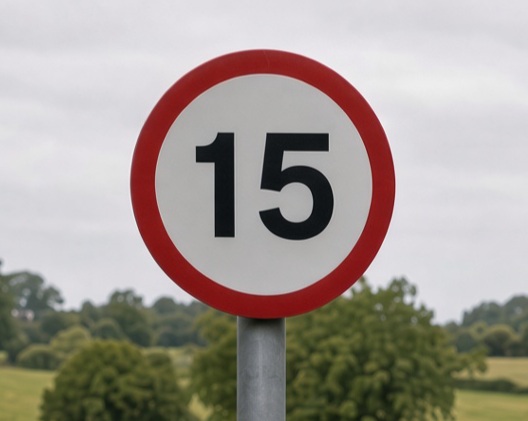
They ramp up fear using their assets in the controlled media, giving outsized coverage to rare examples where bike or e-bike riders cause serious accidents. Councils then start to impose speed limits and other restrictions in response.

Annoyed by the privileges granted to cyclists in recent years, much of the public, particularly the “authoritarian right”, strongly support this. Indeed their complaints about cyclists’ behaviour help justify the crackdown.

But what about enforcement? Controlled media then bombard the public with reports of dangerous, speeding cyclists getting away with breaking the law. Momentum builds for compulsory registration and mandatory tracking devices linked to digital IDs. The perpetrators can now be brought to justice. The technology also enables riders to monitor their speed, so they now have no excuse.

The loophole has been closed and every mode of transport is thoroughly spied on.

The push for cycling speed limits – and indeed the registration of bikes and compulsory insurance – may have a more mundane explanation. Certainly it’s difficult to justify on a rational cost-benefit basis. The risks posed by cyclists to other road users, including pedestrians, are very low. And the risks to cyclists themselves are likely to be far outweighed by the health benefits. (This is not to excuse bad behaviour by riders or to downplay the impact on individual victims of the incidents they cause.)

However, a command-and-control culture now infests transport authorities, unhindered by economic concerns and fostered by the war on motorists. Perhaps this mentality is now being applied to cyclists, a form of blowback on a group the bureaucrats were supposed to be helping.

But there remains a possibility that more sinister and disturbing motives are behind this agenda, a hypothesis made more likely by the rapid erosion of freedom across the board, not just within the transport sector.

Richard Wellings
15-minute cities and the new feudal system

While the power elite will continue to enjoy their jet-set lifestyles, the general public will increasingly be restricted to 15-minute cities as “climate lockdowns” are imposed.

Serfs weren’t allowed to leave their village without their master’s permission. They spent their whole lives restricted to a small area, except perhaps for a rare pilgrimage. As councils start to require permits to drive down certain roads or into certain areas, the parallels with the feudal system are obvious.

15-minute cities are superficially attractive. The basic idea is that employment, retail outlets, health services, schools and various other amenities should be easily accessible to people’s homes – indeed within a short, 15-minute walk or cycle ride. This new urban geography is designed to reduce car dependency and foster “stronger communities.”

Encouraging walking and cycling is a key aspect of the policy, though in practical application this has meant using a big stick rather than a carrot.

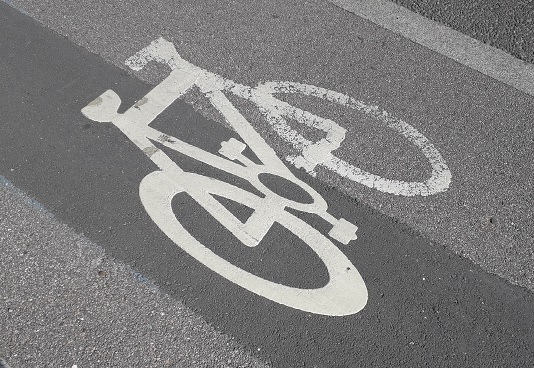
The road space available to cars is reduced to make way for cycle lanes or wider pavements. Speed limits are lowered; traffic lights increased; parking restricted; obstacles placed in the road; streets closed.

These measures create delays and impose costs on motorists, reducing their mobility and deterring them from travelling outside their immediate area.     

Indeed, proponents of 15-minute cities admit that mobility is not their priority. Because, they hope, key amenities are accessible locally, they argue mobility is no longer needed to the same extent.

But here the movement hits a major hurdle: economies of scale.

Many services are inefficient or not viable at a micro level. In a relatively free economy, this means they would tend to be driven out of business by more efficient competitors that serve a larger catchment area and population.

An obvious illustration is to compare big edge-of-town supermarkets with the same brands’ “local” iterations, the latter having far less choice and significantly higher prices. Consumers often choose to drive further to a big supermarket in order to do a weekly shop in one go, which may be cheaper and more efficient than making frequent visits on foot or by bike to smaller local stores. (Of course, staying at home, shopping online and waiting for deliveries is another option under the 15-minute-city model – which may explain why the Big Tech elite are promoting it so enthusiastically.)

The 15-minute city concept therefore implies using planning controls and mobility restrictions to hinder the economies of scale associated with larger catchment areas – effectively forcing businesses and consumers to stay local. Accordingly, such policies are now commonplace across the UK, Western Europe and “progressive” US cities, representing a shift to command-and-control economics and a further erosion of private property rights.

There are similar issues with labour markets. If mobility is restricted – for example, by slower journeys or a forced reduction in car ownership – then it becomes harder for potential employees to find jobs that match their skills and talents. The size of the area in which they can access opportunities may shrink dramatically. The same problem applies to many small businesses. Productivity and wages suffer. Welfare dependency may increase.

The 15-minute-city movement seeks to overcome the economies of scale problem through high-density living. If large numbers of people are stacked on top of one another in blocks of small apartments, then a population of tens of thousands can be packed into a square mile. But given current rates of new home construction, it will typically take several decades to densify neighbourhoods in this way. Lost economies of scale will not be replaced in the foreseeable future.

Moreover, high-density districts have disturbing social and political implications. Residents of detached houses on large plots are relatively free to engage in various activities without affecting their neighbours. Their physical environment promotes self-reliance, independence and resilience. They have the space to accumulate possessions, resources and reserves; make repairs; start various businesses; even grow their own food.

By contrast, high-density apartment blocks are characterised by monitoring and surveillance; rules and regulations; permits; conflicts over communal space, repairs and maintenance. Eccentric, offensive or anti-social behaviour may affect a large number of neighbours, providing a rationale for meddling and intervention. This kind of neighbourhood promotes a culture of interfering in other people’s lives.

And residents of small apartments can’t own much. Their possessions and real resources are severely limited by lack of physical space. They have relatively little scope for self reliance and are more vulnerable to becoming dependent on the state in any crisis. They are therefore more controllable.

15-minute cities are an attempt to manipulate the built environment in order to undermine individual freedom. They’re a Trojan horse for big government and top-down control.

Richard Wellings

Donate