They’re about to completely change our way of life – and most people don’t even realise.
Climate lockdowns are coming. This has already been decided outside democracy at a higher level.
And unless there’s a major change in current power structures, it’s happening whether the public like it or not.
While the term “climate lockdown” is useful shorthand, there are important differences from the lockdowns imposed during the Covid era.
Moving around won’t technically be banned; they’re just going to make it much more expensive, stressful and impractical.
Most importantly, the war on motorists will be ramped up massively – with new charges, red tape and restrictions. The kind of draconian measures seen in London will be rolled out to other cities, and then expanded to towns, perhaps even large villages.
There’s already a big campaign to condition the public to pay-per-mile road charging. This will most likely be added on top of road tax and fuel duty, plus ULEZ-style tolls for entering cities.
The system will be fiendishly complex by design. They want to make drivers fearful of huge fines if they stray into the wrong zone or make a minor mistake, to put them off travelling full stop.
Some councils are planning to force drivers to obtain permits to enter areas of cities or travel down certain routes. Personal carbon allowances are also being discussed (to be reduced in size over time).
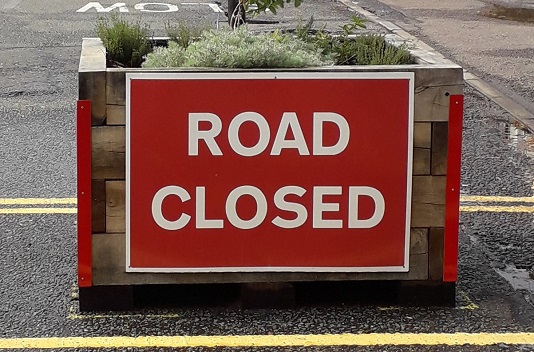
There’ll be even more street closures, obstacles, traffic lights, and other reductions in road capacity – all intended to create artificial delays and “nudge” people out of their vehicles. The kind of measures imposed in so-called low traffic neighbourhoods will be scaled up.
Mass surveillance infrastructure is being installed to facilitate these controls. Alarmingly, this will allow the authorities to ban dissidents and non-compliers from travelling to certain locations.
During a future pandemic, they could use the system to stop unvaccinated individuals travelling outside their immediate locality.
As well as tracking and controlling the public, the main objective is a big reduction in car ownership, and for the remaining drivers to travel far less. The plan is for much of the population to be increasingly limited to 15-minute cities (more details here).
In practice this will mean less choice in employment, business, shopping and leisure activities. It will also breed social isolation by making it much harder to visit friends and relatives outside your own area. The impact on the elderly and infirm will be particularly serious. Denied the convenience of door-to-door car travel, more and more people will stay at home waiting for items to be delivered.
Holidays abroad will also become a thing of the past, at least for lower-to-middle income groups. Perhaps they’ll have to sell their carbon allowance to rich people as energy bills and other basic living costs continue to rise. In any case, new anti-tourist taxes and regulations will increasingly make overseas travel prohibitively expensive.
Anti-tourist protests are already being instigated and amplified in order to condition the public ready for the coming crackdown.
The aviation sector, while still a target, is likely to be treated with a relatively light touch however. This is because air travel is critical to many agendas of the transnational “elite”, such as deeper economic, social and political integration across borders.
Accordingly, the focus will be on anti-tourism measures imposed at local level, such as new taxes and restrictions on the supply of accommodation. Tourist-dependent regions will be sold these policies with promises of moving upmarket, as richer long-haul travellers are forced to holiday closer to home by inflated costs.
Finally, it’s worth discussing how governments are going to try to hoodwink the public that they’re not really undermining people’s mobility. They’ll claim it’s still easy to move around using “greener” alternatives, such as trains and buses. (The EU is even promoting the idea that time-consuming and expensive sleeper trains can replace flights).
In reality trains and buses are only practical and viable in areas and corridors with relatively high population densities. In many locations it’s impossible for them to replace a large percentage of car journeys.
Taking the train (or bus) involves at least three stages. You have to travel to the station to catch it, leaving enough time for unforeseen delays, then make the train journey itself. At the other end you have to get from the station to your final destination.
In rural and suburban areas it’s typically far quicker to drive directly to your endpoint. It often takes nearly as long to get to the nearest station as it does to complete the whole journey by car. Moreover, there are huge swathes of the country that can’t be reached by bus or train – at least not in a reasonable time.
So, forcing people to ditch their cars and rely on trains and buses instead is effectively the same as massively reducing their mobility.
Richard Wellings
 Transport Watch