
Imagine having to get permission from the government to board a train, take the bus, or drive your car; being fined if you exceed your annual travel allowance; or getting banned from travelling beyond a few miles from your home.
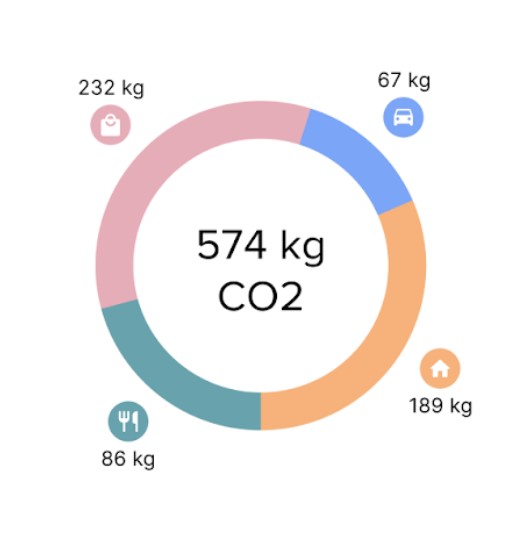
This could be the totalitarian nightmare faced by Britons if the Starmer regime succeeds in imposing digital IDs.
A comprehensive spying system based on digital IDs, linked to payments, will be a vital component of the climate lockdowns agenda.
It facilitates the long-planned system of carbon rationing, which will most likely take the form of personal carbon allowances.
The “elite” have been developing plans for carbon rationing for decades.
Back in 2006, the then Environment Secretary floated the idea of carbon “credit cards” which would be issued as part of a nationwide carbon rationing scheme. Each individual would be issued an annual carbon allowance, with the card swiped when purchasing travel, energy, food and other goods.
Personal carbon allowances would be tradable, with those using less selling their surplus to those needing more. This appeals to socialists because it would redistribute resources from the middle classes to groups dependent on welfare handouts – the former driving cars, heating large houses and taking frequent holidays.
The Department of the Environment carried out a feasibility study on carbon rationing, which concluded there could be significant public opposition. Funnily enough, this took place at the same time the Blair government was considering imposing national ID cards. The European Union and various other governments have also been promoting carbon rationing and conducting trials.
As explained elsewhere, there are win-win strategies to address climate risks, whether natural or man-made, that do not require draconian mass surveillance and strict control over individual behaviour. But the “elite” appear determined to undermine freedom, perhaps as part of a wider agenda to crush dissent and place a greater share of economic resources under their own control.
Fortunately, there are several obstacles to carbon rationing. The first is the need to track and tally everyone’s trips and purchases. So, if people are paying anonymously for travel tickets using physical cash, this is a big problem for the bureaucrats.
It’s perhaps no coincidence the authorities are making it harder and harder to use cash, whether to board buses, buy train tickets, or pay for parking. Even pay-as-you-go travel cards don’t offer the required level of surveillance: different people can use the same one. But digital IDs, linked to payments and facial recognition, would enable it.
In the near future, buses and railway stations are likely to be equipped with digital ID readers and facial recognition cameras. You will be forced to scan your ID to travel on public transport, with every journey tracked and recorded.
The British government is currently funding a “digital ticketing” trial in the North of England. Participants no longer have to buy a ticket to travel by train. Instead, their location is tracked by their mobile phone and they are charged an appropriate fare. It’s easy to see how this technology could be modified with digital ID infrastructure to serve a system of carbon rationing.
Meanwhile, a network of cameras and satellite tracking will spy on every car journey. Car manufacturers may soon be forced to install digital ID readers, facial recognition and/or fingerprinting in vehicles so the authorities can identify the driver of a car at any given time, although this may not be necessary if digital IDs are linked to mobile devices that must be carried at all times.
A second obstacle is public opposition. We can expect climate change propaganda to be ramped up massively in the controlled media in order to manufacture consent for the draconian new system.
There will be much more coverage of natural disasters, which will be blamed on global warming. It’s even conceivable that crises will be deliberately created for this purpose. This needn’t be done directly by covertly starting forest fires or seeding clouds to cause torrential rain; it can be done indirectly by changing river management policies or neglecting the drains to make flooding more likely, or stopping the clearance of combustible undergrowth in forests and so on.
And to promote digital IDs, we can expect the establishment to further weaponise the public’s concerns about immigration. Many on the Right are likely to play the role of “useful idiots” in this regard, while others promoting this agenda will be controlled opposition or state assets.
Finally, there are major practical problems with carbon rationing. Determining the optimum allowance is clearly impossible, given the insurmountable difficulties of calculating the costs and benefits of emissions.
Even working out the impact of any given activity is tricky. Should a rail journey include carbon released during the construction and maintenance of the infrastructure? And should the loading of vehicles be taken into account?
If a train is nearly empty then the emissions per person could be very high indeed. The same goes for buses. Yet running that service might be necessary for operational reasons, perhaps ready for a jam-packed service in the opposite direction.
There will be major issues dealing with consumption in shared households. It can’t be split both equally and fairly. What if one resident spends all day at home with the heating on, while another is at work most of the time?
In reality, carbon rationing will inevitably be based on a combination of politics and junk science, concocted by a coalition of puppet politicians and bought-and-paid-for scientists and economists.
The rations will be arbitrary and designed to advance various other “elite” agendas.
One of the goals will be the further destruction of the middle classes; another the “levelling down” of wealthy nations.
But what if public opposition and practical difficulties mean a system of carbon rationing can’t be implemented?
They will find other ways. Carbon rationing will be implemented by the back door.
Car ownership will become more and more expensive. Drivers will face further delays as roads are closed or narrowed, additional traffic lights installed and congestion deliberately worsened. Punitive new road charging will be imposed, particularly in large conurbations. Residents will increasingly be trapped in their 15-minute cities.
Domestic energy bills will be hiked further and even more people will struggle to heat their homes.
Digital IDs will still play a critical role in this agenda by making it easier to crack down on opposition. They dramatically lower the cost of enforcing compliance.
Resisters will be easier to identify and target. They can automatically be stopped from travelling to protests and in due course from posting on social media. They can be denied access to employment or essential goods and services, even their own money.
If the government succeeds in imposing digital IDs, the future prospects for freedom are very bleak indeed.
Richard Wellings
Image: WEF
 Transport Watch