How to increase car ownership

Hatred of cars is often based on the idea that they create inequality. But this viewpoint is marked by a high degree of hypocrisy. The main reason low-income households struggle to afford a vehicle is precisely because anti-car policymakers have imposed huge additional costs on car ownership.

This is particularly reprehensible because increasing the population’s mobility would bring enormous economic benefits. Increased car ownership would improve access to job and business opportunities, enabling workers to find employment that better matches their skills and talents.

Leisure and housing options would be expanded by easy access to an increased number of locations. A greater choice of retail outlets would be available, enabling more households to exploit the economics of scale associated with large shops and bulk buying.

There would be social benefits too. For example, making it easier to visit and help out elderly and disabled family members.

Currently approximately 78% of households in England have access to a car or van, with 33% of households having access to two or more. The figures are broadly similar in other parts of the UK. But growth in car ownership levels has stagnated since the early 2000s, following rapid growth in previous decades.

Moreover, car ownership is much lower than average among households in the bottom two income deciles. Although there are several factors involved, this suggests the high cost of motoring is likely to play an important role.

The list below provides various policies that could be implemented to increase these figures and improve mobility. Many of these ideas are highly contentious and are included here in order to stimulate debate. A full discussion of each proposal is beyond the scope of this post. Their pros and cons will be analysed in more detail in a series of future articles.

  • Scrap fuel duty and road tax (VED).
  • Abolish compulsory vehicle insurance.
  • Remove trade barriers that deter the importation of low-cost cars from countries such as India and China. This should include non-tariff regulatory barriers.
  • Simplify the driving test and lower the cost of passing.
  • Withdraw “low-emission zones”, “congestion charges” and other local levies.
  • Discontinue the annual MOT test.
  • Abandon the forced shift to electric vehicles.
  • Deregulate taxis and other car-based businesses.

The main objections to higher car ownership are that it would worsen congestion, pollution and road safety.

It’s important to understand that an increase in ownership among lower-income groups wouldn’t lead to a proportionate increase in usage. The new motorists would tend to face greater financial constraints than the average driver. For purposes of illustration, an increase in ownership from say 78% of households to 88% might only increase traffic levels by say 5%.

However, many of the measures to remove barriers to car ownership among the poor would also benefit existing motorists, an effect which is likely to have a bigger impact.

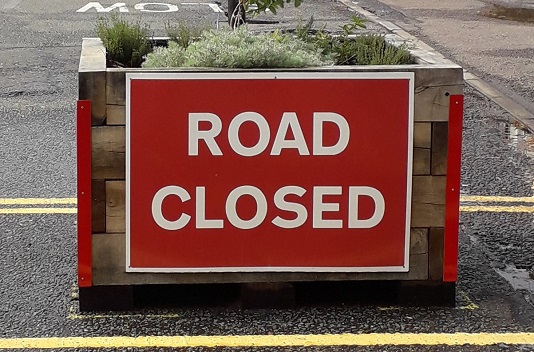
Congestion could be mitigated by re-instating roads that have recently been closed as part of various anti-car schemes. Road narrowing measures could also be reversed, particularly at junctions; the number of traffic lights and other controls reduced; and efficient one-way systems restored in town centres.

Bus and cycle lanes are barely used on many routes and could be removed to increase capacity for cars, vans and lorries. In suitable locations, heavily loss-making railways could be taken out, with the paths redeployed as fast, congestion-free toll roads. And, why not rip up red tape and allow the private sector to provide new road capacity? The planning system can also be liberalised to allow low-density developments rather than stacking and packing vast numbers of people into already crowded inner cities.

The pollution problem is a bit of a red herring, as air quality has improved enormously over the last few decades, partly due to de-industrialisation, but also better vehicle technology. Any conceivable increase in car ownership would make little difference to this long-term trend. (And any purported effect on “climate change” would also be trivial).  

Reversing the artificial delays caused by anti-car policies would help mitigate the likely small impact on emissions from higher car ownership, as would the above suggestion of chanelling a high proportion of traffic onto congestion-free former railways and new private roads.

Finally, if the new car owners have shifted from riskier modes such as motorcycles, there could be safety benefits. It’s also possible that voluntary insurance cover would encourage a proportion of the new drivers to behave more responsibly, given the enhanced financial risks of accidents.

In a healthy, growing economy, with improving living standards, it should be natural for the population’s mobility to increase, which in turn delivers productivity improvements and creates further wealth. Yet politicians and officials seem hellbent on undermining the benefits of lower transport costs and improved access, despite their proven role as key drivers of economic progress.

While this article has set out ways of increasing the public’s mobility, in reality the reverse is happening. Punitive new charges are being imposed and costly red tape expanded. Levies such as low-emission zones specifically target poorer motorists.

The political elite must know all this will have a severely negative impact on the victims’ economic opportunities and also inflict wider social damage. Perhaps a failing economy and falling living standards are the true goals of their radical green agenda.

Richard Wellings

Image: Shutterstock
15-minute cities and the new feudal system

While the power elite will continue to enjoy their jet-set lifestyles, the general public will increasingly be restricted to 15-minute cities as “climate lockdowns” are imposed.

Serfs weren’t allowed to leave their village without their master’s permission. They spent their whole lives restricted to a small area, except perhaps for a rare pilgrimage. As councils start to require permits to drive down certain roads or into certain areas, the parallels with the feudal system are obvious.

15-minute cities are superficially attractive. The basic idea is that employment, retail outlets, health services, schools and various other amenities should be easily accessible to people’s homes – indeed within a short, 15-minute walk or cycle ride. This new urban geography is designed to reduce car dependency and foster “stronger communities.”

Encouraging walking and cycling is a key aspect of the policy, though in practical application this has meant using a big stick rather than a carrot.

The road space available to cars is reduced to make way for cycle lanes or wider pavements. Speed limits are lowered; traffic lights increased; parking restricted; obstacles placed in the road; streets closed.

These measures create delays and impose costs on motorists, reducing their mobility and deterring them from travelling outside their immediate area.     

Indeed, proponents of 15-minute cities admit that mobility is not their priority. Because, they hope, key amenities are accessible locally, they argue mobility is no longer needed to the same extent.

But here the movement hits a major hurdle: economies of scale.

Many services are inefficient or not viable at a micro level. In a relatively free economy, this means they would tend to be driven out of business by more efficient competitors that serve a larger catchment area and population.

An obvious illustration is to compare big edge-of-town supermarkets with the same brands’ “local” iterations, the latter having far less choice and significantly higher prices. Consumers often choose to drive further to a big supermarket in order to do a weekly shop in one go, which may be cheaper and more efficient than making frequent visits on foot or by bike to smaller local stores. (Of course, staying at home, shopping online and waiting for deliveries is another option under the 15-minute-city model – which may explain why the Big Tech elite are promoting it so enthusiastically.)

The 15-minute city concept therefore implies using planning controls and mobility restrictions to hinder the economies of scale associated with larger catchment areas – effectively forcing businesses and consumers to stay local. Accordingly, such policies are now commonplace across the UK, Western Europe and “progressive” US cities, representing a shift to command-and-control economics and a further erosion of private property rights.

There are similar issues with labour markets. If mobility is restricted – for example, by slower journeys or a forced reduction in car ownership – then it becomes harder for potential employees to find jobs that match their skills and talents. The size of the area in which they can access opportunities may shrink dramatically. The same problem applies to many small businesses. Productivity and wages suffer. Welfare dependency may increase.

The 15-minute-city movement seeks to overcome the economies of scale problem through high-density living. If large numbers of people are stacked on top of one another in blocks of small apartments, then a population of tens of thousands can be packed into a square mile. But given current rates of new home construction, it will typically take several decades to densify neighbourhoods in this way. Lost economies of scale will not be replaced in the foreseeable future.

Moreover, high-density districts have disturbing social and political implications. Residents of detached houses on large plots are relatively free to engage in various activities without affecting their neighbours. Their physical environment promotes self-reliance, independence and resilience. They have the space to accumulate possessions, resources and reserves; make repairs; start various businesses; even grow their own food.

By contrast, high-density apartment blocks are characterised by monitoring and surveillance; rules and regulations; permits; conflicts over communal space, repairs and maintenance. Eccentric, offensive or anti-social behaviour may affect a large number of neighbours, providing a rationale for meddling and intervention. This kind of neighbourhood promotes a culture of interfering in other people’s lives.

And residents of small apartments can’t own much. Their possessions and real resources are severely limited by lack of physical space. They have relatively little scope for self reliance and are more vulnerable to becoming dependent on the state in any crisis. They are therefore more controllable.

15-minute cities are an attempt to manipulate the built environment in order to undermine individual freedom. They’re a Trojan horse for big government and top-down control.

Richard Wellings

On the road, no-one can hear you scream!

Why stop at a red light? Once you’ve seen one, you’ve seen them all. But seriously, why stop when you can see the junction is deserted and it’s safe to go?

I saw the light about traffic lights in Cambridge in 2000. A junction normally choked with queueing traffic, that took three entire signal changes to cross, was deserted. Is there a bank holiday no-one has told me about, I wondered as I breezed through. Then I realised the lights were out of action, and it hit me – traffic lights are an unnecessary evil! We’re better off left to our own devices! Eureka!

In an early video I made on the subject, when lights were out at Charlotte St/Goodge Street, I asked a cab driver what he made of it. “You’ve just got to be a bit more careful on the junction,” he said, “that’s all”. That is all. How ironic that when lights are out, we are urged to exercise caution, implying that as soon as they are “working” again, we may revert to norms of neglect.

“Traffic light removal only works in low traffic volumes,” said government road safety adviser, Robert Gifford, in my 2008 Newsnight report. But I’ve witnessed the same thing during power cuts across London. Never was it more agreeable to cycle down Shaftesbury Avenue and round Piccadilly. Taxi-drivers smiled and waved you on. Free from artificial barriers to natural flow, the familiar congestion vanished into thin air. I emailed TfL Vice Chair, Dave Wetzel. His officers said they had told the Police to erect barriers to stop traffic from entering the affected areas. I emailed a Chief Inspector contact at the Met. He replied, “No such action was taken”. 

Traffic officers like us to think we need their interventions to keep traffic moving and keep us safe. Nothing could be further from the truth. Westminster City Council’s safety audit reveals that 44% – nearly half – of all personal injury “accidents” occur at traffic lights. I put accidents in inverted commas because most accidents are not accidents. Nor, as the authorities would have us believe, are they mostly due to human error. They are events contrived by the dysfunctional rules of the road.

The flaw at the heart of the system is the traffic engineering concept of priority – priority for main roads, or traffic from the right. It abandons common law principles of equal rights and responsibilities, and imposes anti-social rights-of-way. It tells main road traffic to plough on, regardless who was there first. It produces conflicting speeds and puts side road traffic and pedestrians at a dangerous disadvantage. It promotes aggression. “Get out of my way!” yells priority, as it denies infinite filtering opportunities and expressions of fellow feeling. And it produces a “need” for regulation and signage that cost the earth, in both senses. How many of the other 56% of “accidents” in the WCC audit are due to priority? Compiled in the context of priority, the stats don’t tell us. Why do we “need” traffic lights, those weapons of mass distraction, danger and delay? To break the priority streams of traffic so others can enter or cross. Traffic lights make us stop to avoid the inconvenience of slowing down. Genius!

From a video shot 20 years ago, I’m still haunted by the image of a mother and toddler waiting to cross the Euston Road. Eventually the lights changed. They set off, only to be caught in the “pen” (yes – traffic engineers treat us like sheep) in the middle of the six-lane highway, where they had to wait again for the other lot of lights to change. Meanwhile, the toddler in his buggy is at the ideal level to inhale the toxic fumes that damage health and development. These abuses are repeated daily throughout the land, promoted by the law of the land in the guise of the rules of the road. In the domestic sphere, coercive control is illegal. On the roads, it’s rampant.

The simple solution to our road safety and road rage problems, and many of our congestion and air quality problems, is to replace priority with equality. Then, whoever arrives first, on foot or on wheels, goes first, more or less, as in other walks of life. My interest in avoiding collision with you mirrors your interest in avoiding collision with me. Instinctively we approach carefully and merge at low speeds. It’s the peaceful anarchy that breaks out whenever traffic lights break down: anarchy in the original sense of self-government.

In the absence of a bridge or flyover, all junctions, rural and urban, could be all-way give-ways. As a river absorbs tributaries, main road traffic can easily accommodate minor road traffic. All drivers have to do is take their foot off the accelerator.

Freedom to filter not only transforms road safety and civility, it reduces air and noise pollution. In a 2007 article, I showed it cuts emissions by up to four times. A study by the engineering department of Surrey University has since found that traffic lights multiply emissions by up to 29 times! Most victims who suffer unnecessarily on the altar of the malign traffic system are anonymous, though one name stands for many: Ella Kissi-Debrah. The DfT is aware, but rejects reform. Should traffic authorities be facing corporate manslaughter charges?

So, with exceptions such as multi-lane intersections at peak times, traffic lights are unnecessary per se. Of course system reform needs combining with driver re-education and a new driving test. The new rulebook or advice guide could be written on one page. 1. All road-users are equal. 2. The vulnerable are more equal than others. 3. Drive on the left. 4. Give way to others who were there first. 5. You’re a driver and a pedestrian too. 6. Use the inside lane except when overtaking. 7. Take it easy and have a nice day.

Martin Cassini

For more information about these ideas, visit Equality Streets.

Political manipulation and the push for climate lockdowns

The plan is clear. The political elite want to create what amounts to a new feudal system, with the manipulation of the green agenda providing a convenient pretext.

Ordinary people’s mobility will be severely restricted. They will be forced out of their cars and off the roads by a raft of new charges and controls. Their lives will largely be confined to “15-minute cities.”

But the perpetrators have a problem. These measures are deeply unpopular with a large percentage of the public. And they are being imposed in ostensible democracies. So, they need a strategy to overcome resistance.

One element is a relentless propaganda campaign to promote the idea of a “climate emergency.” With clear parallels to the manipulation strategies deployed during the pandemic, they’re trying to persuade the public that a form of lockdown is necessary to stop global warming.

This is why the BBC lectures viewers on climate change every time there’s a heat wave, flooding or forest fires. It’s also why the BBC has effectively banned proper debate on environmental issues, with sceptical voices not welcome on its outlets. The understandable anguish created by images of natural disasters is used to undermine free speech on the issue.

The second element is a focus on local government. There’s a reason why mayors and councils are taking a leading role in the “climate lockdowns” policy, while central government pretends to be more motorist friendly. The establishment is exploiting the different incentives facing members of the public.

The benefits of measures such as “low-traffic neighbourhoods” (LTNs) are highly concentrated and obvious to the relatively small number of beneficiaries. By contrast, the costs, which may be enormous by comparison, are typically dispersed and not always obvious to the losers.

If a through road is closed off by the council, many of its residents will support the new restriction (though some may be against – for example if it means much longer journeys). Their street may be quieter and perhaps safer. This constituency offers a bedrock of support for such measures.

It will be bolstered by locals ideologically wedded to the green agenda, perhaps the result of a lifetime of indoctrination by schools, universities and the media, with no exposure to the counter arguments.

They will be joined by state-funded “sock puppets” – campaign groups paid by government to lobby itself and create a fake impression of wider support for policies that the political elite have already decided to impose.

By focusing on the local level, the instigators can build a sufficient coalition of supporters to at least make the argument that they’re not imposing their agenda despite overwhelming public opposition.

Indeed, many of the losers from such policies will not even live or vote in the borough or city where the new controls are being installed. They may be commuters or businesses now facing prohibitive charges or massive delays to their journeys.

Residents in areas beyond the schemes may see a big increase in congestion as traffic is displaced. The emergency services might become less efficient as they can no longer take a direct route, or because cycle lanes mean motorists can no longer get out of their way to let them pass. Labour mobility, productivity and wages may decline because potential employees can’t reach jobs that match their skills, and economies of scale may be lost as the populations that can be profitably or efficiently served shrink (click here for a more detailed discussion).

It will not always be obvious to people that the “war on motorists” is to blame for these negative economic impacts, which in turn dilutes political resistance to the new restrictions. And these effects are spread over a much wider geographical area than the benefits (that accrue to a small, concentrated group), which means opposition is harder to coordinate.  

Note that the purported non-local environmental gains are quite tenuous. The costs and benefits of any future climate change are impossible to calculate accurately. And the impact of the new controls will be negligible in terms of global emissions. In any case, anti-car policies are often counterproductive. Artificially created congestion can actually increase pollution.

Rather than restricting ordinary people’s mobility – and effectively creating a new feudal system in the process – policymakers should focus on win-win policies that both cut emissions and benefit the economy. This means ending the vast subsidies pumped into various polluting activities.

It speaks volumes that governments are so reluctant to take this obvious step. The green agenda is really about giving even more power to the elite and their institutions rather than saving the planet.  

Richard Wellings

How do we keep the UK moving in an era of permanently higher energy prices?

Where we are today 

There is no substitute for the private car in terms of flexibility, cost and radius of travel – except, that is, when oil prices are likely to breach $200 per barrel, translating into £2 per litre for petrol, when car parking in the central areas of most major cities is £5-£10 per hour or higher, and travelling a total distance of 600 miles in a day is just not feasible – which just about sums up the soon to be normal experience of motorists in the UK. 

The largest problem is that outside most major cities (indeed, outside London in fact) there are few options but to have a private car. The infrequent or non-existent bus services, the expensive buses that are available, and the lack of any well-developed metro or subway service dramatically limit transport options. 

Case study: Northwest England 

Liverpool – one of the largest cities in the UK and the 2nd largest in the North of England – is close enough to Manchester, the largest city in the region and the 3rd largest in England, that the conurbations overlap and include a population the size of a medium-sized European country (5.6 million).  

Just across the Pennines, there is yet another gigantic urban sprawl that is not particularly well connected to this megalopolis by road or rail. The East-West rail lines in the North of England are not electrified and are served infrequently by antiquated rolling stock. Taxis cost £3 per mile and thus the reality for nearly everyone is that they must have a car. 

What may work best is a model where buses are replaced by multi-capacity, on-demand hybrid bus-taxis which can take separate fares at separate prices. This model is not just a nice add on – it is a necessity.  

The average car is used only one hour per day and spends most of its time parked. When it is used, it carries just one person (the driver) for 90% of its trips. While providing gainful employment and profits to automakers, this is no good for the average person, especially since the cost of simply operating the car is around £300-£600 a month. 

Imagine, then, if a customer could, for £400 per month, buy a subscription, a carnet of passes for all their monthly trips, upgrading with options packages any extra services to their “base buy”. Effectively, this would replace the need for a car during the week for any work commutes, or indeed any supermarket trips. The effective cost per trip, especially for longer-term subscriptions would be considerably less than a taxi trip today and in many cases cheaper than a single bus ticket. A point-to-point travel paradigm is possible, without fixed routes, for considerably less cost to the consumer than a government-operated bus service. 

It would be much like a season ticket for a bus, except that this covers usage in a shared-ride vehicle of appropriate capacity and capability for a specific trip. 

For the weekends, where the average use is likely to be significantly greater than one hour per day, a multi-day car hire is easily managed. Furthermore, putting car-hire businesses in the heart of communities, rather than located on industrial estates far from where people live is another way to make better use of land. A car-rental (carshare) business (where one car is used by many different people although not at the same time) can be located in purpose built multi-storey car parks. It will become apparent to many people that investing in a mobility subscription will be far more cost effective than owning a car, especially when a car can be hired for those small number of occasions when one is needed for multiple consecutive days. 

A key driver of this system could be a comprehensive congestion charging scheme, run as a public utility, on all roads. Such a system would have to be restricted to the hypothecation of revenues garnered – so that there is no incentive or temptation for the city government to use motorists as a funding source for general taxation. 

Conclusion 

Regardless of the power source of vehicles, the overarching requirement must be to make mobility affordable, delivered through a mix of shared rides, car share, and integrated public transport. 

There really is no way to maintain the current system of road usage and vehicle ownership when the costs of energy are rising so dramatically. The total costs of domestic energy (electricity and natural gas), petrol and food (itself a derivative of wholesale energy prices) make car ownership extremely costly. While the government still earns significant tax revenues from petrol taxes, this form of taxation has to evolve and change. 

In order to mitigate the wasteful (in terms of both time and fuel) congestion we see every day on our busiest routes, we need a better way of managing roadspacetime. 

Eric Matthew W. Masaba

Image: Wikimedia Commons