Unknown's avatar

About Transport Watch

Research organisation advocating a rational approach to transport policy. Dedicated to the numbers rather than the myths regarding rail and road.

Digital IDs and carbon rationing

Imagine having to get permission from the government to board a train, take the bus, or drive your car; being fined if you exceed your annual travel allowance; or getting banned from travelling beyond a few miles from your home.
This could be the totalitarian nightmare faced by Britons if the Starmer regime succeeds in imposing digital IDs.

A comprehensive spying system based on digital IDs, linked to payments, will be a vital component of the climate lockdowns agenda.

It facilitates the long-planned system of carbon rationing, which will most likely take the form of personal carbon allowances.

The “elite” have been developing plans for carbon rationing for decades.

Back in 2006, the then Environment Secretary floated the idea of carbon “credit cards” which would be issued as part of a nationwide carbon rationing scheme. Each individual would be issued an annual carbon allowance, with the card swiped when purchasing travel, energy, food and other goods.

Personal carbon allowances would be tradable, with those using less selling their surplus to those needing more. This appeals to socialists because it would redistribute resources from the middle classes to groups dependent on welfare handouts – the former driving cars, heating large houses and taking frequent holidays.

The Department of the Environment carried out a feasibility study on carbon rationing, which concluded there could be significant public opposition. Funnily enough, this took place at the same time the Blair government was considering imposing national ID cards. The European Union and various other governments have also been promoting carbon rationing and conducting trials.

As explained elsewhere, there are win-win strategies to address climate risks, whether natural or man-made, that do not require draconian mass surveillance and strict control over individual behaviour. But the “elite” appear determined to undermine freedom, perhaps as part of a wider agenda to crush dissent and place a greater share of economic resources under their own control.

Fortunately, there are several obstacles to carbon rationing. The first is the need to track and tally everyone’s trips and purchases. So, if people are paying anonymously for travel tickets using physical cash, this is a big problem for the bureaucrats.

It’s perhaps no coincidence the authorities are making it harder and harder to use cash, whether to board buses, buy train tickets, or pay for parking. Even pay-as-you-go travel cards don’t offer the required level of surveillance: different people can use the same one. But digital IDs, linked to payments and facial recognition, would enable it.

In the near future, buses and railway stations are likely to be equipped with digital ID readers and facial recognition cameras. You will be forced to scan your ID to travel on public transport, with every journey tracked and recorded.

The British government is currently funding a “digital ticketing” trial in the North of England. Participants no longer have to buy a ticket to travel by train. Instead, their location is tracked by their mobile phone and they are charged an appropriate fare. It’s easy to see how this technology could be modified with digital ID infrastructure to serve a system of carbon rationing.

Meanwhile, a network of cameras and satellite tracking will spy on every car journey. Car manufacturers may soon be forced to install digital ID readers, facial recognition and/or fingerprinting in vehicles so the authorities can identify the driver of a car at any given time, although this may not be necessary if digital IDs are linked to mobile devices that must be carried at all times.

A second obstacle is public opposition. We can expect climate change propaganda to be ramped up massively in the controlled media in order to manufacture consent for the draconian new system.

There will be much more coverage of natural disasters, which will be blamed on global warming. It’s even conceivable that crises will be deliberately created for this purpose. This needn’t be done directly by covertly starting forest fires or seeding clouds to cause torrential rain; it can be done indirectly by changing river management policies or neglecting the drains to make flooding more likely, or stopping the clearance of combustible undergrowth in forests and so on.

And to promote digital IDs, we can expect the establishment to further weaponise the public’s concerns about immigration. Many on the Right are likely to play the role of “useful idiots” in this regard, while others promoting this agenda will be controlled opposition or state assets.     

Finally, there are major practical problems with carbon rationing. Determining the optimum allowance is clearly impossible, given the insurmountable difficulties of calculating the costs and benefits of emissions.

Even working out the impact of any given activity is tricky. Should a rail journey include carbon released during the construction and maintenance of the infrastructure? And should the loading of vehicles be taken into account?

If a train is nearly empty then the emissions per person could be very high indeed. The same goes for buses. Yet running that service might be necessary for operational reasons, perhaps ready for a jam-packed service in the opposite direction.

There will be major issues dealing with consumption in shared households. It can’t be split both equally and fairly. What if one resident spends all day at home with the heating on, while another is at work most of the time?

In reality, carbon rationing will inevitably be based on a combination of politics and junk science, concocted by a coalition of puppet politicians and bought-and-paid-for scientists and economists.

The rations will be arbitrary and designed to advance various other “elite” agendas.

One of the goals will be the further destruction of the middle classes; another the “levelling down” of wealthy nations.

But what if public opposition and practical difficulties mean a system of carbon rationing can’t be implemented?

They will find other ways. Carbon rationing will be implemented by the back door.

Car ownership will become more and more expensive. Drivers will face further delays as roads are closed or narrowed, additional traffic lights installed and congestion deliberately worsened. Punitive new road charging will be imposed, particularly in large conurbations. Residents will increasingly be trapped in their 15-minute cities.

Domestic energy bills will be hiked further and even more people will struggle to heat their homes.

Digital IDs will still play a critical role in this agenda by making it easier to crack down on opposition. They dramatically lower the cost of enforcing compliance.

Resisters will be easier to identify and target. They can automatically be stopped from travelling to protests and in due course from posting on social media. They can be denied access to employment or essential goods and services, even their own money.

If the government succeeds in imposing digital IDs, the future prospects for freedom are very bleak indeed.

Richard Wellings

Donate

Image: WEF

20mph limits are about climate lockdowns, not saving lives

The transnational “elite” want to impose climate lockdowns but realise they’ll be resisted by the public, so they’ve implemented a strategy of deception.

Rather than telling the truth about their plans to restrict people’s mobility and trap them in 15-minute cities, they’re sneaking in these policies by the back door.  

Bogus pretexts are deployed to gain wider support for measures creating the foundations for climate lockdowns.

They created an air pollution scare and spread disinformation about the impact of car fumes on health. This provided a pretext to impose “low emission zones” and force lower-income motorists off the roads.

It also allowed the authorities to install infrastructure that can be repurposed for the long-planned system of road charging, as well as conditioning the public to the idea of paying tolls to enter certain areas.

Another strategy was to manipulate local political systems in order to impose “low-traffic neighbourhoods”. Many of the big losers from such policies lived outside the boroughs concerned, so had little say in the matter. So-called consultations were often rigged or ignored.

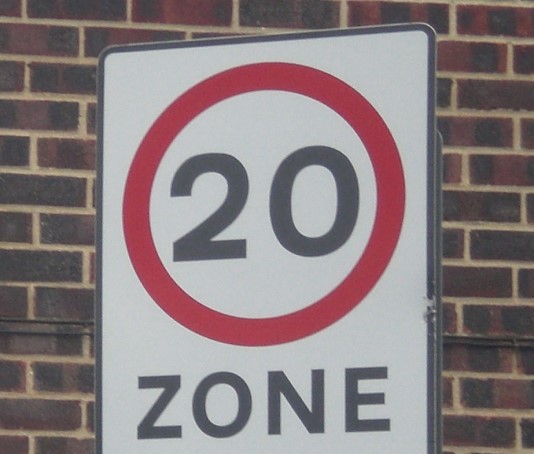
The focus of this article is a third ruse to advance the climate lockdowns agenda: the lowering of speed limits and the imposition of 20mph zones across the UK, 30km/h ones across Europe.

The authorities claim it’s about saving lives. Conveniently, this allows them to paint opponents of this policy in a very bad light, as not caring about victims of road accidents, including children.

But the perpetrators of 20mph zones are guilty of gross hypocrisy on this issue. Every second counts for victims of heart attacks and strokes. Yet the very same interests that promote 20mph policies have slowed down ambulances with a host of anti-car policies: cycle lanes or wider pavements that make roads too narrow to overtake the traffic; LTN road closures that force emergency vehicles to take a longer route; road humps and chicanes; cameras and fines that make drivers hesitant about getting out of the way at junctions; the proliferation of traffic lights that cause vehicles to bunch up; and so on.

Anti-car policies are counterproductive in other ways, too. They may encourage travellers to switch to more dangerous modes, such as riding motorbikes – a rational strategy to reduce the delays from artificially created congestion and lower the cost of the supertax imposed on fuel.

Moreover, investment in new roads historically played a major role in reducing casualty rates. The construction of motorways and dual carriageways took traffic away from relatively dangerous single carriageway rural roads. However, following the Conservative Party’s adoption of the radical green agenda, the roads programme largely ended in the mid-1990s.

Beyond the hypocrisy of their other policies, the 20mph brigade typically fail to acknowledge the economic trade-offs of lower speed limits. This is a classic example of focusing on the seen benefits while ignoring the unseen costs.

Lowering speed limits tends to reduce productivity. To take a simple example, a delivery driver might now be able to drop off nine items during his shift, rather than ten previously. Or consider labour mobility. A potential employee will be able to reach fewer job opportunities within a reasonable travel time. This makes it less likely he’ll get a job that matches his talents and also more likely he’ll stay unemployed. Then there are the lost economies of scale for businesses when they operate with smaller catchment areas, and so on.

Reduced productivity means fewer resources available for other goods, including healthcare, food, leisure activities and sanitation. In other words, 20mph zones have the potential to backfire, including in terms of saving lives, due to their negative impact on the economy.

The Welsh government’s own analysis of its 20mph policy estimated the costs of slower journey times at £6.35 billion over the 30-year appraisal period (2022 prices). This far exceeded the estimated road safety benefits of £1.39 billion.

Wales has a population of about three million. So, the cost of similar 20mph policies across the UK as a whole could well run into several billion pounds per year. And this is just one facet of the climate lockdowns agenda. Slower journeys and reduced mobility have major economic costs, as explained in detail in this article.

Even if we take the “saving lives” rationale at face value, it seems implausible that current 20mph policies are a cost-effective way of achieving that goal. It’s likely that spending a fraction of those billions removing obstacles to emergency ambulances would be a far more efficient use of resources. Another option would be enhanced road safety education; or maybe a programme of upgrading dangerous rural A-roads to dual carriageways.

In reality, however, the most cost-effective life-saving strategies probably lie outside the transport sector, in healthcare or foreign policy, for example. If saving lives were the real motive for 20mph then this “opportunity cost” issue would be subject to rigorous discussion and analysis. It speaks volumes that the authorities ignore 20mph’s cost-effectiveness compared with alternative allocations of resources.

Another giveaway is the tendency to impose extended 20mph zones rather than fine-tune the policy to location-specific trade-offs. While overall the costs of the Welsh policy were estimated to far exceed the benefits, the aggregate figures hide huge variation.

There will be some locations where the benefits of lower speed limits outweigh the costs – perhaps near schools at certain times of day or on busy shopping streets with lots of pedestrians. At the other extreme will be major through-roads, perhaps in low-density suburbs with few pedestrians or cyclists around. In the latter locations lower limits are delaying large numbers of drivers, imposing significant time losses for little gain.

It’s therefore relatively easy to work out where 20mph is likely to be a cost-effective way of saving lives and reducing injury, and where the costs of the policy are likely to far exceed the benefits. This could also be quantified, at least roughly, for each section of road under consideration. Instead many authorities have preferred to impose large 20mph zones, in some cases stretching across whole boroughs. This once again suggests other motives are the driving force behind the policy.

Finally, the authorities occasionally admit their 20mph policies are linked to a deeper agenda.

According to Glasgow’s City Convener for Climate and Transport

“A citywide 20mph speed limit will bring Glasgow in line with many other UK cities and help to create safer streets and communities for all of us, reducing the risk of accidents and the severity of injuries sustained.

“Reducing the impact of traffic on communities will also contribute to the wider shift needed towards more sustainable forms of transport, which is vital if we are to achieve our target of Glasgow becoming carbon neutral by 2030.” (emphasis added)

Similarly in a “statement of reasons” for its policy, Oxfordshire County Council writes, “…20mph speed restrictions are being used to help promote alternative modes of transport for local travel.”

And from Wales’s Deputy Minister for Climate Change: “Introducing lower speeds will support the Welsh Government’s vision for walking and cycling to be the natural mode of choice for short everyday journeys.”

In a subsequent Senedd debate on the 20mph policy, he was congratulated by a Labour MS colleague:

“… I’d like to congratulate the Minister on having the courage of his convictions and doing what needs to be done. We have a climate emergency and we need to reduce our speed limits and we need to ensure that we make that transition out of cars into active travel and ensure that we meet our 58 per cent reduction by 2030, which is not very far off.”

These perspectives echo the content of the 2020 Stockholm Declaration – backed by the United Nations, World Health Organization and European Commission – and explicitly referenced by the Welsh government.

This is a reminder that the 20mph agenda is actually being coordinated outside democracy at transnational “elite” level (hence near-identical policies being imposed across the West and its vassals).

The Declaration resolved, inter alia, to:

“Address the connections between road safety, mental and physical health, development, education, equity, gender equality, sustainable cities, environment and climate change, as well as the social determinants of safety and the interdependence between the different SDGs [Sustainable Development Goals], recalling that the SDGs and targets are integrated and indivisible…”

And noted that “efforts to reduce speed in general will have a beneficial impact on air quality and climate change…”

In practice, the transition will impose a big reduction in people’s mobility because “sustainable” modes generally offer far longer journey times and much reduced travel options compared with cars.

Richard Wellings

Image: Wikimedia Commons

Donate

Climate change policies and economic collapse

Climate change is providing a pretext for all manner of restrictions on our lives. As a consequence, climate change policies are now one of the biggest threats to individual freedom.

There is good reason to believe this is at least partly deliberate, that the climate change agenda is a Trojan horse for more sinister ends: socialist-style central planning of the economy, dictatorial global government, and grabbing a greater share of assets and resources for transnational “elites.”

This context explains why the flaws of the official climate change narrative are rarely debated. They are largely ignored by tightly controlled media outlets and the seemingly bought-and-paid-for scientific establishment.

The standard narrative says climate change is a major threat to civilisation. A “scientific consensus” suggests it will lead to “extreme weather” – stronger hurricanes, worse flooding, droughts and forest fires.

This will destablise society, it is claimed. Parts of the world will no longer be able to support agriculture. Food and water shortages will worsen, leading to migration on an epic scale. Even relatively resilient countries face huge costs to strengthen flood defences, adapt essential infrastructure and so on.

An obvious flaw is how this perspective neglects or ignores potential benefits from climate change. Global warming could reduce heating bills and winter deaths in cold countries. Raised CO2 levels tend to increase crop yields. Higher rainfall could be helpful in many locations.

It is not obvious that the costs of any climate change will outweigh the benefits, or if they do, by how much. In any case, it is disingenuous to argue these costs and benefits can be properly quantified. They are highly subjective at the individual level and therefore hard to measure, monetise and aggregate. This is highly problematic when trying to set policy in a rational way or determine optimal temperature targets.

Scientific modelling provides a crutch for the policy activists. But the record of both climate and economic modelling is appalling – including over the short run.

And even if short-term success were achieved, this would not guarantee long-term accuracy. There are numerous factors that modellers cannot know, such as the impact of unpredictable natural events or sudden advances in technology – or indeed individuals’ preferences decades in the future.

Climate change activists perhaps have a more compelling argument when they argue that this lack of knowledge is a major reason why humanity should be worried. If the models were reliable, then people would have a good idea what’s in store and could take steps to address the problems. But the inherent uncertainties mean catastrophe is possible.

The chances might be slight, but climate change could wipe out much of humanity, perhaps because unknown positive feedbacks occur or certain tipping points are breached. From this perspective, the lack of knowledge provides a rationale for caution.

Norman et al. write:

“Without any precise models, we can still reason that polluting or altering our environment significantly could put us in uncharted territory, with no statistical track record and potentially large consequences.” …

“It is the degree of opacity and uncertainty in a system, as well as asymmetry in effect, rather than specific model predictions, that should drive the precautionary measures. Push a complex system too far and it will not come back. The popular belief that uncertainty undermines the case for taking seriously the ‘climate crisis’ that scientists tell us we face is the opposite of the truth.”

However, while the nature of the uncertainty and opacity are not the same, there is also a lack of knowledge about the impact of policies designed to tackle climate change.

To paraphrase the above quotation, without any precise models, we can still reason that altering our economy significantly could put us in uncharted territory, with no statistical track record and potentially large consequences.

Climate change policies are already undermining productivity growth in many countries. The process by which living standards increase due to big reductions in energy and transport costs has been choked off.

Climate change is also providing a pretext for trade barriers, with industries in Europe resenting “unfair” competition from countries with looser environmental standards.

Then there’s the increasing state control of the economy, with major sectors centrally planned by government bureaucrats. Think of the forced shift to renewable energy and electric cars, or state meddling in agriculture.

All this promotes economic stagnation or decline. In turn, it could create a vicious circle, with interest groups lobbying more intensively for government favours as the size of the pie shrinks – a negative sum game compounding the damage.

Look how heavy industry in Western Europe, crippled by high energy prices, has been propped up by state subsidies to keep it alive, or how growing fuel poverty is putting pressure on the welfare state.

It’s possible to envisage climate change policies pushing the political culture in a far more socialist direction in reaction to social and economic problems caused by the radical green agenda (difficulties which will, however, be blamed on convenient scapegoats, such as an imaginary “free market”).

Climate change policies could therefore be a monumental disaster for the economy and society, threatening key drivers of wealth creation such as trade, economies of scale, and specialisation.

This would bring big declines in living standards, perhaps even disasters similar to those predicted by climate change alarmists, such as large-scale starvation and population displacement.

While it could be argued that economics is less uncertain than climate change, the outcome might also depend on highly unpredictable combinations of economic decline, reduced resilience and “external shocks” such as war, natural disasters or pandemics.

It is also conceivable that ill-conceived climate change policies could end up reducing resilience to climate change itself (natural and/or human-influenced), with catastrophic outcomes resulting from a combination of both. The uncertainty could thus be compounded.

The policy implications are clear. Climate change measures that create major economic uncertainty by damaging fundamentals such as individual freedom, property rights, wealth creation, productivity growth (and thus food availability) should be discarded. The focus instead should be on win-win policies that benefit both the economy and the environment. These are measures that should be implemented whether or not climate change is viewed as a serious threat.

This means phasing out the vast and inefficient state subsidies to activities that emit “greenhouse gases,” such as non-viable agricultural practices, elements of the fossil-fuel industry, loss-making parts of energy and transport networks, and much of the military.

Government theft of land, often on behalf of crony-capitalist corporations, should also cease. Property rights should be respected, including those of various indigenous peoples whose form of ownership might differ from current European norms.

State control over vast swathes of the planet is illegitimate. It took place through violent conquest without the consent of the original inhabitants. A policy of non-interference, combined with returning these areas to their rightful owners and ending state subsidies, would prevent much of the damage to ecosystems that bolster the resilience of the planet. Economy-killing climate policies would then be even less defensible.

Richard Wellings

Image: Croft, R., Wikimedia Commons, CC2.0.

Donate

What life will be like under climate lockdowns

They’re about to completely change our way of life – and most people don’t even realise.

Climate lockdowns are coming. This has already been decided outside democracy at a higher level.

And unless there’s a major change in current power structures, it’s happening whether the public like it or not.

While the term “climate lockdown” is useful shorthand, there are important differences from the lockdowns imposed during the Covid era.

Moving around won’t technically be banned; they’re just going to make it much more expensive, stressful and impractical.

Most importantly, the war on motorists will be ramped up massively – with new charges, red tape and restrictions. The kind of draconian measures seen in London will be rolled out to other cities, and then expanded to towns, perhaps even large villages.

There’s already a big campaign to condition the public to pay-per-mile road charging. This will most likely be added on top of road tax and fuel duty, plus ULEZ-style tolls for entering cities.

The system will be fiendishly complex by design. They want to make drivers fearful of huge fines if they stray into the wrong zone or make a minor mistake, to put them off travelling full stop.

Some councils are planning to force drivers to obtain permits to enter areas of cities or travel down certain routes. Personal carbon allowances are also being discussed (to be reduced in size over time).

There’ll be even more street closures, obstacles, traffic lights, and other reductions in road capacity – all intended to create artificial delays and “nudge” people out of their vehicles. The kind of measures imposed in so-called low traffic neighbourhoods will be scaled up.

Mass surveillance infrastructure is being installed to facilitate these controls. Alarmingly, this will allow the authorities to ban dissidents and non-compliers from travelling to certain locations.

During a future pandemic, they could use the system to stop unvaccinated individuals travelling outside their immediate locality.

As well as tracking and controlling the public, the main objective is a big reduction in car ownership, and for the remaining drivers to travel far less. The plan is for much of the population to be increasingly limited to 15-minute cities (more details here).

In practice this will mean less choice in employment, business, shopping and leisure activities. It will also breed social isolation by making it much harder to visit friends and relatives outside your own area. The impact on the elderly and infirm will be particularly serious. Denied the convenience of door-to-door car travel, more and more people will stay at home waiting for items to be delivered.

Holidays abroad will also become a thing of the past, at least for lower-to-middle income groups. Perhaps they’ll have to sell their carbon allowance to rich people as energy bills and other basic living costs continue to rise. In any case, new anti-tourist taxes and regulations will increasingly make overseas travel prohibitively expensive.

Anti-tourist protests are already being instigated and amplified in order to condition the public ready for the coming crackdown.

The aviation sector, while still a target, is likely to be treated with a relatively light touch however. This is because air travel is critical to many agendas of the transnational “elite”, such as deeper economic, social and political integration across borders.

Accordingly, the focus will be on anti-tourism measures imposed at local level, such as new taxes and restrictions on the supply of accommodation. Tourist-dependent regions will be sold these policies with promises of moving upmarket, as richer long-haul travellers are forced to holiday closer to home by inflated costs.

Finally, it’s worth discussing how governments are going to try to hoodwink the public that they’re not really undermining people’s mobility. They’ll claim it’s still easy to move around using “greener” alternatives, such as trains and buses. (The EU is even promoting the idea that time-consuming and expensive sleeper trains can replace flights).

In reality trains and buses are only practical and viable in areas and corridors with relatively high population densities. In many locations it’s impossible for them to replace a large percentage of car journeys.

Taking the train (or bus) involves at least three stages. You have to travel to the station to catch it, leaving enough time for unforeseen delays, then make the train journey itself. At the other end you have to get from the station to your final destination.

In rural and suburban areas it’s typically far quicker to drive directly to your endpoint. It often takes nearly as long to get to the nearest station as it does to complete the whole journey by car. Moreover, there are huge swathes of the country that can’t be reached by bus or train – at least not in a reasonable time.

So, forcing people to ditch their cars and rely on trains and buses instead is effectively the same as massively reducing their mobility.    

Richard Wellings

Donate

How to turn London into Europe’s biggest city

Individuals should be given the freedom to fulfil their potential, rather than being trapped by government policies in towns and cities that hold them back. Having vast numbers of workers in the wrong place weakens the economy by reducing productivity and wealth creation.

In a free society, successful cities and regions can rapidly expand in population, while failing locations can rapidly decline. This process of geographical change is critical for rapid economic growth and big increases in living standards.

Cities in the North of England expanded rapidly during the industrial revolution – and this was vital for their development.

However, the reasons northern cities were centres of wealth creation in the 18th and 19th centuries no longer apply. These days, their economies are largely dependent on government handouts in various forms.

Their predicament is amplified by their location – on the edge of a continent in rapid relative economic decline. High labour, energy and transport costs – and suffocating bureaucracy and red tape – also create a difficult environment for business to prosper.

However, the UK’s geographical disadvantages can be counteracted by exploiting the agglomeration benefits of a very large city. In other words, the “economies of scale” created by a huge conurbation can help to overcome the problems associated with a semi-peripheral location.

Mega cities promote clusters of expertise and innovation. A high degree of specialisation is possible, with a wide range of niche services.  Deep and complex labour markets allow better matching of jobs to skills and talents, which in turn attracts the skilful and talented.

Specialist high-end services combined with high “human capital” attract entrepreneurs and investors from around the world. Providing certain conditions are met – i.e. reasonable tax rates, light-touch regulation and relative political stability – a very large city can create a virtuous economic circle, leading to high levels of productivity and high living standards.  

London should therefore be allowed to grow as large as possible. With state-imposed constraints removed, it could conceivably become the largest city inside Europe.

The administrative area of Greater London currently has a population of around 9 million. The Greater London Built-Up Area, which constitutes the continuous, joined-up conurbation, has around 10 million people. And the wider “London Metropolitan Area” is estimated at approximately 15 million.

In the absence of state-imposed restrictions, these figures (for the sake of illustration) could perhaps grow to 12 million, 15 million and 22 million respectively. However, there should not be fixed population targets or timescales. The outcome should be the result of the voluntary choices made by individuals.  

The main policy change required is liberalisation of the planning system and building regulations. Development should be allowed in London’s green belt. Property owners should also be allowed to “densify” existing neighbourhoods with the minimum of red tape – by building on gardens, adding floors, converting houses into flats, and so on. Under-used land such as parks, playing fields and warehouses could be developed too. A dramatic increase in supply would of course put powerful downward pressure on rents and house prices.

Inadequate transport infrastructure is no longer such a major constraint on the capital’s growth. The shift to working from home (often part-time) means London can accommodate a far bigger population without putting undue pressure on its public transport system (for example by spreading the peaks). And road capacity can quickly be increased by removing various anti-car measures imposed over the last few years (such as barely used cycle and bus lanes etc.).

Furthermore, where appropriate, the capacity of rail corridors could be increased enormously by converting them into busways, which allow higher passenger flows at far lower cost than railways (meaning reduced fares and commercially viable, subsidy-free services).

Water supplies are also frequently cited as a constraint. But a short Severn-Thames link and expanded reservoirs – perhaps combined with desalination plants if absolutely necessary – would resolve this issue.

Of course there should not be state-imposed constraints on the growth of northern cities either. But the chances of say Manchester evolving into a ten-million-plus mega city are slim. London has a first-mover advantage, inertia, a better location closer to Europe’s “core” and already possesses much of the required infrastructure.

Richard Wellings

Image: Wikimedia Commons.

Why transport projects keep going wrong

All over the world transport projects “go wrong”, in the private sector as well as in the public sector. It is not just a British problem – though our disasters seem to be worse than most. A common – almost universal – error at the start of most transport projects is unrealistic initial cost estimates.

There are three major generic causes of cost overruns:

  • The high risks of technological innovation. (The “frontiers of knowledge” are also the frontiers of ignorance!)
  • Changes in project specifications and designs (especially from interfering politicians).
  • Evolving safety and environmental demands (which often seem to get absolute priority, whatever their cost).

All three were prominent in the three government transport project disasters in my 2007 book They Meant Well, Government Project Disasters, namely: The R101 Airship; Concorde; and the Channel Tunnel high-speed rail link to London (HS1). 

But Flyvbjerg (with co-authors), who is the leading expert on this topic, has a more brutal view:

“Cost underestimation and overrun cannot be explained by error and seem to be best explained by strategic misrepresentation, namely lying, with a view to getting projects started. … [They] have not decreased over the past seventy years. No learning seems to take place.”

That is a shocking conclusion, suggesting that, despite past evidence, contingency allowances for cost overruns are still usually much too small. Post-project audits should be essential for all major projects, whether they have “gone wrong” or not.

Revenues from transport projects are also subject to huge margins of error, often being wildly over-optimistic. For example, the (private sector) Channel Tunnel had predicted sixteen million Eurostar passengers in its first full year; but the actual number was only three million. (The 1987 forecast for total Channel Tunnel passengers in 2003 was forty million but the actual number was only fifteen million.) Both passenger volume and average level of fares seem to be hard to guess accurately, especially if one ignores potential competition. 

A further danger for government projects is reluctance to abandon projects even after it has become obvious that they are not viable. According to Peter Jay, Concorde’s advocates constantly employed four red herrings: patriotism; the need to keep up with technological progress; unemployment; and the importance of not offending France. (Britain was trying to join the Common Market at the time!) Roy Jenkins, Air Minister in the first Wilson government, tried to cancel this Anglo-French project in 1964, but soon had to un-cancel it!

For government projects, “national prestige” was often a factor. (Speaking about Concorde, Jo Grimond, the Liberal Party leader, said: “Whenever I hear the word ‘prestige’, my heart sinks.”!) My impression is that “national prestige” was rarely a factor in starting a government project; but was likely to come into play once a project had started to go wrong.

In managing transport projects, there are three essentials:

  • Regular reviews, focusing on the latest estimates of the amount and timing of future cash inflows and outflows.
  • Up-to-date market research to try to reassess likely demand where relevant.
  • An “exit champion” if need be, to argue the case for abandonment.

I would even expand the third point and urge the appointment of at least two “devil’s advocates” from the very start of a project (for private sector projects as well as government projects). Their function would be to question everything – and to criticise and oppose where they thought that sensible. The purpose of formally appointing them would be to legitimise their actions. Otherwise, anyone who queries management decisions is likely to be regarded almost as a traitor. (At least two such appointments, because it is much easier to ignore a single person’s views.) Recommending abandonment – which is difficult – would be one of their potential tasks.

Many private sector projects go wrong too; but I suspect they can be quietly dropped sooner and with less fuss than government projects, where political embarrassment is always likely.  (Cancelling HS2 is a partial exception, because probably a majority of the public think that was a sensible decision, merely delayed for far too long.)

In all six of the government projects in They Meant Well, many of the management failures (though by no means all) were really down to politicians: publishing misleading estimates; installing inadequate or over-complex organisations; appointing incompetent managers; insisting on excessive secrecy (a special weakness of British governments!); funking abandonment; or generally interfering in far too many details, which usually leads to extra costs and expensive construction delays.

Before politicians decide to embark on large quasi-commercial projects, they should provide convincing answers to two questions:

  • Why won’t a private enterprise company undertake this project? (If it will, let it.)
  • Why does government, in contrast, think the project worthwhile?

If private sector companies are unwilling to get involved, one obvious reason may be because they think the risks – on either the costs or the revenues (or both) are too high. Political pressures may push governments towards going ahead, even if they are aware of the likely financial outcome (which they may care about less than profit-seeking businesses.)

Flyvbjerg et al. conclude that even with “government projects”, a significant part of the capital required should be genuine risk capital, with private financiers bearing the consequences of a wrong decision to go ahead. That should help ensure a high degree of involvement by private lenders, which in turn should lead to more effective monitoring, better cost control and also better controls against construction delays.

D.R. Myddelton

Image: gov.uk

How to increase car ownership

Hatred of cars is often based on the idea that they create inequality. But this viewpoint is marked by a high degree of hypocrisy. The main reason low-income households struggle to afford a vehicle is precisely because anti-car policymakers have imposed huge additional costs on car ownership.

This is particularly reprehensible because increasing the population’s mobility would bring enormous economic benefits. Increased car ownership would improve access to job and business opportunities, enabling workers to find employment that better matches their skills and talents.

Leisure and housing options would be expanded by easy access to an increased number of locations. A greater choice of retail outlets would be available, enabling more households to exploit the economics of scale associated with large shops and bulk buying.

There would be social benefits too. For example, making it easier to visit and help out elderly and disabled family members.

Currently approximately 78% of households in England have access to a car or van, with 33% of households having access to two or more. The figures are broadly similar in other parts of the UK. But growth in car ownership levels has stagnated since the early 2000s, following rapid growth in previous decades.

Moreover, car ownership is much lower than average among households in the bottom two income deciles. Although there are several factors involved, this suggests the high cost of motoring is likely to play an important role.

The list below provides various policies that could be implemented to increase these figures and improve mobility. Many of these ideas are highly contentious and are included here in order to stimulate debate. A full discussion of each proposal is beyond the scope of this post. Their pros and cons will be analysed in more detail in a series of future articles.

  • Scrap fuel duty and road tax (VED).
  • Abolish compulsory vehicle insurance.
  • Remove trade barriers that deter the importation of low-cost cars from countries such as India and China. This should include non-tariff regulatory barriers.
  • Simplify the driving test and lower the cost of passing.
  • Withdraw “low-emission zones”, “congestion charges” and other local levies.
  • Discontinue the annual MOT test.
  • Abandon the forced shift to electric vehicles.
  • Deregulate taxis and other car-based businesses.

The main objections to higher car ownership are that it would worsen congestion, pollution and road safety.

It’s important to understand that an increase in ownership among lower-income groups wouldn’t lead to a proportionate increase in usage. The new motorists would tend to face greater financial constraints than the average driver. For purposes of illustration, an increase in ownership from say 78% of households to 88% might only increase traffic levels by say 5%.

However, many of the measures to remove barriers to car ownership among the poor would also benefit existing motorists, an effect which is likely to have a bigger impact.

Congestion could be mitigated by re-instating roads that have recently been closed as part of various anti-car schemes. Road narrowing measures could also be reversed, particularly at junctions; the number of traffic lights and other controls reduced; and efficient one-way systems restored in town centres.

Bus and cycle lanes are barely used on many routes and could be removed to increase capacity for cars, vans and lorries. In suitable locations, heavily loss-making railways could be taken out, with the paths redeployed as fast, congestion-free toll roads. And, why not rip up red tape and allow the private sector to provide new road capacity? The planning system can also be liberalised to allow low-density developments rather than stacking and packing vast numbers of people into already crowded inner cities.

The pollution problem is a bit of a red herring, as air quality has improved enormously over the last few decades, partly due to de-industrialisation, but also better vehicle technology. Any conceivable increase in car ownership would make little difference to this long-term trend. (And any purported effect on “climate change” would also be trivial).  

Reversing the artificial delays caused by anti-car policies would help mitigate the likely small impact on emissions from higher car ownership, as would the above suggestion of chanelling a high proportion of traffic onto congestion-free former railways and new private roads.

Finally, if the new car owners have shifted from riskier modes such as motorcycles, there could be safety benefits. It’s also possible that voluntary insurance cover would encourage a proportion of the new drivers to behave more responsibly, given the enhanced financial risks of accidents.

In a healthy, growing economy, with improving living standards, it should be natural for the population’s mobility to increase, which in turn delivers productivity improvements and creates further wealth. Yet politicians and officials seem hellbent on undermining the benefits of lower transport costs and improved access, despite their proven role as key drivers of economic progress.

While this article has set out ways of increasing the public’s mobility, in reality the reverse is happening. Punitive new charges are being imposed and costly red tape expanded. Levies such as low-emission zones specifically target poorer motorists.

The political elite must know all this will have a severely negative impact on the victims’ economic opportunities and also inflict wider social damage. Perhaps a failing economy and falling living standards are the true goals of their radical green agenda.

Richard Wellings

Image: Shutterstock

Why did the Conservatives become radical greens?

It’s deeply disturbing that a supposedly conservative government has been destroying property rights, undermining the middle classes and strangling the economy – all in the name of the environment. How on earth did this happen?

Looking at the incentives facing the party’s leaders might provide some clues.

The obvious explanation is they’re doing it to attract votes. To win the next election they need to go beyond their core support. So, they have to reach out to the centre, perhaps to voters who might consider backing the Lib Dems.

Such calculations also factor in the marginal seats needed to retain a majority and the particular voter groups they therefore need to attract. To give a specific example, a “green” policy of opposing Heathrow expansion might be cynically designed to gain marginal seats in south-west London.

However, if this strategy has been at play, then it is likely to have backfired spectacularly. The government’s green agenda is a major factor in a cost-of-living crisis that has caused its support to plummet.

Moreover, the Conservative majority relies on working-class voters in the North and Midlands – a group that has suffered particularly badly as energy bills have rocketed and real incomes declined.

Many voters don’t connect the cost-of-living crisis to green policies. Indeed, media propagandists deliberately hide the link by blaming other things.

The inconvenient truth is that the UK’s heavy dependence on imported gas is a direct result of the renewable energy agenda and in particular the forced closure of cheap and reliable coal-fired power stations. But whether voters understand this or not, they still tend to blame the government for the consequences and the marked decline in their living standards. 

So, the “going green to attract votes” hypothesis doesn’t stack up. If this was a factor, then it has been a huge miscalculation. In any case, more moderate measures combined with some environmentalist rhetoric could have ticked the “green box” without doing such immense damage to the economy.

A second possible explanation is that the government has to conform with the “metropolitan elite” in order to retain power. This group, so the theory goes, has different values and priorities to the rest of the country. It also has immense influence because it dominates the media, civil service and other pillars of the establishment.

London-centred, its members use public transport far more than people outside the capital. An often-vocal minority cycle to work. Many of them live in gentrified, densely populated inner-city areas, a very different environment to that experienced by the suburban and rural rich.

15-minute cities might seem normal and desirable to them. But in reality, the purchasing power of this group and the local services it supports are very far from the norm, and could not be replicated in more than a relatively small number of locations.

It seems likely that support for radical environmentalism is significantly stronger in the metropolitan elite than the general population. The Conservatives perhaps fear that reversing the radical green agenda would alienate this group, leading to negative media coverage, obstructive behaviour by the civil service and other problems.

Some Conservative politicians may also want to be part of this “elite” in order to enjoy the status, connections and financial rewards that come with it. If they reject the green agenda, they risk being ostracised.

It’s alarming to think that a small, privileged minority, concentrated in London, effectively has the whip hand over policies that affect the whole population, but this conclusion is certainly plausible when the incentives facing policymakers are considered.

A third hypothesis can almost certainly be rejected. Cynics often believe that politicians effectively get paid to implement various agendas.

A number of corporate interests are making vast profits from green measures. And it’s true they have a strong economic incentive to “capture” policy by investing in lobbying.

But this doesn’t seem to be taking the form of politicians benefiting financially. There are relatively few examples of former ministers getting well-paid jobs at renewable energy companies or other firms that benefit from green policies – and these may well be cases where the individuals concerned have genuine expertise in the industry. The phenomenon certainly isn’t widespread enough to explain government policy.

Moreover, there are also powerful vested interests that will lose out from the radical green agenda. They are attempting to sway politicians too – but, again, there is little evidence that this takes the form of substantial financial inducements. As previous scandals have shown, the reputational risks from exposure would be very high on both sides, which acts as a strong deterrent to any untoward activity.

Finally, there is the possibility that a significant number of ministers and MPs genuinely believe in radical environmentalism. It’s not about their careers, social status, or even the money, but ideological.

It’s striking that a significant proportion of Conservative MPs are not very conservative at all. They already support high taxes, heavy regulation, technocracy, political globalism, central planning, and rapid social change. This arguably makes them natural allies of the radical green agenda.

Their approach couldn’t be more different from genuinely conservative policies to protect the environment. These could focus on bolstering conservation and stewardship by restoring traditional property rights undermined by the state. For example, respecting private property by ending the practice of compulsory purchase would prevent a great deal of environmental damage.  

The key question is therefore how this not very conservative group came to dominate the Conservative Party and subsequently steer environmental policy in a non-conservative direction.

Whatever the real reason, the result is that the UK is effectively a one-party state when it comes to the radical green agenda. All the main parties support it and voters have little realistic choice.   

Richard Wellings

Why it’s still worth cancelling HS2

Ministers have already wasted an astounding £30 billion on High Speed 2 – but it’s still worth scrapping this ill-conceived vanity project.

The government has fallen victim to the sunk-cost fallacy. It continues to throw good money after bad. The saying “When you’re in a hole, stop digging” is particularly apt.

Cancelling HS2 now would enable the remaining expenditure to be reallocated to higher-value uses, generating far greater returns than continuing to squander vast sums on this loss-making scheme.

Moreover, several billion have gone on purchasing property along the route. Much of this could be recouped – ideally with the victims of the land-grab getting first refusal on their former homes and business, wherever possible.

Scrapping HS2 would also have the benefit of scuppering local vanity projects linked to the scheme – whether loss-making tram links or “regeneration” projects to create state-funded Potemkin villages next to the stations.

On the downside, there would clearly be significant costs from cancelling contracts, laying off staff and so on. But these would be relatively small compared with the ballooning HS2 budget.     

About £27 billion of the total spent so far has gone on Phase One, the section between London and Birmingham (recent government figures have been adjusted to 2023 prices).

The official target cost for Phase One is approximately £49 billion in 2023 prices. Since more than half of this has reportedly already been spent, it’s likely the final bill will be far, far higher.

An independent estimate from a credible source predicted Phase One would end up costing around £67 billion (adjusted to 2023 prices). This looks more plausible than the government’s figures – though the scope of the project has been and remains subject to change, making it problematic to compare like with like.

Much will depend on what happens at Euston. The last 4.5 miles of the line, tunnelled under Inner London, together with the expansion and remodelling of the station, could easily end up costing taxpayers around £10 billion – plus the potential for massive additional costs to improve local transport links to the terminus.    

It’s possible ministers and officials will cook up some way of putting a big chunk of Euston’s costs off-balance-sheet in order to artificially reduce the bloating HS2 budget. But it’s also possible they will abandon this part of the project entirely and terminate trains at Old Oak Common permanently.

Uncertainty about the cost, completion date and scope of Phase One makes it difficult to estimate the costs and benefits. Worse still, there is already a substantial literature questioning the assumptions used to create the various iterations of HS2’s “business case”. For example, the shift to virtual meetings and working from home create a very big question mark over the number of high-value-of-time, high-fare-paying business travellers who will use the new line.

Official figures for HS2 Phase One suggest that the costs are roughly equal to the benefits. The benefits may be slightly higher than the costs if somewhat nebulous “wider economic benefits” are factored in (these are typically relatively small for long-distance routes). However, if realistic assumptions are used for the calculations, the costs are likely to far exceed the benefits (one important aspect of this is discussed below).

It will be interesting to see how escalating costs and other problems affect the government’s next “business case” for HS2 Phase One. Will the figures be manipulated to keep the benefits just above the costs – or will they finally throw in the towel?

Moreover, every pound taken via taxation (or borrowed by the government to be repaid through future taxes) costs the economy significantly more than a pound in total. Taxation and government borrowing impose additional economic damage beyond the direct cost – for example by making certain economic activities no longer worthwhile and incentivising the misallocation of resources. The same is true of printing money to fund schemes – effectively a hidden form of taxation.

In other words, taking these additional costs into account, the benefits of HS2 would have to be substantially higher than the direct costs for the project to be worthwhile (the ratio depends on the nature of the state funding).

In any case, there are plenty of transport schemes that are much better value for money than HS2. The benefits often outweigh the costs by a factor of three, four, five or even more.

Let’s assume, for the sake of argument, that Phase One costs an additional £40 billion from the present to completion (in 2023 prices). If the scheme were cancelled now and that £40 billion invested in much higher value transport projects, it’s plausible it could generate (for illustrative purposes and simplicity’s sake) say £100 billion in benefits. This would far exceed the purported benefits from Phase One (see here for some official estimates and further details of their methodology; note that the “cost” in such calculations is not the same as the project’s budget).

And unlike HS2, such an alternative could provide a strongly positive return even when the wider costs of taxation and/or government borrowing are factored in.

There’s a problem with this solution, however. Politicians and officials often disregard economic analysis when deciding which transport schemes get the go ahead. While HS2 is a particularly egregious example, given its mammoth scale, the rot has also spread to smaller rail projects, road schemes, cycle lanes and so on.

It’s not unusual for projects to get the go-ahead even though the costs outweigh the benefits – and this is based on the official analysis – often “cooked” to make the project look better than it really is in order to please political backers and other vested interests.

So, it’s possible the illustrative £40 billion saved by cancelling HS2 Phase One could end up being wasted on other uneconomic schemes – though it seems unlikely they would be worse than HS2.

Ministers could avoid this outcome by introducing a strict minimum benefit-to-cost ratio for transport projects. If proposals failed to reach this threshold – set quite high to take account of exaggerated benefits, unrealistic cost estimates and other manipulations – they would automatically be refused.

Unfortunately, politicians are typically content forcing taxpayers to fund uneconomic schemes in order to “buy votes” in target regions or curry favour with powerful special interests.

This depressing context makes another option more attractive. As in many Western nations, the UK’s public finances are in deep trouble, with borrowing at dangerously high levels – vulnerable to disaster in the event of a severe external shock. This makes cancelling HS2 to reduce government borrowing a particularly attractive option. It could form the centrepiece of a programme of radical spending cuts, which might also include scrapping other vanity projects.

Restoring confidence in the public finances would have huge economic benefits: encouraging investment, boosting productivity and raising the prospect of future tax cuts. Isn’t this a good reason for ministers to stop digging?   

Richard Wellings

Image: gov.uk

15-minute cities and the new feudal system

While the power elite will continue to enjoy their jet-set lifestyles, the general public will increasingly be restricted to 15-minute cities as “climate lockdowns” are imposed.

Serfs weren’t allowed to leave their village without their master’s permission. They spent their whole lives restricted to a small area, except perhaps for a rare pilgrimage. As councils start to require permits to drive down certain roads or into certain areas, the parallels with the feudal system are obvious.

15-minute cities are superficially attractive. The basic idea is that employment, retail outlets, health services, schools and various other amenities should be easily accessible to people’s homes – indeed within a short, 15-minute walk or cycle ride. This new urban geography is designed to reduce car dependency and foster “stronger communities.”

Encouraging walking and cycling is a key aspect of the policy, though in practical application this has meant using a big stick rather than a carrot.

The road space available to cars is reduced to make way for cycle lanes or wider pavements. Speed limits are lowered; traffic lights increased; parking restricted; obstacles placed in the road; streets closed.

These measures create delays and impose costs on motorists, reducing their mobility and deterring them from travelling outside their immediate area.     

Indeed, proponents of 15-minute cities admit that mobility is not their priority. Because, they hope, key amenities are accessible locally, they argue mobility is no longer needed to the same extent.

But here the movement hits a major hurdle: economies of scale.

Many services are inefficient or not viable at a micro level. In a relatively free economy, this means they would tend to be driven out of business by more efficient competitors that serve a larger catchment area and population.

An obvious illustration is to compare big edge-of-town supermarkets with the same brands’ “local” iterations, the latter having far less choice and significantly higher prices. Consumers often choose to drive further to a big supermarket in order to do a weekly shop in one go, which may be cheaper and more efficient than making frequent visits on foot or by bike to smaller local stores. (Of course, staying at home, shopping online and waiting for deliveries is another option under the 15-minute-city model – which may explain why the Big Tech elite are promoting it so enthusiastically.)

The 15-minute city concept therefore implies using planning controls and mobility restrictions to hinder the economies of scale associated with larger catchment areas – effectively forcing businesses and consumers to stay local. Accordingly, such policies are now commonplace across the UK, Western Europe and “progressive” US cities, representing a shift to command-and-control economics and a further erosion of private property rights.

There are similar issues with labour markets. If mobility is restricted – for example, by slower journeys or a forced reduction in car ownership – then it becomes harder for potential employees to find jobs that match their skills and talents. The size of the area in which they can access opportunities may shrink dramatically. The same problem applies to many small businesses. Productivity and wages suffer. Welfare dependency may increase.

The 15-minute-city movement seeks to overcome the economies of scale problem through high-density living. If large numbers of people are stacked on top of one another in blocks of small apartments, then a population of tens of thousands can be packed into a square mile. But given current rates of new home construction, it will typically take several decades to densify neighbourhoods in this way. Lost economies of scale will not be replaced in the foreseeable future.

Moreover, high-density districts have disturbing social and political implications. Residents of detached houses on large plots are relatively free to engage in various activities without affecting their neighbours. Their physical environment promotes self-reliance, independence and resilience. They have the space to accumulate possessions, resources and reserves; make repairs; start various businesses; even grow their own food.

By contrast, high-density apartment blocks are characterised by monitoring and surveillance; rules and regulations; permits; conflicts over communal space, repairs and maintenance. Eccentric, offensive or anti-social behaviour may affect a large number of neighbours, providing a rationale for meddling and intervention. This kind of neighbourhood promotes a culture of interfering in other people’s lives.

And residents of small apartments can’t own much. Their possessions and real resources are severely limited by lack of physical space. They have relatively little scope for self reliance and are more vulnerable to becoming dependent on the state in any crisis. They are therefore more controllable.

15-minute cities are an attempt to manipulate the built environment in order to undermine individual freedom. They’re a Trojan horse for big government and top-down control.

Richard Wellings