
All over the world transport projects “go wrong”, in the private sector as well as in the public sector. It is not just a British problem – though our disasters seem to be worse than most. A common – almost universal – error at the start of most transport projects is unrealistic initial cost estimates.
There are three major generic causes of cost overruns:
- The high risks of technological innovation. (The “frontiers of knowledge” are also the frontiers of ignorance!)
- Changes in project specifications and designs (especially from interfering politicians).
- Evolving safety and environmental demands (which often seem to get absolute priority, whatever their cost).
All three were prominent in the three government transport project disasters in my 2007 book They Meant Well, Government Project Disasters, namely: The R101 Airship; Concorde; and the Channel Tunnel high-speed rail link to London (HS1).
But Flyvbjerg (with co-authors), who is the leading expert on this topic, has a more brutal view:
“Cost underestimation and overrun cannot be explained by error and seem to be best explained by strategic misrepresentation, namely lying, with a view to getting projects started. … [They] have not decreased over the past seventy years. No learning seems to take place.”
That is a shocking conclusion, suggesting that, despite past evidence, contingency allowances for cost overruns are still usually much too small. Post-project audits should be essential for all major projects, whether they have “gone wrong” or not.
Revenues from transport projects are also subject to huge margins of error, often being wildly over-optimistic. For example, the (private sector) Channel Tunnel had predicted sixteen million Eurostar passengers in its first full year; but the actual number was only three million. (The 1987 forecast for total Channel Tunnel passengers in 2003 was forty million but the actual number was only fifteen million.) Both passenger volume and average level of fares seem to be hard to guess accurately, especially if one ignores potential competition.
A further danger for government projects is reluctance to abandon projects even after it has become obvious that they are not viable. According to Peter Jay, Concorde’s advocates constantly employed four red herrings: patriotism; the need to keep up with technological progress; unemployment; and the importance of not offending France. (Britain was trying to join the Common Market at the time!) Roy Jenkins, Air Minister in the first Wilson government, tried to cancel this Anglo-French project in 1964, but soon had to un-cancel it!
For government projects, “national prestige” was often a factor. (Speaking about Concorde, Jo Grimond, the Liberal Party leader, said: “Whenever I hear the word ‘prestige’, my heart sinks.”!) My impression is that “national prestige” was rarely a factor in starting a government project; but was likely to come into play once a project had started to go wrong.
In managing transport projects, there are three essentials:
- Regular reviews, focusing on the latest estimates of the amount and timing of future cash inflows and outflows.
- Up-to-date market research to try to reassess likely demand where relevant.
- An “exit champion” if need be, to argue the case for abandonment.
I would even expand the third point and urge the appointment of at least two “devil’s advocates” from the very start of a project (for private sector projects as well as government projects). Their function would be to question everything – and to criticise and oppose where they thought that sensible. The purpose of formally appointing them would be to legitimise their actions. Otherwise, anyone who queries management decisions is likely to be regarded almost as a traitor. (At least two such appointments, because it is much easier to ignore a single person’s views.) Recommending abandonment – which is difficult – would be one of their potential tasks.
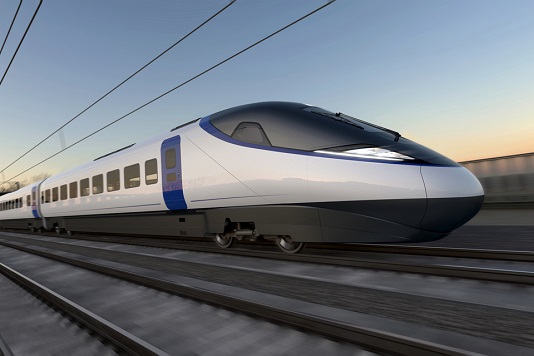
Many private sector projects go wrong too; but I suspect they can be quietly dropped sooner and with less fuss than government projects, where political embarrassment is always likely. (Cancelling HS2 is a partial exception, because probably a majority of the public think that was a sensible decision, merely delayed for far too long.)
In all six of the government projects in They Meant Well, many of the management failures (though by no means all) were really down to politicians: publishing misleading estimates; installing inadequate or over-complex organisations; appointing incompetent managers; insisting on excessive secrecy (a special weakness of British governments!); funking abandonment; or generally interfering in far too many details, which usually leads to extra costs and expensive construction delays.
Before politicians decide to embark on large quasi-commercial projects, they should provide convincing answers to two questions:
- Why won’t a private enterprise company undertake this project? (If it will, let it.)
- Why does government, in contrast, think the project worthwhile?
If private sector companies are unwilling to get involved, one obvious reason may be because they think the risks – on either the costs or the revenues (or both) are too high. Political pressures may push governments towards going ahead, even if they are aware of the likely financial outcome (which they may care about less than profit-seeking businesses.)
Flyvbjerg et al. conclude that even with “government projects”, a significant part of the capital required should be genuine risk capital, with private financiers bearing the consequences of a wrong decision to go ahead. That should help ensure a high degree of involvement by private lenders, which in turn should lead to more effective monitoring, better cost control and also better controls against construction delays.
D.R. Myddelton
Image: gov.uk
 Transport Watch
I understand that extra tunnelling is a contribution to the costs expanding, though cannot find what proportion of the London to Birmingham route will now be underground compared with initial plans. On another matter, took a bus from Gravesend to Dartford the other day, haven’t seen exclusive bus roads before, were they part of the Bluewater development?
Hi, Graham. Yes, you’re correct that extra tunnelling contributed to cost overruns on HS2. This was an attempt to reduce opposition along the route and placate angry local MPs. It would be a worthwhile analysis to work out exactly how much extra tunnelling is taking place compared with the original plans. I didn’t know about the bus roads near Bluewater. I will look into it.