Should HS2 be converted into a road?

Imagine the following nightmare scenario for HS2…
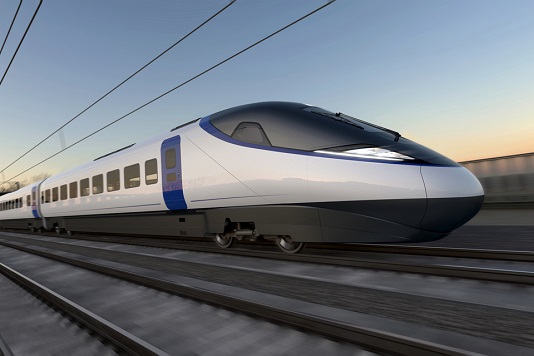
Phase One opens in 2033, around seven years later than originally planned, and tens of billions over budget.

To make matters worse, travel patterns have changed dramatically since High Speed 2 was first conceived. Routine business meetings now take place online, meaning demand for business travel has collapsed.

At the same time, a high proportion of professionals now work from home most of the week. They come into the office only occasionally and often avoid travelling during peak hours. The misery of long-distance rail commuting has largely been consigned to the past – at least for higher income groups.

HS2 still attracts a large number of passengers, though as with HS1, far fewer than forecast when the project was approved. The government has deliberately been slowing down services on the West Coast Main Line (WCML). As predicted, they have rigged the rail market to push more passengers onto the new route.

Competition is still a problem, however. Because few business travellers are using HS2, the vast majority of passengers are day-trippers, tourists, students and so on. They will switch to a slower journey on the WCML, the Chiltern Line, or even the coach if it saves them a few pounds. Inevitably this puts downward pressure on fares.

HS2 therefore faces financial disaster. Its construction was never going to be commercially viable, but it now requires heavy subsidies just to cover its operating costs.

And there are other clouds on the horizon. Driverless cars are finally being rolled out. While their top speed is lower, door-to-door journeys are often quicker than by HS2 – and far more convenient too, particularly for the elderly and those carrying luggage. The demand for rail is being further eroded.

HS2 has therefore become a major headache for ministers. They’ve already wasted tens of billions building the scheme and now it’s going to cost billions more to keep it running. In practice, this will mean cutting services on other parts of the network. After years of economic stagnation, the Treasury can no longer justify vast subsidies for the rail industry.

But there could be a solution.

Converting HS2 into a road has the potential to turn a heavily loss-making white elephant into a profitable business that could cover its operating costs and perhaps help to fill the financial black hole left by the project’s construction.

The government has claimed that up to 18 trains per hour, in each direction, could run along the southern section of HS2. Each train would carry up to 1,100 passengers. This amounts to roughly 20,000 passengers per hour. However, there is widespread scepticism that the planned frequency can be achieved in practice, particularly when many of the services are likely to experience delays on the legacy network before they join the new high-speed line.

Nevertheless, conversion into a road would massively increase potential capacity. Should the market demand it, the route could be managed to eliminate congestion and to maximise passenger numbers. Applying conservative assumptions, 600 coaches an hour, or one every six seconds, could carry 30,000 passengers an hour in each direction with 50 passengers per vehicle. (There are several real-world examples of busways achieving similar results). And obviously there would be relatively simple ways of increasing capacity further, for example by using driverless technology to reduce the gap between vehicles. A two-second gap – frequently observed already on motorways – equates to 1,800 vehicles per hour, or 90,000 passengers – around five times an optimistic figure for HS2.

As for journey times, it’s true that HS2 would reach a far higher top speed than the coaches. However, door-to-door journey times are what counts. The coaches would boast a far higher service frequency. Perhaps one would leave central Birmingham every minute. Better still, they could serve a much wider range of destinations, offering direct services into London and other places on or near the route from a large number of towns, villages and suburbs. Services could use the existing road network before joining and after leaving the former HS2. In this way, a far larger population could benefit directly from the new infrastructure.

Similarly, in London services could go to numerous destinations directly and wouldn’t have to terminate at Euston – perhaps continuing to the West End, City or Victoria Coach Station, for example. This in-built flexibility – which could also open up the route to shorter commuter journeys within the south-east – offers the potential of using the path of HS2 far more intensively than under existing plans.   

The shift in travel patterns detailed above suggests that an ultra-high-capacity route might not be needed. In this case, spare “slots” could be sold to cars and goods vehicles, raising additional revenue and taking pressure off the motorway network. A congestion-free road into central London could prove extremely valuable.

While it has not been possible to cover every aspect of railway conversion in this article (for more details and technical analysis, see the main Transport Watch website), the evidence suggests this option would provide higher capacity at significantly lower cost than HS2 – which would translate into lower fares and eliminate the need for operating subsidies. In addition, there would be major benefits from the greater flexibility to adapt to changing market conditions and new technologies. Finally, there could be significant environmental benefits, with lower top speeds translating into less noise and reduced energy consumption compared with HS2. (Given current policies, it is assumed that the road vehicles using the route would be electric by the mid-2030s).   

Going back to the situation in 2022, the best option remains cancellation of the entire High Speed 2 project. Even though billions have already been spent, the remaining budget would still deliver much higher returns if redeployed elsewhere (see the sunk-cost fallacy). Nevertheless, at some stage over the next few years Phase 1 of HS2 will hit the point of no return – not least due to the political embarrassment from abandoning it as it nears completion.    

When this happens, wouldn’t it make sense for ministers to reconsider the final trajectory of the scheme? Clearly it would be less costly to decide on the road option at a relatively early stage rather than installing a railway, and all its paraphernalia, only to rip it out a few years later.

Richard Wellings

Image: gov.uk

Une injection de tyrannie: des pass sanitaires aux cartes d’identité digitales?

L’imposition des pass sanitaires représente une extension majeure du pouvoir de l’Etat. Bien que présentés comme un outil de restoration des libertés de l’ère de la pré pandémie, en realité ils risquent de conduire à une extension des restrictions imposées à ceux qui refusent de se mettre au pas.  

Il y a aussi des indices qui suggèrent que les pass sanitaires sont en fait un des pans d’un plus vaste projet, dont l’objectif est d’introduire un système biometrique d’identité digitale. L’UE planifiait déjà les pass sanitaires en 2018, bien avant que quiconque ait entendu parler de Covid-19. Il y a aussi d’autres initiatives inquiétantes, telle que ID2020, qui ont le soutien d’influentes fondations qui bénéficient d’un accès privilégié aux gouvernments Occidentaux.

Le Royaume-Uni semble poursuivre un chemin similaire au plan domestique, en s’embarquant dans un programme d’identité digitale, qui met à mal les libertés individuelles de manière plus générale. Sous le gouvernement de Tony Blair, un projet dont le but était d’imposer des cartes d’identité avait été envisagé, et tout semble indiquer qu’au sein de l’Establishment, les initiatives high tech dérivées, aient la côte. 

Ce programme semble progresser rapidement dans les pays dits en voie de développement où des projets de carte d’identité digitale souvent financés par les fondations et gouvernements Occidentaux, sont pilotés, et consistent à contrôler l’accès aux services essentials et même à la nourriture. 

Dans un tel contexte, les pass sanitaires peuvent être vus comme un tremplin de lancement des cartes d’identité digitales, un moyen de conditionner le public à les présenter sur demande, et à les accepter. 

De telles cartes d’identité contiendront non seulement les historiques médicaux, les informations financières, biométriques, et toute autre donnée personnelle. Ces cartes d’identité représenteraient une atteinte au principe du respect de la vie privèe, mais elles pourraient devenir obligatoires pour exercer le droit de vote, accéder au marché de l’emploi, pour effectuer des transactions, et avoir accès aux services de santé etc.

Elles donneraient le pouvoir aux gouvernements d’exclure ceux qui refusent de participer au système, mais aussi ceux qui accepteraient d’utiliser ces cartes d’identité, mais dont les prises de position sur certaines questions épineuses, ne seraient pas du goût des élites. Les dissidents pourraient se retrouver à voir leur accès aux services de base bloqué, de manière à les punir et en même temps à les pousser en douceur à s’aligner. 

L’imposition des pass sanitaires serait moins inquiétante si elle avait lieu dans un contexte autre que celui actuel d’expansion rapide de l’Etat policier. Les intentions véritables des gouvernements sont d’autant plus suspectes du fait de la faiblesse des arguments avancés, liés à la santé publique, et qui ne tiennent pas debout. 

C’est un secret de polichinelle que le véritable motif derrière l’introduction des pass sanitaires est d’encourager les jeunes à se faire vacciner. Nous sommes face à une menace: si vous ne vous faites pas vacciner, vous aurez du mal à voyager, et vous ne pourrez pas fréquenter les bars et restaurants. 

Le problème avec cette approche, c’est que pour la majorité des jeunes, il n’y a aucune garantie que les avantages de la vaccination anti Covid-19 l’emportent sur les inconvénients. A l’heure actuelle, il n’y a aucune prise de recul qui permet d’identifier les effets de la vaccination sur le long terme, de ce fait, les décideurs politiques semblent avancer dans l’obscurité. Ce qui est moins clair, c’est jusqu’à quel point ces traitements sortis des sentiers battus empêchent la transmission du virus. Il y a aussi le risque que du fait d’avoir été vaccinées, certaines personnes relâcheront leur garde. 

Un scénario plausible est que les vaccins pourraient ne pas être aussi efficaces qu’on l’espère, notamment en ce qui concerne le fait de tomber malade ou de contaminer autrui. Il y a aussi le risque que les effets secondaires liés à la vaccination soient plus prononcés et plus fréquents que ce que les gouvernements et les médias admettent. En même temps, les vaccins et toute la désinformation risquent d’encourager ceux qui les reçoivent à se comporter comme s’ils ne peuvent pas attraper ou transmettre le Covid-19. De telles évolutions pourraient avoir un effet négatif sur les objectifs cités, et les pass sanitaires en seraient partiellement responsables. 

Finalement, toute évaluation des pass sanitaires devrait se pencher sur leur impact économique. On peut assumer qu’une partie de la population va refuser de se faire vacciner, peut-être parce qu’elle s’estime à faible risque d’attraper le Covid-19, ou d’en tomber sérieusement malade.

Disons que 10% des adultes font partie de ce groupe, en plus d’un pourcentage considérable d’enfants (ces chiffres pourraient être bien plus élevés dans certains pays). Une partie des commerces forcés d’exiger des pass sanitaires comme condition d’entrée pourraient en voir leur chiffre d’affaire réduit. Beaucoup de clients ne voudront pas subir les tracasseries qui consistent à se faire tester, si telle est l’alternative. De plus, la distribution des non vaccinés risque de ne pas être la même en fonction des zones géographiques, des groupes d’âge, des communautés, et de ce fait, certains commerces dans certaines zones geographiques sont plus à risque d’être affectés. 

Certains commerces pourraient par contre estimer que le jeu en vaut la chandelle, et estimer que cette option est préférable à un retour au confinement et autres restrictions. Et pourtant, présenter les pass sanitaires comme des alternatives au confinement et à la distanciation sociale s’appuie sur des postulats que l’on peut facilement remettre en question, notamment concernant l’impact des vaccins sur les infections, la transmission et les attitudes. De toute façon, au vu de la récente trajectoire autoritaire des gouvernements, il est très probable que cet hiver, ils décident d’imposer simultanément les pass sanitaires et les confinements draconiens. 

L’impact des pass sanitaires sur le marché de l’emploi risque d’être sérieux. Il semble que certaines personnes ne pourront plus travailler dans certains secteurs d’activité du fait de leur refus de se faire vacciner. Ils auront aussi beaucoup de mal à voyager à l’étranger. Certains patrons devront donc faire face à un vivier réduit de talents et d’expertise, ce qui pourrait conduire à des difficultés au niveau du recrutement et à des pénuries de personnel. Ça risque de devenir de plus en plus difficile de trouver le meilleur candidat pour un poste. 

Les opportunités pour les entrepreneurs et pour les échanges avec les partenaires  internationaux vont être réduites. Certaines personnes non vaccinées pourraient aussi décider de réduire leur activité économique, en réponse à ces nouvelles tracasseries et discriminations. Ce qui risque d’avoir un effet négatif sur la productivité, et de contribuer à réduire la croissance économique, et aussi à compresser les finances publiques dans le même temps. 

Pour conclure, il est difficile d’établir que les bénéfices des pass sanitaires l’emportent sur leurs inconvénients. En effet, si l’objectif des pass sanitaires est de protéger la santé, tout en réouvrant l’économie, dès lors, le raisonnement avancé pour leur mise en oeuvre semble biaisé. Il est difficile d’imaginer que les leaders politiques, ou du moins les conseillers et les fonctionnaires n’aient pas conscience des désavantages. Ceci renforce les soupçons qu’il y a autre chose qui se cache derrière les pass sanitaires. Se pourrait-il que leur introduction vise à conditionner le public à accepter l’utilisation de masse des cartes d’identité digitales, destructrices du principe de respect de la vie privée?

Richard Wellings

Translated by Jamila Nana

Image: Shutterstock

HS2 is not a cost-effective way of increasing rail capacity

The government’s policies to increase rail capacity are looking increasingly foolish when Covid-19 is already leading to long-term changes in travel habits.

Office workers may choose to waste less time commuting and work a day or two each week from home. Business people will increasingly use video conferencing software rather than wasting the whole day travelling down to London for a routine meeting.

At the same time, the government’s finances are likely to be strained over the next few years. Rather than wasting roughly £100 billion on High Speed 2, policymakers should consider more cost effective ways of addressing rail capacity issues. This would be a far less reckless approach to spending taxpayers’ money than a horrendously risky megaproject that is already massively overbudget.

Here is a list of alternative measures. A big advantage is that unlike HS2, they can be implemented incrementally, specific to locations where they are practical and cost-effective, offering far more flexibility in the context of huge uncertainty over future passenger numbers.    

  • Introduce more flexible pricing to flatten the peak. Passengers would have greater financial incentives to travel during the “shoulders” of the peak, or indeed off-peak, thereby making more efficient use of existing infrastructure and rolling stock.
  • Phase out government subsidies and price controls so that fare levels better reflect industry costs.
  • Convert first class carriages into standard class carriages to accommodate more passengers.
  • Introduce high-capacity “economy class” coaches with more standing room instead of seating, offering lower fare options. (This is only likely to be a practical option post-Covid).
  • Lengthen trains by adding more carriages and extending platforms. Double-length trains could even be used on busier sections and then split part-way through the journey.
  • Deploy improved signalling technology to reduce the necessary gap between trains.
  • Consider using double-decker trains where the engineering costs would not be prohibitive.
  • Address bottlenecks by re-engineering junctions: relatively expensive but still much cheaper than building brand-new infrastructure.
  • Divert freight onto quieter routes, enhancing loading gauges where necessary. For example, intermodal traffic from Felixstowe to the Midlands and North can be sent via the Ipswich-Nuneaton route rather than the southern West Coast Main Line.
  • Allow full vertical integration to end the artificial separation between track and train, and between different franchisees and open-access operators. This should improve the financial incentives to make more efficient use of spare capacity.
  • Finally, in some locations there may be a strong economic case for lifting the railway tracks and converting the route into a busway or road, the former typically providing higher capacity at much lower cost than rail transport.

Richard Wellings

Image: Shutterstock

HS2 and the “Great Reset”

High Speed 2 never made any economic sense. In commercial terms it was always going to make heavy losses. Ballooning budgets mean the costs are now likely to outweigh the benefits. And it’s crystal clear that alternative transport investments would deliver far higher returns.

So, why on earth is the project still going ahead?

One theory is that transport policy was captured by powerful special interests. Construction firms, train manufacturers and an army of consultants stand to cash-in from the scheme. They certainly haven’t been shy about lobbying MPs and ministers over the last few years.

Councils in the North and Midlands will use HS2 to grab yet more taxpayers’ cash to fund their pet “regeneration” projects around the new stations. No wonder they’re backing the line so strongly.

Then there are the senior bureaucrats. HS2 provides them with some of the best-paid jobs in government.

But there are compelling arguments against the special interests hypothesis. This is not to deny their influence on policy, but to question whether it is strong enough to be decisive.

Looking at political incentives, HS2 has been unpopular with the public, those against typically far outnumbering those in favour. The scheme has also been an endless source of embarrassment and bad publicity for successive governments, with numerous negative media stories on cost overruns, deception, incompetence, protests and the ill treatment of businesses and residents along the route.   

Having said this, the current government’s levelling-up agenda undoubtedly plays into the hands of the HS2 lobby. They could now argue that ministers were abandoning their pledges to boost the North should the line be cancelled or scaled back.

But earlier on, it would surely have made political sense to scrap HS2 and instead lavish the money on regeneration schemes in individual towns and cities across the region, including local transport upgrades. This would have been a quicker, more effective and less risky way of “buying” votes.

So, neither special interests nor political incentives seem to fully explain why HS2 is going ahead – which brings us to another possibility.

During the pandemic, awareness has grown about the so-called Great Reset agenda, often marketed by politicians as “Build Back Better”. This set of policies, promoted by transnational “elite” institutions such as the World Economic Forum and the European Commission, is being imposed across the Western bloc and its satellites.

At the heart of this shift is radical environmentalism – at least when taken at face value. In transport policy it translates into a ruthless war on drivers. This assault was ramped up in 2020 with the government paying councils to close large numbers of roads to through traffic and narrow main roads to install (often empty) cycle lanes.

Ministers also announced a ban on the sale of new petrol and diesel cars from 2030. The cost of electrification is likely to run into the high hundreds of billions, with motorists picking up much of the bill. The government is also considering introducing a national road pricing scheme, ostensibly to replace the vast revenues currently stolen from motorists via fuel duty.

It isn’t difficult to discern the direction of travel. Ordinary motorists will gradually be forced off the roads by a combination of regulation, tolls, taxes and closures. Driving (and also flying) will increasingly be the preserve of the rich.

So, how does this agenda relate to HS2?

At the moment a significant proportion of people travelling from the South East to the North or Midlands, or vice versa, choose to drive. Rail makes most sense for city centre to city centre journeys, particularly trips involving central London, which is car unfriendly to say the least. But if the journey starts and finishes in the suburbs, if other stops are planned en route, or if heavy luggage is carried, the car is often quicker and more convenient than the train.

However, if the Great Reset agenda is enforced, most people won’t have this choice in fifteen or twenty years’ time.

Imagine someone driving from Yorkshire to London in the not-so-distant future. He struggled to afford an expensive electric car and rapid charging socket, and is saving up for the eventual battery replacement.

He incurs heavy tolls as the government tracks his drive south. On entering London, the surveillance system levies an additional hefty “congestion charge” tax. He’s then delayed by 20 mph speed limits, cycle lanes, road humps and chicanes. The route he used to take is no longer possible due to road closures and he has to make a long detour.

On arriving at his destination he struggles to find a parking space. One side of the road has been turned into a cycle lane and the other is permits only. When he finally finds one, the charge is prohibitive. He decides that he won’t bother driving next time. He will use video conferencing or if absolutely necessary take the train.

So, the transport market is going to be so heavily rigged that most people will have little choice but to travel by rail if they make these kind of journeys – assuming they can afford it (these policies are likely to bring a major reduction in overall personal mobility, with negative knock-on effects on job opportunities, business costs, productivity and wages).

This authoritarian agenda may explain politicians’ attachment to HS2. Senior officials and ministers have been aware of and signed up to Great Reset-type policies for years. They knew a big crackdown on private motoring was coming and were just waiting for a pretext to impose it. In the meantime, the true scale of the shift and its implications would deliberately be hidden from the public.

HS2 will prove very useful to government ministers during the coming assault on private transport and mobility. They will deploy it to deceive the public that they are speeding up journeys and improving connectivity when for the vast majority of travellers the exact opposite is true.

It is no coincidence that the EU, together with the UK and US governments, are all now promoting uneconomic high-speed rail and very similar transport policies more generally. This is a top-down agenda, ordered by an unaccountable transnational “elite” and imposed by its lackeys in national governments. Both liberty and democracy are being crushed in the process.

Opposing this railway is therefore about far more than saving taxpayers’ money, protecting private property and halting environmental destruction. If HS2 is stopped, or even scaled back, our leaders will find it harder to undermine people’s freedom to travel.

Richard Wellings

Paul Withrington, R.I.P.

Paul Withrington was one of transport’s visionaries. His ideas promised a transformation in connectivity, with rapid, low-cost journeys right into the heart of the largest cities. The vast subsidies pumped into public transport would be consigned to history. And commuters could all be comfortably seated, ending the ordeal of standing cheek by jowl on railway carriages.

Paul’s key insight was that railway lines were often an inefficient use of transport corridors. Rail routes could typically carry far more passengers and freight if they were concreted over. The nature of their re-purposing would depend on the location and ideally a market discovery process. In the big cities, they might become high-capacity busways during peak hours. Shorter braking distances compared with heavy rail meant that a greater number of passengers could travel along a single track/lane.

A conservative estimate of 600 buses per hour, with 50 seated passengers on each, gives a throughput of 30,000 people – similar to high-capacity subway systems but at far lower cost. And relatively simple new technology could reduce the gaps between vehicles much further, indeed beyond plausible demand levels for any route in the UK. Importantly, Paul explained, the buses would be able to use the existing road network both before and after using the converted track-bed, eliminating much of the inconvenience and delay of having to travel significant distances to and from railway stations.

Several developing countries understood the benefits of achieving Tube-style capacity on the cheap. The busway networks of Bogota, Canton, Curitiba and Istanbul suggested the logic was sound, as did the Lincoln Tunnel’s Express Bus Lane in New York City. And these case studies did not enjoy the full benefits of redeploying rail paths that were fully separated from the existing road network.

In rural areas, smaller towns, and in big cities at off-peak times, buses might make far less sense due to insufficient passenger demand. The converted railways could then be used for conventional road traffic, but with the routes managed and indeed priced, Paul suggested, to prevent congestion. As well as much faster journeys, this promised to take heavy traffic away from overcrowded, stop-start residential roads and urban high streets, bringing major environmental benefits too.

Paul founded the think tank Transport Watch in 1994 in order to conduct, publish and publicise research into these ideas. The organisation expanded on the work of the Railway Conversion League. Drawing on his long career in engineering, transport planning and academia, Paul conducted rigorous statistical analyses on the comparative efficiency of rail and road.

His work attracted the attention of the Institute of Economic Affairs, which published Paul’s articles in the journal Economic Affairs, as well as on the IEA blog. With the support of Lord Vinson, the IEA later created a dedicated transport unit, and in 2015 we co-wrote a comprehensive report based on Paul’s ideas, Paving Over the Tracks: A Better Use of Britain’s Railways? It was a big success in terms of media coverage, with stories in the national newspapers and plenty of TV and radio interest. The editorial column of The Times praised the report for its innovative thinking. But it was ignored by the politicians. The hold of the rail lobby was too strong.

Paul also became a familiar face on the transport conference circuit. Despite his expertise, the organisers did not invite him to give presentations – after all, they depended on sponsorship by the rail industry. But he did get the opportunity to challenge ministers and officials during the Q&A sessions. He managed to bypass the gatekeepers again by publishing full-page adverts setting out the case for railway conversion in magazines such as the New Statesmen, Private Eye and The Week. He also found an outlet through his long and frequent letters to Local Transport Today, a rare example of a transport publication tolerant of open debate.

More recently, Paul focused on opposing High Speed 2, which he memorably described as “a fraud upon the nation”. In his transport planning days, part of his job was giving evidence at public enquiries into major road schemes. This mastery of detail was now deployed to analyse HS2. He contacted officials to try to get to the bottom of the project’s dubious cost-benefit analysis. But in the end, he had to back-engineer the calculations to uncover the assumptions behind them. It turned out that as HS2 costs ballooned, the government had adjusted upwards its forecasts of high-value business travel on the line, thus inflating the benefit-cost ratio. He shared his findings by submitting evidence to parliamentary inquiries, but their technical nature was not conducive to media interest.

Inevitably Paul’s research and campaigning activity attracted the ire of the rail lobby and its army of internet trolls. Rather than engaging with the arguments and debating them, they hurled abuse and tried to smear his character. But Paul shrugged off the nasty attacks with his characteristic good humour.

Transport policy headed in what Paul thought was the wrong direction from the mid-1990s onwards, with massive rail spending central to successive governments’ approach. Paul consoled himself with the knowledge that this policy would eventually collapse under the weight of its own contradictions – not just rail’s high cost base and inflexibility, but also its fundamental impracticality outside big cities and densely populated corridors. Despite ministers’ rhetoric, it was never likely to carry more than a small percentage of passenger and freight traffic, with attempts to expand beyond this facing a cliff of diminishing returns.

The railway’s finances were indeed already in trouble before Covid-19 hit. The big increases in Network Rail debt, which effectively hid the true level of subsidy, had begun to raise major concerns at the Treasury. Paul lived to see the shift to working from home and virtual business meetings – and its disproportionately negative effect on rail travel compared with road.

If these changes are permanent, even for quite a small fraction of the workforce, it could be catastrophic for the rail industry. A combination of high fixed costs and a significant fall in fare revenue could coincide with a government debt crisis in which subsidy increases face strong resistance. If railways become unaffordable, Paul’s ideas may finally get the attention they deserve.

Richard Wellings

This article was originally published on the Institute of Economic Affairs blog.