Individuals should be given the freedom to fulfil their potential, rather than being trapped by government policies in towns and cities that hold them back. Having vast numbers of workers in the wrong place weakens the economy by reducing productivity and wealth creation.
In a free society, successful cities and regions can rapidly expand in population, while failing locations can rapidly decline. This process of geographical change is critical for rapid economic growth and big increases in living standards.
Cities in the North of England expanded rapidly during the industrial revolution – and this was vital for their development.
However, the reasons northern cities were centres of wealth creation in the 18th and 19th centuries no longer apply. These days, their economies are largely dependent on government handouts in various forms.
Their predicament is amplified by their location – on the edge of a continent in rapid relative economic decline. High labour, energy and transport costs – and suffocating bureaucracy and red tape – also create a difficult environment for business to prosper.
However, the UK’s geographical disadvantages can be counteracted by exploiting the agglomeration benefits of a very large city. In other words, the “economies of scale” created by a huge conurbation can help to overcome the problems associated with a semi-peripheral location.
Mega cities promote clusters of expertise and innovation. A high degree of specialisation is possible, with a wide range of niche services. Deep and complex labour markets allow better matching of jobs to skills and talents, which in turn attracts the skilful and talented.
Specialist high-end services combined with high “human capital” attract entrepreneurs and investors from around the world. Providing certain conditions are met – i.e. reasonable tax rates, light-touch regulation and relative political stability – a very large city can create a virtuous economic circle, leading to high levels of productivity and high living standards.
London should therefore be allowed to grow as large as possible. With state-imposed constraints removed, it could conceivably become the largest city inside Europe.
The administrative area of Greater London currently has a population of around 9 million. The Greater London Built-Up Area, which constitutes the continuous, joined-up conurbation, has around 10 million people. And the wider “London Metropolitan Area” is estimated at approximately 15 million.
In the absence of state-imposed restrictions, these figures (for the sake of illustration) could perhaps grow to 12 million, 15 million and 22 million respectively. However, there should not be fixed population targets or timescales. The outcome should be the result of the voluntary choices made by individuals.
The main policy change required is liberalisation of the planning system and building regulations. Development should be allowed in London’s green belt. Property owners should also be allowed to “densify” existing neighbourhoods with the minimum of red tape – by building on gardens, adding floors, converting houses into flats, and so on. Under-used land such as parks, playing fields and warehouses could be developed too. A dramatic increase in supply would of course put powerful downward pressure on rents and house prices.
Inadequate transport infrastructure is no longer such a major constraint on the capital’s growth. The shift to working from home (often part-time) means London can accommodate a far bigger population without putting undue pressure on its public transport system (for example by spreading the peaks). And road capacity can quickly be increased by removing various anti-car measures imposed over the last few years (such as barely used cycle and bus lanes etc.).
Furthermore, where appropriate, the capacity of rail corridors could be increased enormously by converting them into busways, which allow higher passenger flows at far lower cost than railways (meaning reduced fares and commercially viable, subsidy-free services).
Water supplies are also frequently cited as a constraint. But a short Severn-Thames link and expanded reservoirs – perhaps combined with desalination plants if absolutely necessary – would resolve this issue.
Of course there should not be state-imposed constraints on the growth of northern cities either. But the chances of say Manchester evolving into a ten-million-plus mega city are slim. London has a first-mover advantage, inertia, a better location closer to Europe’s “core” and already possesses much of the required infrastructure.
The North of England’s economic problems are undeniable. There is relatively little wealth creation in its once-great cities. The entrepreneurial dynamos of the industrial revolution are now heavily dependent on government handouts, with public spending typically making up half or more of their ‘GDP’.
Even the bright spots of the northern economy are creatures of the state. The universities rely in large part on government-guaranteed loans and research grants. And the professional services sector concentrated in Leeds and Manchester is parasitic on costly regulations imposed on individuals and businesses. In reality it represents the destruction of wealth.
Unfortunately it’s difficult to be optimistic about the northern economy in the long term. High costs combined with room-for-improvement in human capital (skills etc.) mean that the region will continue to struggle.
A programme of radical spending cuts and deregulation could of course reduce the costs of doing business in the North – but the short-term effect on public services and local economies is unlikely to be politically palatable. The scale of deregulation required to make a significant impact is probably impossible while the UK remains signed up to red tape imposed by the EU and various other supranational bodies.
At the same time, long-term demographic trends are likely to exacerbate the region’s human capital problem, with increasing numbers of elderly and incapacitated, as well as young people typically ill-equipped to undertake high-skilled jobs. Those who think improved training and education can resolve the latter issue are surely deluded.
The tides of economic geography are also working against the North. The region finds itself on the periphery of a Western Europe sinking rapidly into stagnation and irrelevance as the global core shifts to the East. Indeed, even the region’s handouts may be at risk as the vast UK revenues based on Western geopolitical power and associated market-rigging eventually unravel.
In this context there is a ‘fiddling while Rome burns’ quality to the government’s levelling-up agenda, which in part reheats George Osborne’s plan to create a ‘Northern Powerhouse’ by speeding up rail journeys between the region’s major centres. This is not, however, to deny that transport investment has the potential to deliver significant economic benefits.
Reductions in transport costs lower the cost of exchange, which in turn boosts trade and brings higher productivity through specialisation, economies of scale and so on. They also enable the development of agglomerations, clusters of activity that may further increase productivity and output. For example, thicker labour markets may lead to the better matching of workers to jobs and increased firm density may lead to greater knowledge sharing and to increased specialisation in supply chains.
Thus, in theory, better transport links could improve the economic performance of the North by enabling its businesses to make better use of its human capital. There could also be significant benefits from creating a larger hub in say Manchester. Improving the connectivity of the airport, for example, could increase the number of flight destinations that are economically viable, raising the attractiveness of the city as a business location.
Improved transport infrastructure in the North won’t be enough to overcome the region’s long-term structural problems, and it can’t reverse the impact of global economic trends, but it does have the potential to improve economic performance and perhaps slow down the rate of relative decline. This conclusion, however, depends on the assumption that such infrastructure would deliver a substantial reduction in transport costs in the North, which is where proposals to ‘invest’ billions in rail improvements fall short.
Indeed, the plans are likely to be useless for the vast majority of transport users in the region, and worse still will impose large tax costs and deadweight losses on the wider economy.
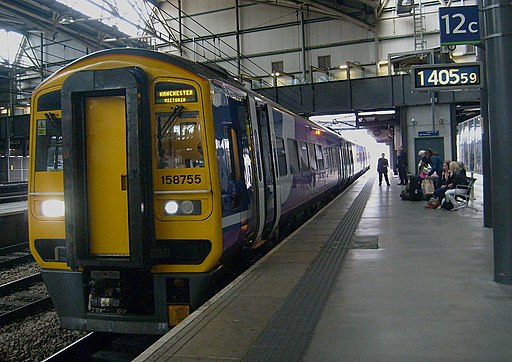
Consider plans for an enhanced rail link between Manchester and Leeds city centres – whether branded as part of HS3 or Northern Powerhouse Rail or a less ambitious improvement to the existing line. Imagine that journey times are cut from around 50 minutes to about half an hour.
Such an outcome is, however, unlikely to deliver significant results in terms of the thicker labour markets and other ‘agglomeration economies’ that are essential element to the aim of having these cities work as a single economic unit.
The main problem is the geography of northern conurbations. They are ‘multinucleated settlements’ comprising numerous smaller centres such as Stockport, Oldham, Salford, Rochdale etc. In addition, the region exhibits a high degree of suburbanisation and has experienced significant counterurbanisation.
Despite the huge government subsidies poured into inner-city regeneration programmes over the last thirty years, the vast majority of high-skilled workers reside in the outer suburbs or semi-rural villages. The gentrified inner-city districts so characteristic of London are largely absent.
The urban geography of the north suggests that a 30-minute city centre to city centre journey time would not deliver the single labour market so vital to the vision of the ‘Northern Powerhouse’. Typical door-to-door journeys would still be too time consuming and expensive for practical daily commuting. Indeed the seemingly quite large percentage reduction in travel times promised by rail improvements becomes relatively small when examined in these terms.
To give a practical example, take someone who lives in the wealthy suburbs of north Leeds and works in Manchester. The bus trip to Leeds station takes say 35 minutes in the morning peak, but in practice the commuter has to allow 50 minutes to give some leeway for transfers and the walking involved. The 30-minute ‘high-speed’ trip to Manchester takes the total up to 80 minutes, and then the worker faces say a 10-minute walk to his office – making a total of 90 minutes or a 3-hour round trip, about three times the average.
The situation is of course similar or worse for residents of many of the various ‘satellite’ towns and villages in the region. It should also be noted that employment hubs, such as the universities, main hospitals and Salford Quays are often a considerable distance from the city centre stations, increasing travel times further.
Such long journeys would be unacceptable and/or impractical for the vast majority of potential commuters, effectively adding 40 per cent or more to the length of the working week. Moreover, the cost – about £4,000 a year based on current fares and possibly much more if a ‘high speed’ premium were charged – makes this option prohibitive for many workers.
Urban planners might attempt to address at least the travel-time problem by encouraging more high-paid workers to live in city centres through adopting policies of restricting suburban development and driving it instead into high-density tower blocks close to rail hubs. At the same time, businesses could be forced or nudged to locate near the stations. This could perhaps get door-to-door round trips to just under 2 hours.
But even if Kowloon densities were achieved, say of 100,000 residents in the square mile around the main hub stations, this would still represent a tiny fraction of the total population of Yorkshire and Lancashire – and in reality not all of the residents would be trans-Pennine commuters. This hardly suggests a transformative effect on the regional economy. Such high-density environments also create numerous costs and problems, such as anti-social behaviour and congestion, the so-called diseconomies of agglomeration. Moreover, it’s difficult to see how they would appeal beyond quite limited niche groups.
It therefore seems likely that rail improvements will prove a costly failure in terms of uniting the labour markets of Leeds, Manchester and Sheffield. Worse still, the North will have to contribute a significant share of the tax bill and suffer a proportion of the resulting wider economic losses. Even if London and the South-East pay much of the cost, this will still have a negative knock-on effect on northern economies.
Rail schemes will also be largely useless in terms of freight transport in the north, further diminishing its potential to deliver many of the vaunted competition and specialisation benefits. This also applies to many businesses that rely on cars and vans to carry their equipment, such as construction firms. Faster rail links are only likely to benefit a small number of sectors, particularly professional services, which as mentioned earlier is typically parasitic on other businesses and typically contributes little to wealth creation.
Indeed the relatively short distances between the major northern cities and their dispersed, multi-nucleated nature makes rail freight impractical and uneconomic apart from a handful of niche markets. It’s far cheaper to load cargo on to lorries for fast, door-to-door convenience. Unsurprisingly, given this fundamental obstacle, there has recently been very little rail freight traffic on the trans-Pennine routes between Leeds, Manchester and Sheffield – with the exception of bulk limestone from the Peak District quarries.
Accordingly, if reducing freight costs were a major component of the government’s strategy, resources would be allocated to the road network rather than rail. While some vague plans have been mooted and incremental improvements announced, it’s clear that faster rail links are the main priority.
Such modal bias is particularly misguided because it would be possible to fund trans-Pennine road improvements – such as a fast Sheffield-Manchester link – with private investment at no cost to the taxpayer, with construction costs covered by future toll revenues. Yet our politicians seem to prefer uneconomic rail projects. Indeed they often go out of their way to obstruct non-state initiatives to improve infrastructure, by imposing strict planning restrictions, for example.
Something is clearly very rotten in the state of British transport policy. Time and time again, politicians are wasting taxpayers’ money on ill-conceived projects that fail to deliver their objectives. Transport investment should be about maximising economic returns by allocating scarce resources in the most cost-effective way, but instead it has become a PR-driven process of grabbing headlines, ‘buying’ votes and paying-off special interests.
Richard Wellings
An earlier version of this article was published on Richard Wellings’ blog.


 Transport Watch
