
Ministers have already wasted an astounding £30 billion on High Speed 2 – but it’s still worth scrapping this ill-conceived vanity project.
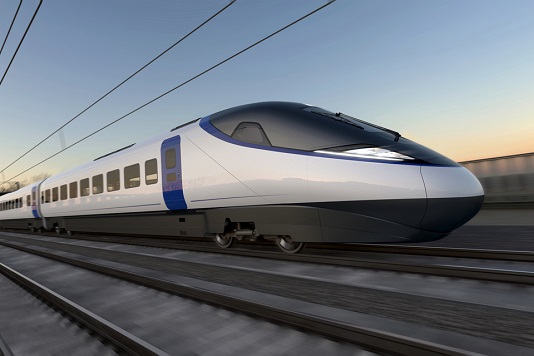
The government has fallen victim to the sunk-cost fallacy. It continues to throw good money after bad. The saying “When you’re in a hole, stop digging” is particularly apt.
Cancelling HS2 now would enable the remaining expenditure to be reallocated to higher-value uses, generating far greater returns than continuing to squander vast sums on this loss-making scheme.
Moreover, several billion have gone on purchasing property along the route. Much of this could be recouped – ideally with the victims of the land-grab getting first refusal on their former homes and business, wherever possible.
Scrapping HS2 would also have the benefit of scuppering local vanity projects linked to the scheme – whether loss-making tram links or “regeneration” projects to create state-funded Potemkin villages next to the stations.
On the downside, there would clearly be significant costs from cancelling contracts, laying off staff and so on. But these would be relatively small compared with the ballooning HS2 budget.
About £27 billion of the total spent so far has gone on Phase One, the section between London and Birmingham (recent government figures have been adjusted to 2023 prices).
The official target cost for Phase One is approximately £49 billion in 2023 prices. Since more than half of this has reportedly already been spent, it’s likely the final bill will be far, far higher.
An independent estimate from a credible source predicted Phase One would end up costing around £67 billion (adjusted to 2023 prices). This looks more plausible than the government’s figures – though the scope of the project has been and remains subject to change, making it problematic to compare like with like.
Much will depend on what happens at Euston. The last 4.5 miles of the line, tunnelled under Inner London, together with the expansion and remodelling of the station, could easily end up costing taxpayers around £10 billion – plus the potential for massive additional costs to improve local transport links to the terminus.
It’s possible ministers and officials will cook up some way of putting a big chunk of Euston’s costs off-balance-sheet in order to artificially reduce the bloating HS2 budget. But it’s also possible they will abandon this part of the project entirely and terminate trains at Old Oak Common permanently.
Uncertainty about the cost, completion date and scope of Phase One makes it difficult to estimate the costs and benefits. Worse still, there is already a substantial literature questioning the assumptions used to create the various iterations of HS2’s “business case”. For example, the shift to virtual meetings and working from home create a very big question mark over the number of high-value-of-time, high-fare-paying business travellers who will use the new line.
Official figures for HS2 Phase One suggest that the costs are roughly equal to the benefits. The benefits may be slightly higher than the costs if somewhat nebulous “wider economic benefits” are factored in (these are typically relatively small for long-distance routes). However, if realistic assumptions are used for the calculations, the costs are likely to far exceed the benefits (one important aspect of this is discussed below).
It will be interesting to see how escalating costs and other problems affect the government’s next “business case” for HS2 Phase One. Will the figures be manipulated to keep the benefits just above the costs – or will they finally throw in the towel?
Moreover, every pound taken via taxation (or borrowed by the government to be repaid through future taxes) costs the economy significantly more than a pound in total. Taxation and government borrowing impose additional economic damage beyond the direct cost – for example by making certain economic activities no longer worthwhile and incentivising the misallocation of resources. The same is true of printing money to fund schemes – effectively a hidden form of taxation.
In other words, taking these additional costs into account, the benefits of HS2 would have to be substantially higher than the direct costs for the project to be worthwhile (the ratio depends on the nature of the state funding).
In any case, there are plenty of transport schemes that are much better value for money than HS2. The benefits often outweigh the costs by a factor of three, four, five or even more.
Let’s assume, for the sake of argument, that Phase One costs an additional £40 billion from the present to completion (in 2023 prices). If the scheme were cancelled now and that £40 billion invested in much higher value transport projects, it’s plausible it could generate (for illustrative purposes and simplicity’s sake) say £100 billion in benefits. This would far exceed the purported benefits from Phase One (see here for some official estimates and further details of their methodology; note that the “cost” in such calculations is not the same as the project’s budget).
And unlike HS2, such an alternative could provide a strongly positive return even when the wider costs of taxation and/or government borrowing are factored in.
There’s a problem with this solution, however. Politicians and officials often disregard economic analysis when deciding which transport schemes get the go ahead. While HS2 is a particularly egregious example, given its mammoth scale, the rot has also spread to smaller rail projects, road schemes, cycle lanes and so on.
It’s not unusual for projects to get the go-ahead even though the costs outweigh the benefits – and this is based on the official analysis – often “cooked” to make the project look better than it really is in order to please political backers and other vested interests.
So, it’s possible the illustrative £40 billion saved by cancelling HS2 Phase One could end up being wasted on other uneconomic schemes – though it seems unlikely they would be worse than HS2.
Ministers could avoid this outcome by introducing a strict minimum benefit-to-cost ratio for transport projects. If proposals failed to reach this threshold – set quite high to take account of exaggerated benefits, unrealistic cost estimates and other manipulations – they would automatically be refused.
Unfortunately, politicians are typically content forcing taxpayers to fund uneconomic schemes in order to “buy votes” in target regions or curry favour with powerful special interests.
This depressing context makes another option more attractive. As in many Western nations, the UK’s public finances are in deep trouble, with borrowing at dangerously high levels – vulnerable to disaster in the event of a severe external shock. This makes cancelling HS2 to reduce government borrowing a particularly attractive option. It could form the centrepiece of a programme of radical spending cuts, which might also include scrapping other vanity projects.
Restoring confidence in the public finances would have huge economic benefits: encouraging investment, boosting productivity and raising the prospect of future tax cuts. Isn’t this a good reason for ministers to stop digging?
Richard Wellings
Image: gov.uk
 Transport Watch