Digital IDs and carbon rationing

Imagine having to get permission from the government to board a train, take the bus, or drive your car; being fined if you exceed your annual travel allowance; or getting banned from travelling beyond a few miles from your home.
This could be the totalitarian nightmare faced by Britons if the Starmer regime succeeds in imposing digital IDs.

A comprehensive spying system based on digital IDs, linked to payments, will be a vital component of the climate lockdowns agenda.

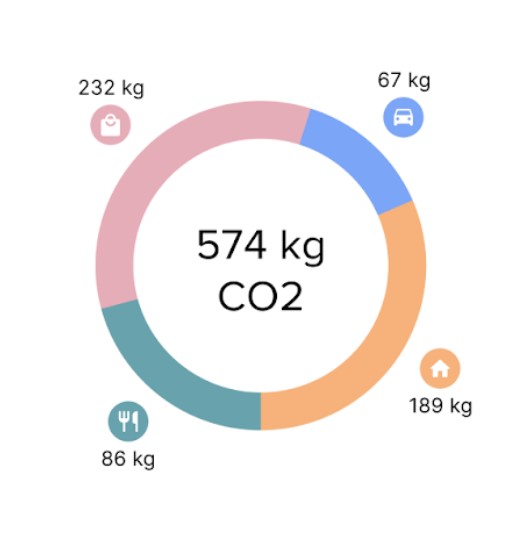
It facilitates the long-planned system of carbon rationing, which will most likely take the form of personal carbon allowances.

The “elite” have been developing plans for carbon rationing for decades.

Back in 2006, the then Environment Secretary floated the idea of carbon “credit cards” which would be issued as part of a nationwide carbon rationing scheme. Each individual would be issued an annual carbon allowance, with the card swiped when purchasing travel, energy, food and other goods.

Personal carbon allowances would be tradable, with those using less selling their surplus to those needing more. This appeals to socialists because it would redistribute resources from the middle classes to groups dependent on welfare handouts – the former driving cars, heating large houses and taking frequent holidays.

The Department of the Environment carried out a feasibility study on carbon rationing, which concluded there could be significant public opposition. Funnily enough, this took place at the same time the Blair government was considering imposing national ID cards. The European Union and various other governments have also been promoting carbon rationing and conducting trials.

As explained elsewhere, there are win-win strategies to address climate risks, whether natural or man-made, that do not require draconian mass surveillance and strict control over individual behaviour. But the “elite” appear determined to undermine freedom, perhaps as part of a wider agenda to crush dissent and place a greater share of economic resources under their own control.

Fortunately, there are several obstacles to carbon rationing. The first is the need to track and tally everyone’s trips and purchases. So, if people are paying anonymously for travel tickets using physical cash, this is a big problem for the bureaucrats.

It’s perhaps no coincidence the authorities are making it harder and harder to use cash, whether to board buses, buy train tickets, or pay for parking. Even pay-as-you-go travel cards don’t offer the required level of surveillance: different people can use the same one. But digital IDs, linked to payments and facial recognition, would enable it.

In the near future, buses and railway stations are likely to be equipped with digital ID readers and facial recognition cameras. You will be forced to scan your ID to travel on public transport, with every journey tracked and recorded.

The British government is currently funding a “digital ticketing” trial in the North of England. Participants no longer have to buy a ticket to travel by train. Instead, their location is tracked by their mobile phone and they are charged an appropriate fare. It’s easy to see how this technology could be modified with digital ID infrastructure to serve a system of carbon rationing.

Meanwhile, a network of cameras and satellite tracking will spy on every car journey. Car manufacturers may soon be forced to install digital ID readers, facial recognition and/or fingerprinting in vehicles so the authorities can identify the driver of a car at any given time, although this may not be necessary if digital IDs are linked to mobile devices that must be carried at all times.

A second obstacle is public opposition. We can expect climate change propaganda to be ramped up massively in the controlled media in order to manufacture consent for the draconian new system.

There will be much more coverage of natural disasters, which will be blamed on global warming. It’s even conceivable that crises will be deliberately created for this purpose. This needn’t be done directly by covertly starting forest fires or seeding clouds to cause torrential rain; it can be done indirectly by changing river management policies or neglecting the drains to make flooding more likely, or stopping the clearance of combustible undergrowth in forests and so on.

And to promote digital IDs, we can expect the establishment to further weaponise the public’s concerns about immigration. Many on the Right are likely to play the role of “useful idiots” in this regard, while others promoting this agenda will be controlled opposition or state assets.     

Finally, there are major practical problems with carbon rationing. Determining the optimum allowance is clearly impossible, given the insurmountable difficulties of calculating the costs and benefits of emissions.

Even working out the impact of any given activity is tricky. Should a rail journey include carbon released during the construction and maintenance of the infrastructure? And should the loading of vehicles be taken into account?

If a train is nearly empty then the emissions per person could be very high indeed. The same goes for buses. Yet running that service might be necessary for operational reasons, perhaps ready for a jam-packed service in the opposite direction.

There will be major issues dealing with consumption in shared households. It can’t be split both equally and fairly. What if one resident spends all day at home with the heating on, while another is at work most of the time?

In reality, carbon rationing will inevitably be based on a combination of politics and junk science, concocted by a coalition of puppet politicians and bought-and-paid-for scientists and economists.

The rations will be arbitrary and designed to advance various other “elite” agendas.

One of the goals will be the further destruction of the middle classes; another the “levelling down” of wealthy nations.

But what if public opposition and practical difficulties mean a system of carbon rationing can’t be implemented?

They will find other ways. Carbon rationing will be implemented by the back door.

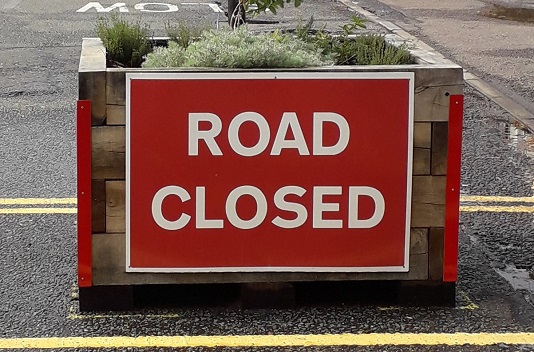
Car ownership will become more and more expensive. Drivers will face further delays as roads are closed or narrowed, additional traffic lights installed and congestion deliberately worsened. Punitive new road charging will be imposed, particularly in large conurbations. Residents will increasingly be trapped in their 15-minute cities.

Domestic energy bills will be hiked further and even more people will struggle to heat their homes.

Digital IDs will still play a critical role in this agenda by making it easier to crack down on opposition. They dramatically lower the cost of enforcing compliance.

Resisters will be easier to identify and target. They can automatically be stopped from travelling to protests and in due course from posting on social media. They can be denied access to employment or essential goods and services, even their own money.

If the government succeeds in imposing digital IDs, the future prospects for freedom are very bleak indeed.

Richard Wellings

Donate

Image: WEF

20mph limits are about climate lockdowns, not saving lives

The transnational “elite” want to impose climate lockdowns but realise they’ll be resisted by the public, so they’ve implemented a strategy of deception.

Rather than telling the truth about their plans to restrict people’s mobility and trap them in 15-minute cities, they’re sneaking in these policies by the back door.  

Bogus pretexts are deployed to gain wider support for measures creating the foundations for climate lockdowns.

They created an air pollution scare and spread disinformation about the impact of car fumes on health. This provided a pretext to impose “low emission zones” and force lower-income motorists off the roads.

It also allowed the authorities to install infrastructure that can be repurposed for the long-planned system of road charging, as well as conditioning the public to the idea of paying tolls to enter certain areas.

Another strategy was to manipulate local political systems in order to impose “low-traffic neighbourhoods”. Many of the big losers from such policies lived outside the boroughs concerned, so had little say in the matter. So-called consultations were often rigged or ignored.

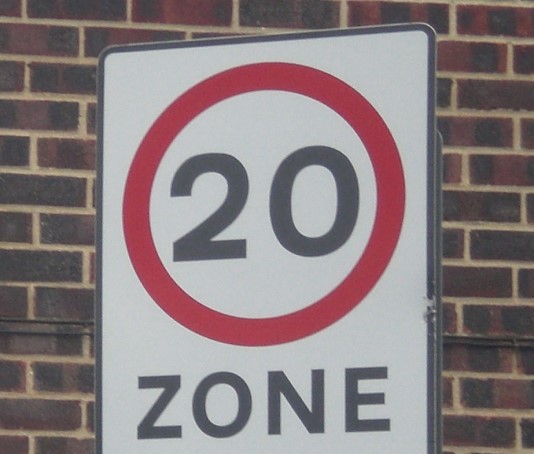
The focus of this article is a third ruse to advance the climate lockdowns agenda: the lowering of speed limits and the imposition of 20mph zones across the UK, 30km/h ones across Europe.

The authorities claim it’s about saving lives. Conveniently, this allows them to paint opponents of this policy in a very bad light, as not caring about victims of road accidents, including children.

But the perpetrators of 20mph zones are guilty of gross hypocrisy on this issue. Every second counts for victims of heart attacks and strokes. Yet the very same interests that promote 20mph policies have slowed down ambulances with a host of anti-car policies: cycle lanes or wider pavements that make roads too narrow to overtake the traffic; LTN road closures that force emergency vehicles to take a longer route; road humps and chicanes; cameras and fines that make drivers hesitant about getting out of the way at junctions; the proliferation of traffic lights that cause vehicles to bunch up; and so on.

Anti-car policies are counterproductive in other ways, too. They may encourage travellers to switch to more dangerous modes, such as riding motorbikes – a rational strategy to reduce the delays from artificially created congestion and lower the cost of the supertax imposed on fuel.

Moreover, investment in new roads historically played a major role in reducing casualty rates. The construction of motorways and dual carriageways took traffic away from relatively dangerous single carriageway rural roads. However, following the Conservative Party’s adoption of the radical green agenda, the roads programme largely ended in the mid-1990s.

Beyond the hypocrisy of their other policies, the 20mph brigade typically fail to acknowledge the economic trade-offs of lower speed limits. This is a classic example of focusing on the seen benefits while ignoring the unseen costs.

Lowering speed limits tends to reduce productivity. To take a simple example, a delivery driver might now be able to drop off nine items during his shift, rather than ten previously. Or consider labour mobility. A potential employee will be able to reach fewer job opportunities within a reasonable travel time. This makes it less likely he’ll get a job that matches his talents and also more likely he’ll stay unemployed. Then there are the lost economies of scale for businesses when they operate with smaller catchment areas, and so on.

Reduced productivity means fewer resources available for other goods, including healthcare, food, leisure activities and sanitation. In other words, 20mph zones have the potential to backfire, including in terms of saving lives, due to their negative impact on the economy.

The Welsh government’s own analysis of its 20mph policy estimated the costs of slower journey times at £6.35 billion over the 30-year appraisal period (2022 prices). This far exceeded the estimated road safety benefits of £1.39 billion.

Wales has a population of about three million. So, the cost of similar 20mph policies across the UK as a whole could well run into several billion pounds per year. And this is just one facet of the climate lockdowns agenda. Slower journeys and reduced mobility have major economic costs, as explained in detail in this article.

Even if we take the “saving lives” rationale at face value, it seems implausible that current 20mph policies are a cost-effective way of achieving that goal. It’s likely that spending a fraction of those billions removing obstacles to emergency ambulances would be a far more efficient use of resources. Another option would be enhanced road safety education; or maybe a programme of upgrading dangerous rural A-roads to dual carriageways.

In reality, however, the most cost-effective life-saving strategies probably lie outside the transport sector, in healthcare or foreign policy, for example. If saving lives were the real motive for 20mph then this “opportunity cost” issue would be subject to rigorous discussion and analysis. It speaks volumes that the authorities ignore 20mph’s cost-effectiveness compared with alternative allocations of resources.

Another giveaway is the tendency to impose extended 20mph zones rather than fine-tune the policy to location-specific trade-offs. While overall the costs of the Welsh policy were estimated to far exceed the benefits, the aggregate figures hide huge variation.

There will be some locations where the benefits of lower speed limits outweigh the costs – perhaps near schools at certain times of day or on busy shopping streets with lots of pedestrians. At the other extreme will be major through-roads, perhaps in low-density suburbs with few pedestrians or cyclists around. In the latter locations lower limits are delaying large numbers of drivers, imposing significant time losses for little gain.

It’s therefore relatively easy to work out where 20mph is likely to be a cost-effective way of saving lives and reducing injury, and where the costs of the policy are likely to far exceed the benefits. This could also be quantified, at least roughly, for each section of road under consideration. Instead many authorities have preferred to impose large 20mph zones, in some cases stretching across whole boroughs. This once again suggests other motives are the driving force behind the policy.

Finally, the authorities occasionally admit their 20mph policies are linked to a deeper agenda.

According to Glasgow’s City Convener for Climate and Transport

“A citywide 20mph speed limit will bring Glasgow in line with many other UK cities and help to create safer streets and communities for all of us, reducing the risk of accidents and the severity of injuries sustained.

“Reducing the impact of traffic on communities will also contribute to the wider shift needed towards more sustainable forms of transport, which is vital if we are to achieve our target of Glasgow becoming carbon neutral by 2030.” (emphasis added)

Similarly in a “statement of reasons” for its policy, Oxfordshire County Council writes, “…20mph speed restrictions are being used to help promote alternative modes of transport for local travel.”

And from Wales’s Deputy Minister for Climate Change: “Introducing lower speeds will support the Welsh Government’s vision for walking and cycling to be the natural mode of choice for short everyday journeys.”

In a subsequent Senedd debate on the 20mph policy, he was congratulated by a Labour MS colleague:

“… I’d like to congratulate the Minister on having the courage of his convictions and doing what needs to be done. We have a climate emergency and we need to reduce our speed limits and we need to ensure that we make that transition out of cars into active travel and ensure that we meet our 58 per cent reduction by 2030, which is not very far off.”

These perspectives echo the content of the 2020 Stockholm Declaration – backed by the United Nations, World Health Organization and European Commission – and explicitly referenced by the Welsh government.

This is a reminder that the 20mph agenda is actually being coordinated outside democracy at transnational “elite” level (hence near-identical policies being imposed across the West and its vassals).

The Declaration resolved, inter alia, to:

“Address the connections between road safety, mental and physical health, development, education, equity, gender equality, sustainable cities, environment and climate change, as well as the social determinants of safety and the interdependence between the different SDGs [Sustainable Development Goals], recalling that the SDGs and targets are integrated and indivisible…”

And noted that “efforts to reduce speed in general will have a beneficial impact on air quality and climate change…”

In practice, the transition will impose a big reduction in people’s mobility because “sustainable” modes generally offer far longer journey times and much reduced travel options compared with cars.

Richard Wellings

Image: Wikimedia Commons

Donate

What life will be like under climate lockdowns

They’re about to completely change our way of life – and most people don’t even realise.

Climate lockdowns are coming. This has already been decided outside democracy at a higher level.

And unless there’s a major change in current power structures, it’s happening whether the public like it or not.

While the term “climate lockdown” is useful shorthand, there are important differences from the lockdowns imposed during the Covid era.

Moving around won’t technically be banned; they’re just going to make it much more expensive, stressful and impractical.

Most importantly, the war on motorists will be ramped up massively – with new charges, red tape and restrictions. The kind of draconian measures seen in London will be rolled out to other cities, and then expanded to towns, perhaps even large villages.

There’s already a big campaign to condition the public to pay-per-mile road charging. This will most likely be added on top of road tax and fuel duty, plus ULEZ-style tolls for entering cities.

The system will be fiendishly complex by design. They want to make drivers fearful of huge fines if they stray into the wrong zone or make a minor mistake, to put them off travelling full stop.

Some councils are planning to force drivers to obtain permits to enter areas of cities or travel down certain routes. Personal carbon allowances are also being discussed (to be reduced in size over time).

There’ll be even more street closures, obstacles, traffic lights, and other reductions in road capacity – all intended to create artificial delays and “nudge” people out of their vehicles. The kind of measures imposed in so-called low traffic neighbourhoods will be scaled up.

Mass surveillance infrastructure is being installed to facilitate these controls. Alarmingly, this will allow the authorities to ban dissidents and non-compliers from travelling to certain locations.

During a future pandemic, they could use the system to stop unvaccinated individuals travelling outside their immediate locality.

As well as tracking and controlling the public, the main objective is a big reduction in car ownership, and for the remaining drivers to travel far less. The plan is for much of the population to be increasingly limited to 15-minute cities (more details here).

In practice this will mean less choice in employment, business, shopping and leisure activities. It will also breed social isolation by making it much harder to visit friends and relatives outside your own area. The impact on the elderly and infirm will be particularly serious. Denied the convenience of door-to-door car travel, more and more people will stay at home waiting for items to be delivered.

Holidays abroad will also become a thing of the past, at least for lower-to-middle income groups. Perhaps they’ll have to sell their carbon allowance to rich people as energy bills and other basic living costs continue to rise. In any case, new anti-tourist taxes and regulations will increasingly make overseas travel prohibitively expensive.

Anti-tourist protests are already being instigated and amplified in order to condition the public ready for the coming crackdown.

The aviation sector, while still a target, is likely to be treated with a relatively light touch however. This is because air travel is critical to many agendas of the transnational “elite”, such as deeper economic, social and political integration across borders.

Accordingly, the focus will be on anti-tourism measures imposed at local level, such as new taxes and restrictions on the supply of accommodation. Tourist-dependent regions will be sold these policies with promises of moving upmarket, as richer long-haul travellers are forced to holiday closer to home by inflated costs.

Finally, it’s worth discussing how governments are going to try to hoodwink the public that they’re not really undermining people’s mobility. They’ll claim it’s still easy to move around using “greener” alternatives, such as trains and buses. (The EU is even promoting the idea that time-consuming and expensive sleeper trains can replace flights).

In reality trains and buses are only practical and viable in areas and corridors with relatively high population densities. In many locations it’s impossible for them to replace a large percentage of car journeys.

Taking the train (or bus) involves at least three stages. You have to travel to the station to catch it, leaving enough time for unforeseen delays, then make the train journey itself. At the other end you have to get from the station to your final destination.

In rural and suburban areas it’s typically far quicker to drive directly to your endpoint. It often takes nearly as long to get to the nearest station as it does to complete the whole journey by car. Moreover, there are huge swathes of the country that can’t be reached by bus or train – at least not in a reasonable time.

So, forcing people to ditch their cars and rely on trains and buses instead is effectively the same as massively reducing their mobility.    

Richard Wellings

Donate