How to increase car ownership

Hatred of cars is often based on the idea that they create inequality. But this viewpoint is marked by a high degree of hypocrisy. The main reason low-income households struggle to afford a vehicle is precisely because anti-car policymakers have imposed huge additional costs on car ownership.

This is particularly reprehensible because increasing the population’s mobility would bring enormous economic benefits. Increased car ownership would improve access to job and business opportunities, enabling workers to find employment that better matches their skills and talents.

Leisure and housing options would be expanded by easy access to an increased number of locations. A greater choice of retail outlets would be available, enabling more households to exploit the economics of scale associated with large shops and bulk buying.

There would be social benefits too. For example, making it easier to visit and help out elderly and disabled family members.

Currently approximately 78% of households in England have access to a car or van, with 33% of households having access to two or more. The figures are broadly similar in other parts of the UK. But growth in car ownership levels has stagnated since the early 2000s, following rapid growth in previous decades.

Moreover, car ownership is much lower than average among households in the bottom two income deciles. Although there are several factors involved, this suggests the high cost of motoring is likely to play an important role.

The list below provides various policies that could be implemented to increase these figures and improve mobility. Many of these ideas are highly contentious and are included here in order to stimulate debate. A full discussion of each proposal is beyond the scope of this post. Their pros and cons will be analysed in more detail in a series of future articles.

  • Scrap fuel duty and road tax (VED).
  • Abolish compulsory vehicle insurance.
  • Remove trade barriers that deter the importation of low-cost cars from countries such as India and China. This should include non-tariff regulatory barriers.
  • Simplify the driving test and lower the cost of passing.
  • Withdraw “low-emission zones”, “congestion charges” and other local levies.
  • Discontinue the annual MOT test.
  • Abandon the forced shift to electric vehicles.
  • Deregulate taxis and other car-based businesses.

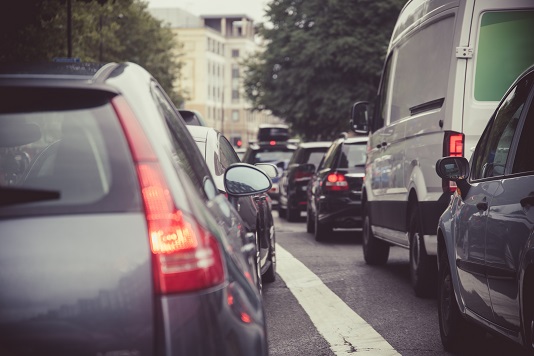
The main objections to higher car ownership are that it would worsen congestion, pollution and road safety.

It’s important to understand that an increase in ownership among lower-income groups wouldn’t lead to a proportionate increase in usage. The new motorists would tend to face greater financial constraints than the average driver. For purposes of illustration, an increase in ownership from say 78% of households to 88% might only increase traffic levels by say 5%.

However, many of the measures to remove barriers to car ownership among the poor would also benefit existing motorists, an effect which is likely to have a bigger impact.

Congestion could be mitigated by re-instating roads that have recently been closed as part of various anti-car schemes. Road narrowing measures could also be reversed, particularly at junctions; the number of traffic lights and other controls reduced; and efficient one-way systems restored in town centres.

Bus and cycle lanes are barely used on many routes and could be removed to increase capacity for cars, vans and lorries. In suitable locations, heavily loss-making railways could be taken out, with the paths redeployed as fast, congestion-free toll roads. And, why not rip up red tape and allow the private sector to provide new road capacity? The planning system can also be liberalised to allow low-density developments rather than stacking and packing vast numbers of people into already crowded inner cities.

The pollution problem is a bit of a red herring, as air quality has improved enormously over the last few decades, partly due to de-industrialisation, but also better vehicle technology. Any conceivable increase in car ownership would make little difference to this long-term trend. (And any purported effect on “climate change” would also be trivial).  

Reversing the artificial delays caused by anti-car policies would help mitigate the likely small impact on emissions from higher car ownership, as would the above suggestion of chanelling a high proportion of traffic onto congestion-free former railways and new private roads.

Finally, if the new car owners have shifted from riskier modes such as motorcycles, there could be safety benefits. It’s also possible that voluntary insurance cover would encourage a proportion of the new drivers to behave more responsibly, given the enhanced financial risks of accidents.

In a healthy, growing economy, with improving living standards, it should be natural for the population’s mobility to increase, which in turn delivers productivity improvements and creates further wealth. Yet politicians and officials seem hellbent on undermining the benefits of lower transport costs and improved access, despite their proven role as key drivers of economic progress.

While this article has set out ways of increasing the public’s mobility, in reality the reverse is happening. Punitive new charges are being imposed and costly red tape expanded. Levies such as low-emission zones specifically target poorer motorists.

The political elite must know all this will have a severely negative impact on the victims’ economic opportunities and also inflict wider social damage. Perhaps a failing economy and falling living standards are the true goals of their radical green agenda.

Richard Wellings

Image: Shutterstock
How to avoid paying the London ULEZ charge

A key part of the “climate change” agenda is the policy of driving ordinary people out of their cars and as a result making motoring the preserve of the wealthy and well-connected. One of its most enthusiastic promoters in the UK appears to be Transport for London.

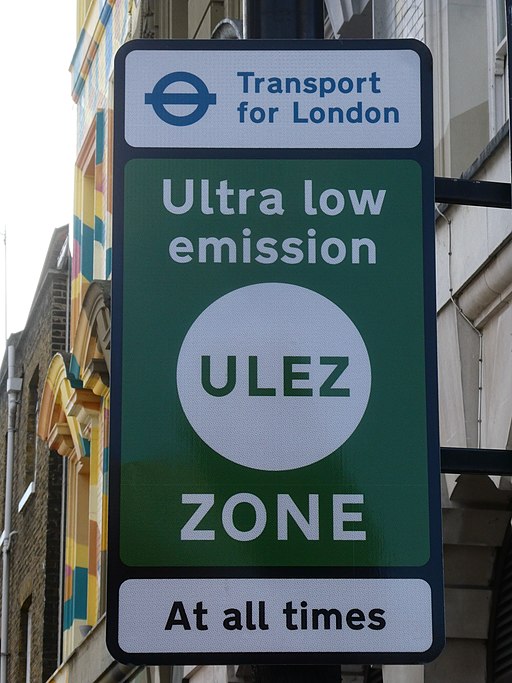
Across the capital, the space available for cars is being reduced, with numerous roads either closed or narrowed, often to make way for bus or cycle lanes that are barely used. Speed limits have also been lowered and the number of traffic controls expanded. Adding to motorists’ misery, a new £12.50 daily charge has been imposed on drivers of older vehicles inside an extended and extensive Ultra-Low Emissions Zone (ULEZ) bounded by the North and South Circular Roads.

The new charge is reprehensible in several ways. Firstly it targets older vehicles which tend to be driven by poorer motorists. In other words it could be perceived as a sly way of trying to force poorer motorists off the roads without stating this openly.

Secondly, it targets diesels in particular, even relatively new ones – this just a few years after motorists were encouraged to buy diesels by the government because they were told they were better for the environment. Diesel drivers have clearly been betrayed after following government advice and now face heavy losses, either through the ULEZ charge, depreciation or the costs of buying a different vehicle.

Finally, the charge is being imposed during a pandemic, a time when elderly and other vulnerable people are avoiding public transport due to the infection risks. This is also a bad time for drivers to be out and about looking for a newer car. Moreover, the policy adds insult to injury for those who need to drive as part of their job and now face a large extra bill at an already extremely difficult time.

It should also be noted that the pretext for the charge – reducing the harm to health from air pollution – doesn’t stand up to close scrutiny. The “evidence” behind this policy is highly questionable, with some commentators describing it as “junk science”. Moreover, the charge itself is unlikely to make much difference to levels of air pollution, yet alone to people’s health. And restricting people’s mobility is likely to be harmful in many ways – fewer outings and less exercise, for example – while the associated economic damage will tend to mean fewer resources are available for healthcare.

Indeed it’s possible that there is a hidden agenda behind this supposed health measure, namely putting in the infrastructure for more general and widespread road-user charging. This would be used to drive even more motorists off the roads, not just owners of older vehicles. It would be naive to expect TfL not to massively expand charging over time, especially given the longer-term anti-car agenda.

In this context, it is imperative that motorists resist this programme and do everything they can to starve TfL of revenue, thus limiting the resources it has available to impose yet more harmful policies.   

Owners of older vehicles who drive frequently and extensively within the ULEZ zone realistically have little choice except to buy another vehicle instead of paying the prohibitive charges. However, for more occasional motorists, there are several strategies that could mitigate the costs and perhaps tip the balance in favour of keeping an older car – particular if much of the mileage takes place outside inner London.

The first method is to cluster trips on a single day, only paying the charge once rather than several times had the trips been spread out over several days. This is not ideal and could take some organising – it will not be possible for everyone – but could be worthwhile financially for those with sufficient flexibility.

Another strategy is to cooperate with nearby friends or family to borrow each other’s cars, providing the drivers are insured and with due regard for infection risks among the vulnerable. So, for example, one friend would use the vehicle in the morning, another in the afternoon, and another in the evening. Using the same car would mean only paying the charge once instead of three times. Alternatively, a driver who owns an older diesel could borrow a friend’s newer petrol vehicle.

For drivers who live relatively near the ULEZ boundary, it may be feasible to park outside the zone and stay out of it for the vast majority of shopping, business and leisure trips.

Finally, Transport for London has been reluctant to disclose the location of its ULEZ enforcement cameras, despite several Freedom of Information requests. The zone covers a large area and coverage is unlikely to be comprehensive. Those of a suspicious nature might think this is the real reason why several London councils closed numerous minor through roads in the months leading up to the ULEZ extension.

Many people will understandably not want to break the law on principle, even if the ULEZ is unethical in many ways. Nevertheless, it seems likely that some shorter journeys may be possible without the charge being imposed – particularly if obvious pinch points like major junctions and main roads entering the zone are avoided.

One possible way to experiment with this is to join the ULEZ Auto Pay system and then keep a record of the routes taken each day, say by marking them on a map. It will soon become clear which journeys are possible without the charge being imposed.

Drivers may feel that there is little they can do to resist the global agenda to reduce their mobility by forcing them out of their cars. However, there are ways to limit the damage and also push back by defunding the organisations hellbent on transforming our way of life without our consent.

Richard Wellings

Image: Wikimedia Commons

The war on road traffic particulates is based on junk science

Forgive me for following up my letter. I do so because, in the same issue, we have (a) two experts disagreeing almost violently as to the efficacy of battery electric vehicles (“The route to zero emissions, or over-hyped”) and (b) under the headline, “No compelling evidence that brake and tyre dust harm health”, we have COMEAP declaring that there is “no compelling narrative of adverse health effect of exposure to non-exhaust particles from road traffic”.

Recapping, my previous letter: the “Great dirty diesel scare” was sparked by the COMEAP report of 2010. It claimed particulates were causing “29,000 premature deaths”. The same report says that the 75% plausibility limits range from one sixth to double the cited numbers. I pointed out that the finding was akin to a scientist stating that the average height of a man was six feet but with a plausibility range of one foot to 12 feet. Worse still the numbers depended on the disgraceful procedure of elicitation – asking experts, with no data, for their views as though there can be any “experts” with no data.

I go on to point out that the COMEAP report, “UK Plan for tackling roadside nitrogen dioxide concentrations”, of July 2017 has, under the heading “Estimating the mortality burden attributable to current concentrations of air pollutants”, the following admission: “Some Members do not think it appropriate to try to calculate an overall burden of the mortality associated with the air pollution mixture”. They were right, but overruled. 

In any event, the 2010 report contains a figure showing that particulates from local traffic are a minor contributor to the overall particulate burden. Worse still Engineering and Technology, March 2017 and the Air Quality Expert Group’s report, “Non-exhaust emissions from road traffic”, dated 2019 find that by as early as 2022 hardly any of the particulates from road traffic will be from exhausts! By that date it is unlikely that the battery electric vehicle will have made significant penetration. Hence the data represent a largely internal combustion engine powered fleet.

So, given the very wide plausibility limits cited by COMEAP, the technical disagreements, and the vanishingly small proportion of particulates which are from exhausts, the honest conclusion should be that there is insufficient evidence to justify any policy designed to reduce these, or any other particulates

We now have the amazing statement by COMEAP reported above, namely, “There is no evidence that non-exhaust particulates cause harm”. How on earth would they determine which particulates harmed health, I ask? I go on, if these non-exhaust particulates do not damage heath, and if particulates from exhausts are a vanishingly small proportion of the whole and if their impact on heath is entirely uncertain, why on earth are they destroying the diesel industry?

I conclude that COMEAP makes its claims in the knowledge that they play well with the often data free, anti-car and green lobbies which have such strong but misguided influence on policy.

Paul Withrington

A version of this letter was published in Local Transport Today on 16 October 2020.