
Why it’s still worth cancelling HS2

Ministers have already wasted an astounding £30 billion on High Speed 2 – but it’s still worth scrapping this ill-conceived vanity project.
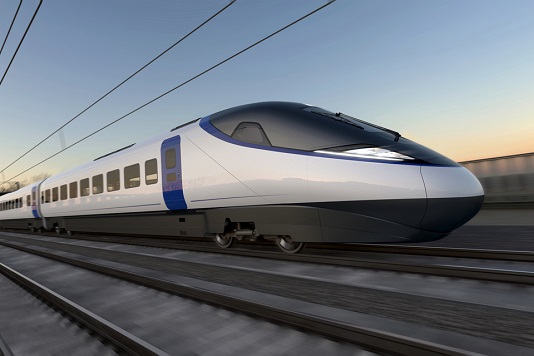
The government has fallen victim to the sunk-cost fallacy. It continues to throw good money after bad. The saying “When you’re in a hole, stop digging” is particularly apt.

Cancelling HS2 now would enable the remaining expenditure to be reallocated to higher-value uses, generating far greater returns than continuing to squander vast sums on this loss-making scheme.

Moreover, several billion have gone on purchasing property along the route. Much of this could be recouped – ideally with the victims of the land-grab getting first refusal on their former homes and business, wherever possible.

Scrapping HS2 would also have the benefit of scuppering local vanity projects linked to the scheme – whether loss-making tram links or “regeneration” projects to create state-funded Potemkin villages next to the stations.

On the downside, there would clearly be significant costs from cancelling contracts, laying off staff and so on. But these would be relatively small compared with the ballooning HS2 budget.     

About £27 billion of the total spent so far has gone on Phase One, the section between London and Birmingham (recent government figures have been adjusted to 2023 prices).

The official target cost for Phase One is approximately £49 billion in 2023 prices. Since more than half of this has reportedly already been spent, it’s likely the final bill will be far, far higher.

An independent estimate from a credible source predicted Phase One would end up costing around £67 billion (adjusted to 2023 prices). This looks more plausible than the government’s figures – though the scope of the project has been and remains subject to change, making it problematic to compare like with like.

Much will depend on what happens at Euston. The last 4.5 miles of the line, tunnelled under Inner London, together with the expansion and remodelling of the station, could easily end up costing taxpayers around £10 billion – plus the potential for massive additional costs to improve local transport links to the terminus.    

It’s possible ministers and officials will cook up some way of putting a big chunk of Euston’s costs off-balance-sheet in order to artificially reduce the bloating HS2 budget. But it’s also possible they will abandon this part of the project entirely and terminate trains at Old Oak Common permanently.

Uncertainty about the cost, completion date and scope of Phase One makes it difficult to estimate the costs and benefits. Worse still, there is already a substantial literature questioning the assumptions used to create the various iterations of HS2’s “business case”. For example, the shift to virtual meetings and working from home create a very big question mark over the number of high-value-of-time, high-fare-paying business travellers who will use the new line.

Official figures for HS2 Phase One suggest that the costs are roughly equal to the benefits. The benefits may be slightly higher than the costs if somewhat nebulous “wider economic benefits” are factored in (these are typically relatively small for long-distance routes). However, if realistic assumptions are used for the calculations, the costs are likely to far exceed the benefits (one important aspect of this is discussed below).

It will be interesting to see how escalating costs and other problems affect the government’s next “business case” for HS2 Phase One. Will the figures be manipulated to keep the benefits just above the costs – or will they finally throw in the towel?

Moreover, every pound taken via taxation (or borrowed by the government to be repaid through future taxes) costs the economy significantly more than a pound in total. Taxation and government borrowing impose additional economic damage beyond the direct cost – for example by making certain economic activities no longer worthwhile and incentivising the misallocation of resources. The same is true of printing money to fund schemes – effectively a hidden form of taxation.

In other words, taking these additional costs into account, the benefits of HS2 would have to be substantially higher than the direct costs for the project to be worthwhile (the ratio depends on the nature of the state funding).

In any case, there are plenty of transport schemes that are much better value for money than HS2. The benefits often outweigh the costs by a factor of three, four, five or even more.

Let’s assume, for the sake of argument, that Phase One costs an additional £40 billion from the present to completion (in 2023 prices). If the scheme were cancelled now and that £40 billion invested in much higher value transport projects, it’s plausible it could generate (for illustrative purposes and simplicity’s sake) say £100 billion in benefits. This would far exceed the purported benefits from Phase One (see here for some official estimates and further details of their methodology; note that the “cost” in such calculations is not the same as the project’s budget).

And unlike HS2, such an alternative could provide a strongly positive return even when the wider costs of taxation and/or government borrowing are factored in.

There’s a problem with this solution, however. Politicians and officials often disregard economic analysis when deciding which transport schemes get the go ahead. While HS2 is a particularly egregious example, given its mammoth scale, the rot has also spread to smaller rail projects, road schemes, cycle lanes and so on.

It’s not unusual for projects to get the go-ahead even though the costs outweigh the benefits – and this is based on the official analysis – often “cooked” to make the project look better than it really is in order to please political backers and other vested interests.

So, it’s possible the illustrative £40 billion saved by cancelling HS2 Phase One could end up being wasted on other uneconomic schemes – though it seems unlikely they would be worse than HS2.

Ministers could avoid this outcome by introducing a strict minimum benefit-to-cost ratio for transport projects. If proposals failed to reach this threshold – set quite high to take account of exaggerated benefits, unrealistic cost estimates and other manipulations – they would automatically be refused.

Unfortunately, politicians are typically content forcing taxpayers to fund uneconomic schemes in order to “buy votes” in target regions or curry favour with powerful special interests.

This depressing context makes another option more attractive. As in many Western nations, the UK’s public finances are in deep trouble, with borrowing at dangerously high levels – vulnerable to disaster in the event of a severe external shock. This makes cancelling HS2 to reduce government borrowing a particularly attractive option. It could form the centrepiece of a programme of radical spending cuts, which might also include scrapping other vanity projects.

Restoring confidence in the public finances would have huge economic benefits: encouraging investment, boosting productivity and raising the prospect of future tax cuts. Isn’t this a good reason for ministers to stop digging?   

Richard Wellings

Image: gov.uk
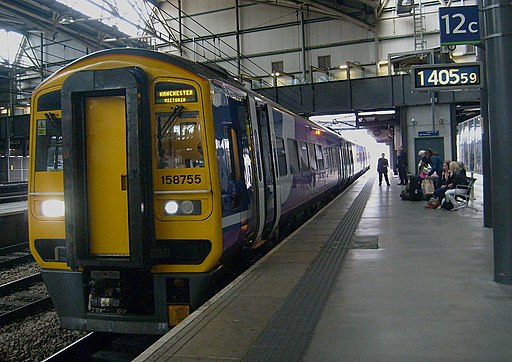
Wasting tens of billions on uneconomic rail schemes won’t level up the North

The North of England’s economic problems are undeniable. There is relatively little wealth creation in its once-great cities. The entrepreneurial dynamos of the industrial revolution are now heavily dependent on government handouts, with public spending typically making up half or more of their ‘GDP’.

Even the bright spots of the northern economy are creatures of the state. The universities rely in large part on government-guaranteed loans and research grants. And the professional services sector concentrated in Leeds and Manchester is parasitic on costly regulations imposed on individuals and businesses. In reality it represents the destruction of wealth.

Unfortunately it’s difficult to be optimistic about the northern economy in the long term. High costs combined with room-for-improvement in human capital (skills etc.) mean that the region will continue to struggle.

A programme of radical spending cuts and deregulation could of course reduce the costs of doing business in the North – but the short-term effect on public services and local economies is unlikely to be politically palatable. The scale of deregulation required to make a significant impact is probably impossible while the UK remains signed up to red tape imposed by the EU and various other supranational bodies.

At the same time, long-term demographic trends are likely to exacerbate the region’s human capital problem, with increasing numbers of elderly and incapacitated, as well as young people typically ill-equipped to undertake high-skilled jobs. Those who think improved training and education can resolve the latter issue are surely deluded.

The tides of economic geography are also working against the North. The region finds itself on the periphery of a Western Europe sinking rapidly into stagnation and irrelevance as the global core shifts to the East. Indeed, even the region’s handouts may be at risk as the vast UK revenues based on Western geopolitical power and associated market-rigging eventually unravel.

In this context there is a ‘fiddling while Rome burns’ quality to the government’s levelling-up agenda, which in part reheats George Osborne’s plan to create a ‘Northern Powerhouse’ by speeding up rail journeys between the region’s major centres. This is not, however, to deny that transport investment has the potential to deliver significant economic benefits.

Reductions in transport costs lower the cost of exchange, which in turn boosts trade and brings higher productivity through specialisation, economies of scale and so on. They also enable the development of agglomerations, clusters of activity that may further increase productivity and output. For example, thicker labour markets may lead to the better matching of workers to jobs and increased firm density may lead to greater knowledge sharing and to increased specialisation in supply chains.

Thus, in theory, better transport links could improve the economic performance of the North by enabling its businesses to make better use of its human capital. There could also be significant benefits from creating a larger hub in say Manchester. Improving the connectivity of the airport, for example, could increase the number of flight destinations that are economically viable, raising the attractiveness of the city as a business location.

Improved transport infrastructure in the North won’t be enough to overcome the region’s long-term structural problems, and it can’t reverse the impact of global economic trends, but it does have the potential to improve economic performance and perhaps slow down the rate of relative decline. This conclusion, however, depends on the assumption that such infrastructure would deliver a substantial reduction in transport costs in the North, which is where proposals to ‘invest’ billions in rail improvements fall short.

Indeed, the plans are likely to be useless for the vast majority of transport users in the region, and worse still will impose large tax costs and deadweight losses on the wider economy.

Consider plans for an enhanced rail link between Manchester and Leeds city centres – whether branded as part of HS3 or Northern Powerhouse Rail or a less ambitious improvement to the existing line. Imagine that journey times are cut from around 50 minutes to about half an hour.

Such an outcome is, however, unlikely to deliver significant results in terms of the thicker labour markets and other ‘agglomeration economies’ that are essential element to the aim of having these cities work as a single economic unit.

The main problem is the geography of northern conurbations. They are ‘multinucleated settlements’ comprising numerous smaller centres such as Stockport, Oldham, Salford, Rochdale etc. In addition, the region exhibits a high degree of suburbanisation and has experienced significant counterurbanisation.

Despite the huge government subsidies poured into inner-city regeneration programmes over the last thirty years, the vast majority of high-skilled workers reside in the outer suburbs or semi-rural villages. The gentrified inner-city districts so characteristic of London are largely absent.

The urban geography of the north suggests that a 30-minute city centre to city centre journey time would not deliver the single labour market so vital to the vision of the ‘Northern Powerhouse’. Typical door-to-door journeys would still be too time consuming and expensive for practical daily commuting. Indeed the seemingly quite large percentage reduction in travel times promised by rail improvements becomes relatively small when examined in these terms.

To give a practical example, take someone who lives in the wealthy suburbs of north Leeds and works in Manchester. The bus trip to Leeds station takes say 35 minutes in the morning peak, but in practice the commuter has to allow 50 minutes to give some leeway for transfers and the walking involved. The 30-minute ‘high-speed’ trip to Manchester takes the total up to 80 minutes, and then the worker faces say a 10-minute walk to his office – making a total of 90 minutes or a 3-hour round trip, about three times the average.

The situation is of course similar or worse for residents of many of the various ‘satellite’ towns and villages in the region. It should also be noted that employment hubs, such as the universities, main hospitals and Salford Quays are often a considerable distance from the city centre stations, increasing travel times further.

Such long journeys would be unacceptable and/or impractical for the vast majority of potential commuters, effectively adding 40 per cent or more to the length of the working week. Moreover, the cost – about £4,000 a year based on current fares and possibly much more if a ‘high speed’ premium were charged – makes this option prohibitive for many workers.

Urban planners might attempt to address at least the travel-time problem by encouraging more high-paid workers to live in city centres through adopting policies of restricting suburban development and driving it instead into high-density tower blocks close to rail hubs. At the same time, businesses could be forced or nudged to locate near the stations. This could perhaps get door-to-door round trips to just under 2 hours.

But even if Kowloon densities were achieved, say of 100,000 residents in the square mile around the main hub stations, this would still represent a tiny fraction of the total population of Yorkshire and Lancashire – and in reality not all of the residents would be trans-Pennine commuters. This hardly suggests a transformative effect on the regional economy. Such high-density environments also create numerous costs and problems, such as anti-social behaviour and congestion, the so-called diseconomies of agglomeration. Moreover, it’s difficult to see how they would appeal beyond quite limited niche groups.

It therefore seems likely that rail improvements will prove a costly failure in terms of uniting the labour markets of Leeds, Manchester and Sheffield. Worse still, the North will have to contribute a significant share of the tax bill and suffer a proportion of the resulting wider economic losses. Even if London and the South-East pay much of the cost, this will still have a negative knock-on effect on northern economies.

Rail schemes will also be largely useless in terms of freight transport in the north, further diminishing its potential to deliver many of the vaunted competition and specialisation benefits. This also applies to many businesses that rely on cars and vans to carry their equipment, such as construction firms. Faster rail links are only likely to benefit a small number of sectors, particularly professional services, which as mentioned earlier is typically parasitic on other businesses and typically contributes little to wealth creation.

Indeed the relatively short distances between the major northern cities and their dispersed, multi-nucleated nature makes rail freight impractical and uneconomic apart from a handful of niche markets. It’s far cheaper to load cargo on to lorries for fast, door-to-door convenience. Unsurprisingly, given this fundamental obstacle, there has recently been very little rail freight traffic on the trans-Pennine routes between Leeds, Manchester and Sheffield – with the exception of bulk limestone from the Peak District quarries.

Accordingly, if reducing freight costs were a major component of the government’s strategy, resources would be allocated to the road network rather than rail. While some vague plans have been mooted and incremental improvements announced, it’s clear that faster rail links are the main priority.

Such modal bias is particularly misguided because it would be possible to fund trans-Pennine road improvements – such as a fast Sheffield-Manchester link – with private investment at no cost to the taxpayer, with construction costs covered by future toll revenues. Yet our politicians seem to prefer uneconomic rail projects. Indeed they often go out of their way to obstruct non-state initiatives to improve infrastructure, by imposing strict planning restrictions, for example.

Something is clearly very rotten in the state of British transport policy. Time and time again, politicians are wasting taxpayers’ money on ill-conceived projects that fail to deliver their objectives. Transport investment should be about maximising economic returns by allocating scarce resources in the most cost-effective way, but instead it has become a PR-driven process of grabbing headlines, ‘buying’ votes and paying-off special interests.

Richard Wellings

An earlier version of this article was published on Richard Wellings’ blog.

Image: Wikimedia Commons

Paul Withrington, R.I.P.

Paul Withrington was one of transport’s visionaries. His ideas promised a transformation in connectivity, with rapid, low-cost journeys right into the heart of the largest cities. The vast subsidies pumped into public transport would be consigned to history. And commuters could all be comfortably seated, ending the ordeal of standing cheek by jowl on railway carriages.

Paul’s key insight was that railway lines were often an inefficient use of transport corridors. Rail routes could typically carry far more passengers and freight if they were concreted over. The nature of their re-purposing would depend on the location and ideally a market discovery process. In the big cities, they might become high-capacity busways during peak hours. Shorter braking distances compared with heavy rail meant that a greater number of passengers could travel along a single track/lane.

A conservative estimate of 600 buses per hour, with 50 seated passengers on each, gives a throughput of 30,000 people – similar to high-capacity subway systems but at far lower cost. And relatively simple new technology could reduce the gaps between vehicles much further, indeed beyond plausible demand levels for any route in the UK. Importantly, Paul explained, the buses would be able to use the existing road network both before and after using the converted track-bed, eliminating much of the inconvenience and delay of having to travel significant distances to and from railway stations.

Several developing countries understood the benefits of achieving Tube-style capacity on the cheap. The busway networks of Bogota, Canton, Curitiba and Istanbul suggested the logic was sound, as did the Lincoln Tunnel’s Express Bus Lane in New York City. And these case studies did not enjoy the full benefits of redeploying rail paths that were fully separated from the existing road network.

In rural areas, smaller towns, and in big cities at off-peak times, buses might make far less sense due to insufficient passenger demand. The converted railways could then be used for conventional road traffic, but with the routes managed and indeed priced, Paul suggested, to prevent congestion. As well as much faster journeys, this promised to take heavy traffic away from overcrowded, stop-start residential roads and urban high streets, bringing major environmental benefits too.

Paul founded the think tank Transport Watch in 1994 in order to conduct, publish and publicise research into these ideas. The organisation expanded on the work of the Railway Conversion League. Drawing on his long career in engineering, transport planning and academia, Paul conducted rigorous statistical analyses on the comparative efficiency of rail and road.

His work attracted the attention of the Institute of Economic Affairs, which published Paul’s articles in the journal Economic Affairs, as well as on the IEA blog. With the support of Lord Vinson, the IEA later created a dedicated transport unit, and in 2015 we co-wrote a comprehensive report based on Paul’s ideas, Paving Over the Tracks: A Better Use of Britain’s Railways? It was a big success in terms of media coverage, with stories in the national newspapers and plenty of TV and radio interest. The editorial column of The Times praised the report for its innovative thinking. But it was ignored by the politicians. The hold of the rail lobby was too strong.

Paul also became a familiar face on the transport conference circuit. Despite his expertise, the organisers did not invite him to give presentations – after all, they depended on sponsorship by the rail industry. But he did get the opportunity to challenge ministers and officials during the Q&A sessions. He managed to bypass the gatekeepers again by publishing full-page adverts setting out the case for railway conversion in magazines such as the New Statesmen, Private Eye and The Week. He also found an outlet through his long and frequent letters to Local Transport Today, a rare example of a transport publication tolerant of open debate.

More recently, Paul focused on opposing High Speed 2, which he memorably described as “a fraud upon the nation”. In his transport planning days, part of his job was giving evidence at public enquiries into major road schemes. This mastery of detail was now deployed to analyse HS2. He contacted officials to try to get to the bottom of the project’s dubious cost-benefit analysis. But in the end, he had to back-engineer the calculations to uncover the assumptions behind them. It turned out that as HS2 costs ballooned, the government had adjusted upwards its forecasts of high-value business travel on the line, thus inflating the benefit-cost ratio. He shared his findings by submitting evidence to parliamentary inquiries, but their technical nature was not conducive to media interest.

Inevitably Paul’s research and campaigning activity attracted the ire of the rail lobby and its army of internet trolls. Rather than engaging with the arguments and debating them, they hurled abuse and tried to smear his character. But Paul shrugged off the nasty attacks with his characteristic good humour.

Transport policy headed in what Paul thought was the wrong direction from the mid-1990s onwards, with massive rail spending central to successive governments’ approach. Paul consoled himself with the knowledge that this policy would eventually collapse under the weight of its own contradictions – not just rail’s high cost base and inflexibility, but also its fundamental impracticality outside big cities and densely populated corridors. Despite ministers’ rhetoric, it was never likely to carry more than a small percentage of passenger and freight traffic, with attempts to expand beyond this facing a cliff of diminishing returns.

The railway’s finances were indeed already in trouble before Covid-19 hit. The big increases in Network Rail debt, which effectively hid the true level of subsidy, had begun to raise major concerns at the Treasury. Paul lived to see the shift to working from home and virtual business meetings – and its disproportionately negative effect on rail travel compared with road.

If these changes are permanent, even for quite a small fraction of the workforce, it could be catastrophic for the rail industry. A combination of high fixed costs and a significant fall in fare revenue could coincide with a government debt crisis in which subsidy increases face strong resistance. If railways become unaffordable, Paul’s ideas may finally get the attention they deserve.

Richard Wellings

This article was originally published on the Institute of Economic Affairs blog.

Chiltern: Bicester to Oxford railway, a scandal or not?

This proposal was the subject of public inquiry. Part one of that was in 2010-11. We appeared for the objectors. This piece summarise the most important points to emerge. A version is on our web site along with some of the evidence presented.

The scheme

The scheme involves:

  • Adding a track to the single track railway between Oxford and Bicester, a distance of some 12 miles or 20 km.
  • A connection, the Bicester “chord”, between that line and the Bicester to London line.
  • A new station at Eaton Parkway immediately to the North of Oxford.

The cost was circa £185million at 2009 prices.

The purpose of was to attract passengers to London, currently using the Great Western Trains from Oxford to Paddington, to Chiltern’s proposed service via the new station and Bicester to Marylebone.

The main inquiry took place in 2010 and 2011. It dealt only with Phase 1, costing £122 million.

The business case

The business case is summarised by the following table, taken from Chiltern’s evidence CRCL/P/1/A.

Table 1: Chiltern Railways Commercial Business case

Total 2010-2021 £m

Farebox income 157.3
Network Rail facility charge – 116.5
Incremental maintenance & renewals costs – 26.3
Incremental train operating costs -7.6
Station operations, marketing, staffing costs -5.5
3rd party agreements -18.1
DfT payment for Phase 2A works 18.0
Total cash flow 1.1

We found that data improbable because:

  • Chiltern was making substantial losses. The annual accounts for 2010 show an operating profit of only £7.7m, amounting to 6% on turnover, and that grant in that year amounted to £4.7m and that, despite the grant, the operation made a loss as a whole of £4.4m. The firm’s net debts (creditors minus debtors) amounted to £66,000 in 2010.
  • The incremental maintenance and renewals assume no, or few, additional carriages and relates only to the 12 mile improvement. In fact additional carriages will be required, bringing wear and tear on the track all the way to London. Our evidence suggest that those costs should be £112m rather than the £26.3m in the tabulation.
  • The incremental train costs are far too low. In defence Chiltern said  “….There is actually little change in the numbers of trains we need to lease once Oxford opens because many of the trains already run between London and Bicester and we get a productivity improvement from the fact that on the main line trains run faster than they do today due to the works we have underway at present to improve the speed, so we can sustain a more frequent service overall with the same number of trains”. However, (a) without the Order Scheme’s services Chiltern would be able to reduce its fleet. Hence the trains required by the Order Scheme should be assigned to it. Our competing calculation, based on passenger flows, showed that the additional cost may be £34m over 9 years rather than the £7.6m cited.

We concluded that the notion that this proposal is self funding is a fiction. In general terms there really is no reason why the services can be any more profitable or loss making than is Network Rail as whole. We demonstrated that Chiltern, together with its track costs, costs the tax payer circa 6 pence per passenger-km, a number which was very equivalent to Network Rail’s average.

The economic case

Chiltern’s summary Table 4.1 of their evidence CRCL/ P/5A provides as follows:

  £m 2002 prices
User Benefits  £222.3
Non-User Benefits  
    Congestion 116.3
    Accident 9.2
    Local Air Quality 0.6
    Noise 0.7
    Greenhouse Gases 0.5
Total 127.2
Revenue 88.5
Operating Costs -44.1
Total 393.9
PV Costs   
Capital cost -81.6
Indirect Tax -22.8
Total -104.4
NPV 289.5
Benefit : Cost Ratio 3.8:1
Chiltern’s rebuttal, CRCL//R/0GJ319 and our response, OBJ /319/3, show that the user benefits were derived solely from reduced driving times to the railway stations.  Further and, astonishingly those saving had been multiplied by factor of four in the estimate of benefits.

The multiplier was said to follow from advice in the Passenger Demand Forecasts Handbook, the PDFA, produced by the Association of Train Operating Companies, ATOC.  That manual is privileged and was not released at the inquiry. Consequently the rationale for the weighing of four is hidden from us. However, if we add to a 20 minute drive time (a) 10 minutes for congestion or uncertainty and (b) ten minutes for parking and walking to the station platform and (c) if those are weighted, as suggested by the DfT, by factors of two and 2.5 respectively then the multiplier on the drive time exceeds three. To that must be added vehicle operating costs providing a value approaching four. However, the walk and, in this case, congestion times are independent of the drive time. Consequently rather than the model being multiplacatory it is additative. Hence, the multiplier of four on drive time savings is likely to be too high by a factor of at least three. That would reduce the £222 million user benefits in the table to £74 million.

Furthermore the non-user congestion savings depended on multiplying the vehicle-km removed from the network by standard values. However, in this case congestion occurs at two or three roundabouts, and would not be much influenced by the scheme. For those reasons the £116.3 million in the table may be overestimated, perhaps by a factor of four.

Taken together the forgoing would reduce the Net Present Value, the NPV, to £53 million.

Lastly, the accepted procedure adopted in these analyses is to subtract fares revenue from costs, the £81.6m in the table. However, that is plainly wrong. The payment is a transfer, generating no resources of itself, see topic 24 http://www.transport-watch.co.uk/topic-24-nata-refresh-and-burger-bar

Staff and rolling stock.

As an aside we found that Chiltern had circa 190 vehicles (traction units plus carriages) and 740 employees in 2010. Hence there were nearly four staff per carriage, excluding those employed by Network Rail to maintain the track

Conclusion

We conclude that both the business case and the economic analysis for this scheme could be considered frauds upon the public and politicians alike. Nevertheless the Inspector found in favour of Chiltern and upwards of one quarter of a billion pounds will be wasted.

The whole will of course encourage the “East West Rail” proposal, connecting Oxford to Cambridge and promoted by the railway lobby. The cost of that will be huge and the product entirely trivial.

Nonsense from London Connections

London Connections has posted an article full of misinformation. For example it cites the Railway Conversion League and claims a mistake made was that railways are too narrow for roads. See http://www.londonreconnections.com/2014/near-terminal-case-saving-marylebone-rail-road-conversion/

Our caption picture denies that. It is ten metres between the staunchions. We go on to point out that the clear width between tunnel or viaduct walls on the railways is typically 24 feet, the same as required for the carriageway of trunk road void of marginal strips. Beyond the tunnels and viaducts widths would allow narrow marginal strips so providing roads far better aligned than most A-roads and of similar width to most.

It is pure nonsense to say these rights of way cannot be converted to very good roads indeed.

Beleben also has a piece reporting on the London Connections post.  We have responded as follows:

Transport-Watch continues the work or the Railway Conversion League, founded after the seminal paper by Brigadier Lloyd, with the title ‘The Potentialities of the British Railways System as a Reserved Roadway System”, read to the Institution of Civil Engineers on 26th April 1955. That paper and a selection of the League’s archival material is available here: http://www.transport-watch.co.uk/topic-7-archive-railway-conversion-league-1958-1994

One quote from the past available from Item 6 of the Archive reads:

“………. when trains are still the theme of nursery rhymes and children’s stories, it is small wonder that the railways have a romantic fascination for most adults. Only years of nursery conditioning can explain the calm with which the public has accepted a bill of £3,000 millions (£33bn at 2007 prices) to subsidise British Rail over the last decade.

Why should we go on pouring money into the railways? If British Rail were Concorde or Maplin this endless drain on public funds would be regarded as a national scandal. Think, we would be constantly told, how many schools, hospitals, council houses could be built with all that money. When the railways were built in the nineteenth century they evoked the same squeals of anguish from Wordsworth and other Victorian environmentalists as new roads do today.

The people who use BR’s passenger services are mainly the better-off. The poor suffer from the diversion of resources out of improving roads and bus services, into keeping up the railways. It is the suburban owner-occupier who supports BR’s commuter services. It is the businessman who uses Inter-City: the poor go by car. If the resources had been pumped into bus transport that have been lavished on the railways, we would no doubt now have a flexible system of rural transport based on post-buses, instead of a sporadic system of branch line services. We would no doubt have a fast and comfortable express inter-city bus service, on the lines of Trailways and Greyhound in the United States. We might even have taken note of the series of studies which suggested that for town commuting, buses are faster, cheaper, less polluting and use less fuel than trains.”

The author was Frances Cairncross writing on 29th April 1974. She was then the Economics Correspondent for The Guardian. Now she is CBE and the Chairs the Executive Committee of the Institute of Fiscal Studies among other.

There can be few greater scandals than the railways. The network absorbs billions of pounds of taxpayer’s cash every year whilst carrying only 3% of the nation’s journeys on a system which, if converted to roads, would provide seats for all London’s crushed railway commuters in express coaches occupying one seventh of the capacity available at a fraction the cost of the train. 

For the arithmetic, a map and pictures see: http://www.transport-watch.co.uk/topic-15-london-waste-battersea-and-north-marylebone.  For comparisons see: http://www.transport-watch.co.uk/topic-2-road-rail-comparisons-summary-findings and the associated links

Consider Bombardiers evidence to the Transport Committee’s Inquiry into the Future of the Railway, seventh report of session 2003-4. In Volume 2 at Ev 479 we find this train manufacturers saying, “To give a few figures – to carry 50,000 people per hour in one direction we would need a road 175 m wide used by cars, or a 35 m road used by buses or a 9m wide track bed for a metro or a commuter railway. In contrast to that we have the New York Express coach lane, 4 miles long including 1.5 miles in tunnel, a lane which is a mere 11 feet wide, offering 30,000 seats in the peak hour in close to 700 45-seat coaches.  Moreover, as long ago as the 1970s Don Morin, Chief of Public Transport in the USA said that there was no movement corridor in the world which could not be satisfied by one express coach lane. To illustrate, 1,000 coaches per hour travelling at 100 kph would have average headways of 100 metres. If those coaches each had 75 seats they would offer 75,000 per hour. In comparison, at Waterloo main line we have less than 50,000 crushed passengers in the peak hour travelling in trains requiring four inbound tracks. Express coaches to satisfy that would occupy less than one-quarter of the space there available.

Here I cite Stewart Joy, Chief Economist to British Railways in the late 1960s, or early 1970s.  He wrote in his book ‘The Train that Ran Away’ that “… there were those in the British Transport Commission and the Railways who were cynically prepared to accept the rewards of high office in return for the unpalatable task of tricking the Government on a mammoth scale.  Those men”, Joy wrote, “were either fools or knaves”.

Now, some 40 years later, we have the same – at immense cost to the nation, and particularly to London commuters, let alone HS2.

Peter Hall was once a supporter of the Conversion Campaign, see the Hall Smith Report at items 13 and 14 here: http://www.transport-watch.co.uk/topic-7-archive-railway-conversion-league-1958-1994.  However, the professor claims to have had a Damascene moment and now supports rail.

Paul Withrington

Dawlish – rail life line to the South West

The headline “Storm forces closure of the West’s lifeline” in The Times of 6th Feb 2014, is somewhat overdone. Here is the reality:

Penzance to Paddington provides one train an hour (11 all day). The journey takes five and a half hours. The open return costs over £120. The typical passenger load on South Western Trains is a 140 people [1].

Torquay to Exeter (through Dawlish) offers three trains per hour. However, a recent picture on TV showed a train with only two carriages on the affected stretch.

Instead of this railway being a “lifeline” it is instead an extraordinarily expensive, fully working, modernised, transport museum.

Further, it is amusing to note that the money now earmarked for the flood defences in the area, amounts to perhaps £130 million or nearly 400 times less than the £50bn required for HS2, a scheme which, far from being transformational, will increase the nation’s passenger journeys by a vanishingly small 0.05%[2].

The flood defences may very well be very much more transformational than that.

Paul Withrington

Footnotes

1] ORR Data shows  First Great Western averages 140 passengers per train

[2] HS2 is now said to generates some 76,000 passengers per day, (FoI request),  corresponding to roughly 22.8 million per year.  It is only those which can be “transformational”, since all the rest exist already.   In contrast there are currently 1.5 billion passenger journeys per year by surface rail, and 43.5bn passenger journeys by all modes.  Hence, HS2’s supposed generated traffic amounts to 1.5% of all surface rail journeys and to 0.05%, or one in 2,000, of all passenger journeys. Transformational? HA, HA.