Unknown's avatar

About Transport Watch

Research organisation advocating a rational approach to transport policy. Dedicated to the numbers rather than the myths regarding rail and road.

On the road, no-one can hear you scream!

Why stop at a red light? Once you’ve seen one, you’ve seen them all. But seriously, why stop when you can see the junction is deserted and it’s safe to go?
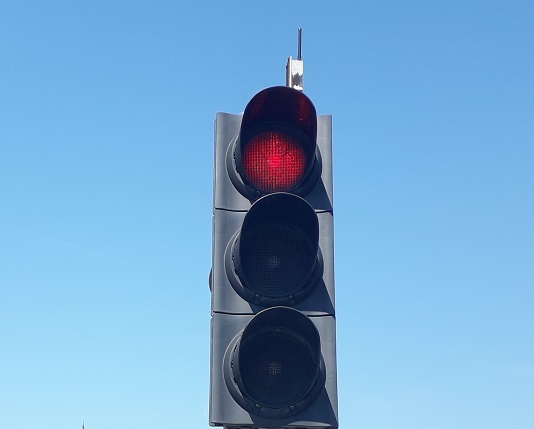
I saw the light about traffic lights in Cambridge in 2000. A junction normally choked with queueing traffic, that took three entire signal changes to cross, was deserted. Is there a bank holiday no-one has told me about, I wondered as I breezed through. Then I realised the lights were out of action, and it hit me – traffic lights are an unnecessary evil! We’re better off left to our own devices! Eureka!

In an early video I made on the subject, when lights were out at Charlotte St/Goodge Street, I asked a cab driver what he made of it. “You’ve just got to be a bit more careful on the junction,” he said, “that’s all”. That is all. How ironic that when lights are out, we are urged to exercise caution, implying that as soon as they are “working” again, we may revert to norms of neglect.

“Traffic light removal only works in low traffic volumes,” said government road safety adviser, Robert Gifford, in my 2008 Newsnight report. But I’ve witnessed the same thing during power cuts across London. Never was it more agreeable to cycle down Shaftesbury Avenue and round Piccadilly. Taxi-drivers smiled and waved you on. Free from artificial barriers to natural flow, the familiar congestion vanished into thin air. I emailed TfL Vice Chair, Dave Wetzel. His officers said they had told the Police to erect barriers to stop traffic from entering the affected areas. I emailed a Chief Inspector contact at the Met. He replied, “No such action was taken”. 

Traffic officers like us to think we need their interventions to keep traffic moving and keep us safe. Nothing could be further from the truth. Westminster City Council’s safety audit reveals that 44% – nearly half – of all personal injury “accidents” occur at traffic lights. I put accidents in inverted commas because most accidents are not accidents. Nor, as the authorities would have us believe, are they mostly due to human error. They are events contrived by the dysfunctional rules of the road.

The flaw at the heart of the system is the traffic engineering concept of priority – priority for main roads, or traffic from the right. It abandons common law principles of equal rights and responsibilities, and imposes anti-social rights-of-way. It tells main road traffic to plough on, regardless who was there first. It produces conflicting speeds and puts side road traffic and pedestrians at a dangerous disadvantage. It promotes aggression. “Get out of my way!” yells priority, as it denies infinite filtering opportunities and expressions of fellow feeling. And it produces a “need” for regulation and signage that cost the earth, in both senses. How many of the other 56% of “accidents” in the WCC audit are due to priority? Compiled in the context of priority, the stats don’t tell us. Why do we “need” traffic lights, those weapons of mass distraction, danger and delay? To break the priority streams of traffic so others can enter or cross. Traffic lights make us stop to avoid the inconvenience of slowing down. Genius!

From a video shot 20 years ago, I’m still haunted by the image of a mother and toddler waiting to cross the Euston Road. Eventually the lights changed. They set off, only to be caught in the “pen” (yes – traffic engineers treat us like sheep) in the middle of the six-lane highway, where they had to wait again for the other lot of lights to change. Meanwhile, the toddler in his buggy is at the ideal level to inhale the toxic fumes that damage health and development. These abuses are repeated daily throughout the land, promoted by the law of the land in the guise of the rules of the road. In the domestic sphere, coercive control is illegal. On the roads, it’s rampant.

The simple solution to our road safety and road rage problems, and many of our congestion and air quality problems, is to replace priority with equality. Then, whoever arrives first, on foot or on wheels, goes first, more or less, as in other walks of life. My interest in avoiding collision with you mirrors your interest in avoiding collision with me. Instinctively we approach carefully and merge at low speeds. It’s the peaceful anarchy that breaks out whenever traffic lights break down: anarchy in the original sense of self-government.

In the absence of a bridge or flyover, all junctions, rural and urban, could be all-way give-ways. As a river absorbs tributaries, main road traffic can easily accommodate minor road traffic. All drivers have to do is take their foot off the accelerator.

Freedom to filter not only transforms road safety and civility, it reduces air and noise pollution. In a 2007 article, I showed it cuts emissions by up to four times. A study by the engineering department of Surrey University has since found that traffic lights multiply emissions by up to 29 times! Most victims who suffer unnecessarily on the altar of the malign traffic system are anonymous, though one name stands for many: Ella Kissi-Debrah. The DfT is aware, but rejects reform. Should traffic authorities be facing corporate manslaughter charges?

So, with exceptions such as multi-lane intersections at peak times, traffic lights are unnecessary per se. Of course system reform needs combining with driver re-education and a new driving test. The new rulebook or advice guide could be written on one page. 1. All road-users are equal. 2. The vulnerable are more equal than others. 3. Drive on the left. 4. Give way to others who were there first. 5. You’re a driver and a pedestrian too. 6. Use the inside lane except when overtaking. 7. Take it easy and have a nice day.

Martin Cassini

For more information about these ideas, visit Equality Streets.
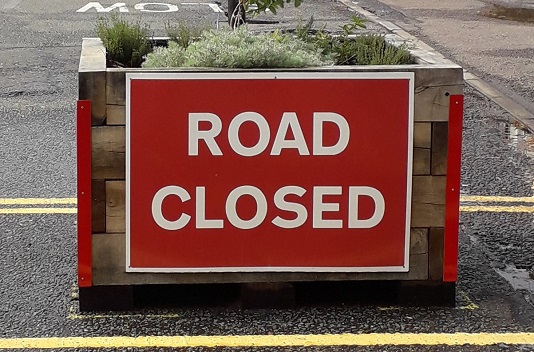
Political manipulation and the push for climate lockdowns

The plan is clear. The political elite want to create what amounts to a new feudal system, with the manipulation of the green agenda providing a convenient pretext.

Ordinary people’s mobility will be severely restricted. They will be forced out of their cars and off the roads by a raft of new charges and controls. Their lives will largely be confined to “15-minute cities.”

But the perpetrators have a problem. These measures are deeply unpopular with a large percentage of the public. And they are being imposed in ostensible democracies. So, they need a strategy to overcome resistance.

One element is a relentless propaganda campaign to promote the idea of a “climate emergency.” With clear parallels to the manipulation strategies deployed during the pandemic, they’re trying to persuade the public that a form of lockdown is necessary to stop global warming.

This is why the BBC lectures viewers on climate change every time there’s a heat wave, flooding or forest fires. It’s also why the BBC has effectively banned proper debate on environmental issues, with sceptical voices not welcome on its outlets. The understandable anguish created by images of natural disasters is used to undermine free speech on the issue.

The second element is a focus on local government. There’s a reason why mayors and councils are taking a leading role in the “climate lockdowns” policy, while central government pretends to be more motorist friendly. The establishment is exploiting the different incentives facing members of the public.

The benefits of measures such as “low-traffic neighbourhoods” (LTNs) are highly concentrated and obvious to the relatively small number of beneficiaries. By contrast, the costs, which may be enormous by comparison, are typically dispersed and not always obvious to the losers.

If a through road is closed off by the council, many of its residents will support the new restriction (though some may be against – for example if it means much longer journeys). Their street may be quieter and perhaps safer. This constituency offers a bedrock of support for such measures.

It will be bolstered by locals ideologically wedded to the green agenda, perhaps the result of a lifetime of indoctrination by schools, universities and the media, with no exposure to the counter arguments.

They will be joined by state-funded “sock puppets” – campaign groups paid by government to lobby itself and create a fake impression of wider support for policies that the political elite have already decided to impose.

By focusing on the local level, the instigators can build a sufficient coalition of supporters to at least make the argument that they’re not imposing their agenda despite overwhelming public opposition.

Indeed, many of the losers from such policies will not even live or vote in the borough or city where the new controls are being installed. They may be commuters or businesses now facing prohibitive charges or massive delays to their journeys.

Residents in areas beyond the schemes may see a big increase in congestion as traffic is displaced. The emergency services might become less efficient as they can no longer take a direct route, or because cycle lanes mean motorists can no longer get out of their way to let them pass. Labour mobility, productivity and wages may decline because potential employees can’t reach jobs that match their skills, and economies of scale may be lost as the populations that can be profitably or efficiently served shrink (click here for a more detailed discussion).

It will not always be obvious to people that the “war on motorists” is to blame for these negative economic impacts, which in turn dilutes political resistance to the new restrictions. And these effects are spread over a much wider geographical area than the benefits (that accrue to a small, concentrated group), which means opposition is harder to coordinate.  

Note that the purported non-local environmental gains are quite tenuous. The costs and benefits of any future climate change are impossible to calculate accurately. And the impact of the new controls will be negligible in terms of global emissions. In any case, anti-car policies are often counterproductive. Artificially created congestion can actually increase pollution.

Rather than restricting ordinary people’s mobility – and effectively creating a new feudal system in the process – policymakers should focus on win-win policies that both cut emissions and benefit the economy. This means ending the vast subsidies pumped into various polluting activities.

It speaks volumes that governments are so reluctant to take this obvious step. The green agenda is really about giving even more power to the elite and their institutions rather than saving the planet.  

Richard Wellings

Why the UK needs the Rotodyne and not HS2

The massive investment required by HS2 is wasteful and will provide a very limited set of benefits. This article argues that a better use of funds would be the creation of a compound gyroplane fleet and rooftop landing sites in certain areas of some cities.

The first point to understand is the physics of high-speed transport. An object moving at twice the speed requires four times the energy. An object moving at four times the speed needs sixteen times the energy.

Thus, a train at 300 km/h is sixteen times more energy greedy than one at 75 km/h, which also should explain to the non-engineers and non-scientist minded why freight trains travel so slowly. High-speed rail is the very opposite of energy efficient. Electric high-speed trains travelling at 300 km/h+ are some of the worst energy guzzling machines we have.

The merit function for high-speed rail puts journey times and city centre to city centre connectivity as high priorities, far above energy efficiency, landscape preservation and flexibility.

For any pairing of cities that does not include London, this project is a bust. Yet the entire country is forced to pay for it.

What worked in Japan was a curious mix of ultra-high population density linked with a small number of population centres on flat plains.

In the UK, with its rolling countryside and older tracks, the 200 km/h tilting Advanced Passenger Train (APT) (although a victim of politics) was the only sensible choice. It exists today as the Pendolino, built under licence from Italian firms within the UK, but mostly abroad.

To create high-speed connectivity for the subset of passengers who require that option every day, the compound gyroplane is a very good choice. This can serve any two points within the UK in a maximum of two hours – not dissimilar to a stratosphere cruising jet, but without the need for expensive airport infrastructure. If the take-off areas are secure, then such a vehicle can even land on rooftops in the City of London.

The compound gyroplane would work for any and every type of person, in every area of the UK, while being a massive export earner and long-term job creation scheme.

The Fairey Rotodyne was an aircraft developed from 1956 to 1962 by the UK aeronautics company Fairey, later merged with Westland. It was a compound gyroplane with propellers and a large main rotor which was operated by “tipjets” – small combustion engines at the extremities of the rotor which provided a jet thrust to move the rotor for take off and landing. The main rotor itself was otherwise unpowered and it would freewheel in flight, providing lift.

This article examines the potential benefits of the craft in terms of providing an addition to the transport options in the United Kingdom. In order to assess these, it is important to engage in some analysis of existing transport modes and their benefits.

The physical geography of the United Kingdom is similar to Japan and New Zealand – a long, thin archipelago. However, the population distribution on the main island, Great Britain, does not lend itself to the construction of high-speed rail in anything but three operational axes which are economically viable. 

The high quality and high speed of the East Coast and West Coast mainlines mean that a good enough quality of travel can be obtained there. Going any faster than 140 mph (225 km/h) is not optimal, due to the energy use and increased cost.

A faster service could be obtained for the comparatively small number of customers who really need to go from London to Newcastle in under 1 hour by using helicopters or small aircraft. At a similar price point to the business class ticket on the high-speed rail system, there is a niche that can be met by use of a hybrid helicopter/aeroplane, which could thus also link the island of Ireland, Isle of Man, Isle of Wight, Scilly Isles, Inner and Outer Hebrides and Faroes. Charter services could perform multi-city stops and hops.

Travel options matrix

The variables we wish to examine are: speed, cost, capacity, energy efficiency and distance.

High-speed rail occupies a specific niche of the transport equation – high speed, high cost, low energy efficiency and medium capacity. The sweet spot for this mode is long distances between 150 and 600 km with large (100+) numbers of passengers.

Low-speed rail is low speed, relatively low cost, highly energy efficient and is almost always high capacity. The distance of this mode of travel is anywhere from 50km to 1000km. From 50+ passengers.

Minibus/coach travel is the lowest cost, highest capacity, low to medium speed, medium energy efficiency and very flexible. The distance of this mode of travel is anywhere from 50km to 1000km. 20+ people. Linking islands is only possible with the use of ferries.

Car travel is medium cost, medium speed, low capacity, low energy efficiency and the most flexible of all the ground transport options. The distance of this mode of travel is anywhere from 3km to 1000km. Linking islands is only possible with the use of ferries

Aeroplanes are the highest speed, high cost, inflexible and need long distances for the cost-benefit analysis to make sense. They are only efficient (in both terms of cost and energy) with very large numbers of people and somewhat medium to very long distances. Apart from flights from the South of England to Scotland, Ireland or the North of England, this is not a viable option for intra-UK travel.

Helicopters are the highest cost, most flexible form of transport in the UK, though of very low capacity and abysmal energy efficiency. More versatile in terms of places that can be reached and at speeds comparable with high-speed rail, they are nevertheless almost prohibitively expensive for anything but occasional use. They are not a commuting option.

Within this matrix, there exists an unmet niche: that of high speed, medium to high capacity, low to medium cost, with flexibility comparable to helicopters.

Enter the Rotodyne compound gyroplane.

Eric Matthew W. Masaba

Image: Rotodyne 2 by L. Chatfield, Flickr (CC by 2.0), cropped.

How do we keep the UK moving in an era of permanently higher energy prices?

Where we are today 

There is no substitute for the private car in terms of flexibility, cost and radius of travel – except, that is, when oil prices are likely to breach $200 per barrel, translating into £2 per litre for petrol, when car parking in the central areas of most major cities is £5-£10 per hour or higher, and travelling a total distance of 600 miles in a day is just not feasible – which just about sums up the soon to be normal experience of motorists in the UK. 

The largest problem is that outside most major cities (indeed, outside London in fact) there are few options but to have a private car. The infrequent or non-existent bus services, the expensive buses that are available, and the lack of any well-developed metro or subway service dramatically limit transport options. 

Case study: Northwest England 

Liverpool – one of the largest cities in the UK and the 2nd largest in the North of England – is close enough to Manchester, the largest city in the region and the 3rd largest in England, that the conurbations overlap and include a population the size of a medium-sized European country (5.6 million).  

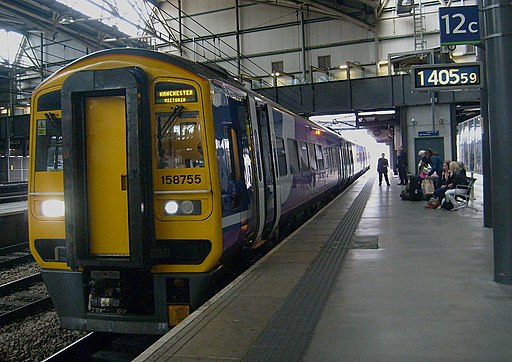
Just across the Pennines, there is yet another gigantic urban sprawl that is not particularly well connected to this megalopolis by road or rail. The East-West rail lines in the North of England are not electrified and are served infrequently by antiquated rolling stock. Taxis cost £3 per mile and thus the reality for nearly everyone is that they must have a car. 

What may work best is a model where buses are replaced by multi-capacity, on-demand hybrid bus-taxis which can take separate fares at separate prices. This model is not just a nice add on – it is a necessity.  

The average car is used only one hour per day and spends most of its time parked. When it is used, it carries just one person (the driver) for 90% of its trips. While providing gainful employment and profits to automakers, this is no good for the average person, especially since the cost of simply operating the car is around £300-£600 a month. 

Imagine, then, if a customer could, for £400 per month, buy a subscription, a carnet of passes for all their monthly trips, upgrading with options packages any extra services to their “base buy”. Effectively, this would replace the need for a car during the week for any work commutes, or indeed any supermarket trips. The effective cost per trip, especially for longer-term subscriptions would be considerably less than a taxi trip today and in many cases cheaper than a single bus ticket. A point-to-point travel paradigm is possible, without fixed routes, for considerably less cost to the consumer than a government-operated bus service. 

It would be much like a season ticket for a bus, except that this covers usage in a shared-ride vehicle of appropriate capacity and capability for a specific trip. 

For the weekends, where the average use is likely to be significantly greater than one hour per day, a multi-day car hire is easily managed. Furthermore, putting car-hire businesses in the heart of communities, rather than located on industrial estates far from where people live is another way to make better use of land. A car-rental (carshare) business (where one car is used by many different people although not at the same time) can be located in purpose built multi-storey car parks. It will become apparent to many people that investing in a mobility subscription will be far more cost effective than owning a car, especially when a car can be hired for those small number of occasions when one is needed for multiple consecutive days. 

A key driver of this system could be a comprehensive congestion charging scheme, run as a public utility, on all roads. Such a system would have to be restricted to the hypothecation of revenues garnered – so that there is no incentive or temptation for the city government to use motorists as a funding source for general taxation. 

Conclusion 

Regardless of the power source of vehicles, the overarching requirement must be to make mobility affordable, delivered through a mix of shared rides, car share, and integrated public transport. 

There really is no way to maintain the current system of road usage and vehicle ownership when the costs of energy are rising so dramatically. The total costs of domestic energy (electricity and natural gas), petrol and food (itself a derivative of wholesale energy prices) make car ownership extremely costly. While the government still earns significant tax revenues from petrol taxes, this form of taxation has to evolve and change. 

In order to mitigate the wasteful (in terms of both time and fuel) congestion we see every day on our busiest routes, we need a better way of managing roadspacetime. 

Eric Matthew W. Masaba

Image: Wikimedia Commons  

Why the war on motorists is wrecking the economy

The government used the pandemic as a pretext to intensify the “war on motorists”, a key element of the elite’s Build Back Better agenda.

Councils were paid to close vast numbers of streets to through traffic, often as part of so-called Low Traffic Neighbourhood schemes. Main roads were narrowed and cycle lanes expanded. Punitive new charges were imposed, in particular London’s Ultra Low Emissions Zone levy, and there are now plans to roll out similar schemes to other cities.

These draconian measures made little sense in terms of the Covid-19 narrative. If anything, car travel should have been encouraged to reduce the spread of the disease. Instead, these policies almost certainly forced more people to use public transport than otherwise would have been the case – despite the apparent infection risks.

Government mismanagement of the pandemic also had a devastating impact on the economy. A massive state spending binge, combined with central bank money-printing on a huge scale, contributed to a cocktail of soaring inflation, a cost-of-living crisis and ballooning public debt.

The obvious way out of this predicament is to adopt policies that facilitate robust economic growth. This would increase tax revenues without a harmful rise in tax rates, thereby mitigating the government debt issue. It would also tend to increase real wages, addressing the cost-of-living problem.

The key to generating growth is rising productivity. But today many government policies seem to be deliberately designed to reduce productivity and undermine improvements in living standards. The war on motorists is a prime example.

A series of measures seem deliberately designed to increase congestion. These include a big rise in the number of traffic lights; the narrowing of junctions to reduce flows; the reduction of road space to make way for bus and cycle lanes; the widening of pavements; and the closure of through routes.

The resulting traffic jams lead to major productivity losses, with drivers wasting time sitting in their vehicles and burning fuel while stopping and starting repeatedly. While it is hard to put a precise figure on the resulting costs to the economy, estimates for losses from congestion in the UK are as high as £40 billion a year.

But the negative impact of anti-car measures goes far beyond this. Journeys are delayed even when there is no congestion. Motorists are stopped by traffic lights even in the middle of the night when the streets are empty. They have to crawl along at 20mph in boroughs where speed limits have been slashed. They have to take long diversions where through roads have been blocked off in so-called low-traffic neighbourhoods. And they have to drive around finding somewhere convenient to park because the council has restricted the number of spaces.

The impact of all this on productivity is especially obvious in the cases of delivery drivers and tradesmen. A delivery driver can make fewer deliveries in a given amount of time due to the artificial delays and diversions. A plumber or electrician can make fewer repairs due to the additional time required to travel between jobs.

In addition, the productivity of the retail sector is negatively affected. Because it takes longer to travel to a given outlet, shops will tend to be smaller, serving a lower population, thereby reducing economies of scale and efficiency. The delays will have a similar impact on distribution, favouring smaller and less efficient warehouses rather than larger, more efficient ones a greater distance apart.

Employment opportunities are also harmed. If a potential worker is prepared to commute for an hour each way, then the delays will reduce the size of the area in which he or she is prepared to take a job. With fewer options available, workers are less likely to find employment that is a good match for their skills – an outcome that again will tend to reduce productivity.

Similarly, businesses will have a smaller pool of potential workers available. They may struggle to find the right people. An entrepreneur might decide to build a smaller and less-efficient factory because the number of suitable workers within its catchment area is lower than otherwise would be the case. And clusters of expertise, together with associated competition and innovation, will tend to be negatively affected due to the shrinkage of the talent available in any given location.  

The negative effects on labour mobility will of course be multiplied if the war on the motorist leads workers to abandon car ownership entirely. Vast swathes of the country are poorly served by public transport, which typically isn’t viable outside urban areas with a high population density and core routes between cities. Commuting by public transport is often completely impractical in the outer suburbs, yet alone in rural areas.

This article has only scratched the surface in terms of the damage being done. The enormous impact of anti-car policies on ambulances and the other emergency services hasn’t been discussed, for example.

The big question is whether our politicians understand the scale of the harm they’re inflicting.  Perhaps they think the ends of this draconian top-down agenda justify the means.

Richard Wellings

Should HS2 be converted into a road?

Imagine the following nightmare scenario for HS2…

Phase One opens in 2033, around seven years later than originally planned, and tens of billions over budget.

To make matters worse, travel patterns have changed dramatically since High Speed 2 was first conceived. Routine business meetings now take place online, meaning demand for business travel has collapsed.

At the same time, a high proportion of professionals now work from home most of the week. They come into the office only occasionally and often avoid travelling during peak hours. The misery of long-distance rail commuting has largely been consigned to the past – at least for higher income groups.

HS2 still attracts a large number of passengers, though as with HS1, far fewer than forecast when the project was approved. The government has deliberately been slowing down services on the West Coast Main Line (WCML). As predicted, they have rigged the rail market to push more passengers onto the new route.

Competition is still a problem, however. Because few business travellers are using HS2, the vast majority of passengers are day-trippers, tourists, students and so on. They will switch to a slower journey on the WCML, the Chiltern Line, or even the coach if it saves them a few pounds. Inevitably this puts downward pressure on fares.

HS2 therefore faces financial disaster. Its construction was never going to be commercially viable, but it now requires heavy subsidies just to cover its operating costs.

And there are other clouds on the horizon. Driverless cars are finally being rolled out. While their top speed is lower, door-to-door journeys are often quicker than by HS2 – and far more convenient too, particularly for the elderly and those carrying luggage. The demand for rail is being further eroded.

HS2 has therefore become a major headache for ministers. They’ve already wasted tens of billions building the scheme and now it’s going to cost billions more to keep it running. In practice, this will mean cutting services on other parts of the network. After years of economic stagnation, the Treasury can no longer justify vast subsidies for the rail industry.

But there could be a solution.

Converting HS2 into a road has the potential to turn a heavily loss-making white elephant into a profitable business that could cover its operating costs and perhaps help to fill the financial black hole left by the project’s construction.

The government has claimed that up to 18 trains per hour, in each direction, could run along the southern section of HS2. Each train would carry up to 1,100 passengers. This amounts to roughly 20,000 passengers per hour. However, there is widespread scepticism that the planned frequency can be achieved in practice, particularly when many of the services are likely to experience delays on the legacy network before they join the new high-speed line.

Nevertheless, conversion into a road would massively increase potential capacity. Should the market demand it, the route could be managed to eliminate congestion and to maximise passenger numbers. Applying conservative assumptions, 600 coaches an hour, or one every six seconds, could carry 30,000 passengers an hour in each direction with 50 passengers per vehicle. (There are several real-world examples of busways achieving similar results). And obviously there would be relatively simple ways of increasing capacity further, for example by using driverless technology to reduce the gap between vehicles. A two-second gap – frequently observed already on motorways – equates to 1,800 vehicles per hour, or 90,000 passengers – around five times an optimistic figure for HS2.

As for journey times, it’s true that HS2 would reach a far higher top speed than the coaches. However, door-to-door journey times are what counts. The coaches would boast a far higher service frequency. Perhaps one would leave central Birmingham every minute. Better still, they could serve a much wider range of destinations, offering direct services into London and other places on or near the route from a large number of towns, villages and suburbs. Services could use the existing road network before joining and after leaving the former HS2. In this way, a far larger population could benefit directly from the new infrastructure.

Similarly, in London services could go to numerous destinations directly and wouldn’t have to terminate at Euston – perhaps continuing to the West End, City or Victoria Coach Station, for example. This in-built flexibility – which could also open up the route to shorter commuter journeys within the south-east – offers the potential of using the path of HS2 far more intensively than under existing plans.   

The shift in travel patterns detailed above suggests that an ultra-high-capacity route might not be needed. In this case, spare “slots” could be sold to cars and goods vehicles, raising additional revenue and taking pressure off the motorway network. A congestion-free road into central London could prove extremely valuable.

While it has not been possible to cover every aspect of railway conversion in this article (for more details and technical analysis, see the main Transport Watch website), the evidence suggests this option would provide higher capacity at significantly lower cost than HS2 – which would translate into lower fares and eliminate the need for operating subsidies. In addition, there would be major benefits from the greater flexibility to adapt to changing market conditions and new technologies. Finally, there could be significant environmental benefits, with lower top speeds translating into less noise and reduced energy consumption compared with HS2. (Given current policies, it is assumed that the road vehicles using the route would be electric by the mid-2030s).   

Going back to the situation in 2022, the best option remains cancellation of the entire High Speed 2 project. Even though billions have already been spent, the remaining budget would still deliver much higher returns if redeployed elsewhere (see the sunk-cost fallacy). Nevertheless, at some stage over the next few years Phase 1 of HS2 will hit the point of no return – not least due to the political embarrassment from abandoning it as it nears completion.    

When this happens, wouldn’t it make sense for ministers to reconsider the final trajectory of the scheme? Clearly it would be less costly to decide on the road option at a relatively early stage rather than installing a railway, and all its paraphernalia, only to rip it out a few years later.

Richard Wellings

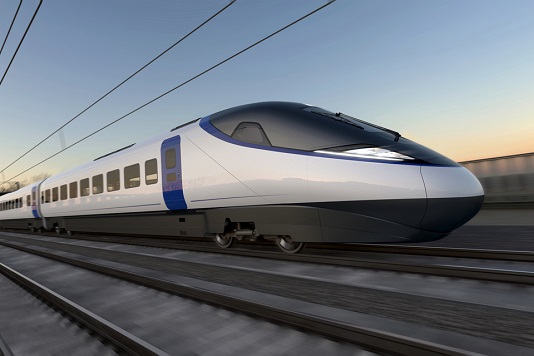
Image: gov.uk

How to avoid paying the London ULEZ charge

A key part of the “climate change” agenda is the policy of driving ordinary people out of their cars and as a result making motoring the preserve of the wealthy and well-connected. One of its most enthusiastic promoters in the UK appears to be Transport for London.

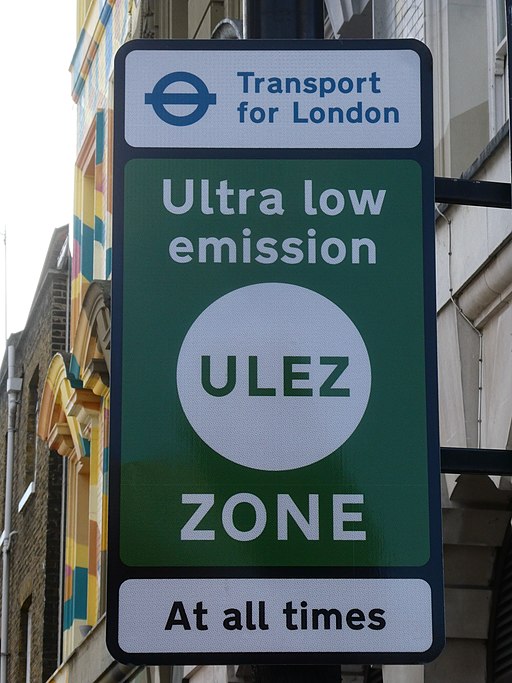
Across the capital, the space available for cars is being reduced, with numerous roads either closed or narrowed, often to make way for bus or cycle lanes that are barely used. Speed limits have also been lowered and the number of traffic controls expanded. Adding to motorists’ misery, a new £12.50 daily charge has been imposed on drivers of older vehicles inside an extended and extensive Ultra-Low Emissions Zone (ULEZ) bounded by the North and South Circular Roads.

The new charge is reprehensible in several ways. Firstly it targets older vehicles which tend to be driven by poorer motorists. In other words it could be perceived as a sly way of trying to force poorer motorists off the roads without stating this openly.

Secondly, it targets diesels in particular, even relatively new ones – this just a few years after motorists were encouraged to buy diesels by the government because they were told they were better for the environment. Diesel drivers have clearly been betrayed after following government advice and now face heavy losses, either through the ULEZ charge, depreciation or the costs of buying a different vehicle.

Finally, the charge is being imposed during a pandemic, a time when elderly and other vulnerable people are avoiding public transport due to the infection risks. This is also a bad time for drivers to be out and about looking for a newer car. Moreover, the policy adds insult to injury for those who need to drive as part of their job and now face a large extra bill at an already extremely difficult time.

It should also be noted that the pretext for the charge – reducing the harm to health from air pollution – doesn’t stand up to close scrutiny. The “evidence” behind this policy is highly questionable, with some commentators describing it as “junk science”. Moreover, the charge itself is unlikely to make much difference to levels of air pollution, yet alone to people’s health. And restricting people’s mobility is likely to be harmful in many ways – fewer outings and less exercise, for example – while the associated economic damage will tend to mean fewer resources are available for healthcare.

Indeed it’s possible that there is a hidden agenda behind this supposed health measure, namely putting in the infrastructure for more general and widespread road-user charging. This would be used to drive even more motorists off the roads, not just owners of older vehicles. It would be naive to expect TfL not to massively expand charging over time, especially given the longer-term anti-car agenda.

In this context, it is imperative that motorists resist this programme and do everything they can to starve TfL of revenue, thus limiting the resources it has available to impose yet more harmful policies.   

Owners of older vehicles who drive frequently and extensively within the ULEZ zone realistically have little choice except to buy another vehicle instead of paying the prohibitive charges. However, for more occasional motorists, there are several strategies that could mitigate the costs and perhaps tip the balance in favour of keeping an older car – particular if much of the mileage takes place outside inner London.

The first method is to cluster trips on a single day, only paying the charge once rather than several times had the trips been spread out over several days. This is not ideal and could take some organising – it will not be possible for everyone – but could be worthwhile financially for those with sufficient flexibility.

Another strategy is to cooperate with nearby friends or family to borrow each other’s cars, providing the drivers are insured and with due regard for infection risks among the vulnerable. So, for example, one friend would use the vehicle in the morning, another in the afternoon, and another in the evening. Using the same car would mean only paying the charge once instead of three times. Alternatively, a driver who owns an older diesel could borrow a friend’s newer petrol vehicle.

For drivers who live relatively near the ULEZ boundary, it may be feasible to park outside the zone and stay out of it for the vast majority of shopping, business and leisure trips.

Finally, Transport for London has been reluctant to disclose the location of its ULEZ enforcement cameras, despite several Freedom of Information requests. The zone covers a large area and coverage is unlikely to be comprehensive. Those of a suspicious nature might think this is the real reason why several London councils closed numerous minor through roads in the months leading up to the ULEZ extension.

Many people will understandably not want to break the law on principle, even if the ULEZ is unethical in many ways. Nevertheless, it seems likely that some shorter journeys may be possible without the charge being imposed – particularly if obvious pinch points like major junctions and main roads entering the zone are avoided.

One possible way to experiment with this is to join the ULEZ Auto Pay system and then keep a record of the routes taken each day, say by marking them on a map. It will soon become clear which journeys are possible without the charge being imposed.

Drivers may feel that there is little they can do to resist the global agenda to reduce their mobility by forcing them out of their cars. However, there are ways to limit the damage and also push back by defunding the organisations hellbent on transforming our way of life without our consent.

Richard Wellings

Image: Wikimedia Commons

Wasting tens of billions on uneconomic rail schemes won’t level up the North

The North of England’s economic problems are undeniable. There is relatively little wealth creation in its once-great cities. The entrepreneurial dynamos of the industrial revolution are now heavily dependent on government handouts, with public spending typically making up half or more of their ‘GDP’.

Even the bright spots of the northern economy are creatures of the state. The universities rely in large part on government-guaranteed loans and research grants. And the professional services sector concentrated in Leeds and Manchester is parasitic on costly regulations imposed on individuals and businesses. In reality it represents the destruction of wealth.

Unfortunately it’s difficult to be optimistic about the northern economy in the long term. High costs combined with room-for-improvement in human capital (skills etc.) mean that the region will continue to struggle.

A programme of radical spending cuts and deregulation could of course reduce the costs of doing business in the North – but the short-term effect on public services and local economies is unlikely to be politically palatable. The scale of deregulation required to make a significant impact is probably impossible while the UK remains signed up to red tape imposed by the EU and various other supranational bodies.

At the same time, long-term demographic trends are likely to exacerbate the region’s human capital problem, with increasing numbers of elderly and incapacitated, as well as young people typically ill-equipped to undertake high-skilled jobs. Those who think improved training and education can resolve the latter issue are surely deluded.

The tides of economic geography are also working against the North. The region finds itself on the periphery of a Western Europe sinking rapidly into stagnation and irrelevance as the global core shifts to the East. Indeed, even the region’s handouts may be at risk as the vast UK revenues based on Western geopolitical power and associated market-rigging eventually unravel.

In this context there is a ‘fiddling while Rome burns’ quality to the government’s levelling-up agenda, which in part reheats George Osborne’s plan to create a ‘Northern Powerhouse’ by speeding up rail journeys between the region’s major centres. This is not, however, to deny that transport investment has the potential to deliver significant economic benefits.

Reductions in transport costs lower the cost of exchange, which in turn boosts trade and brings higher productivity through specialisation, economies of scale and so on. They also enable the development of agglomerations, clusters of activity that may further increase productivity and output. For example, thicker labour markets may lead to the better matching of workers to jobs and increased firm density may lead to greater knowledge sharing and to increased specialisation in supply chains.

Thus, in theory, better transport links could improve the economic performance of the North by enabling its businesses to make better use of its human capital. There could also be significant benefits from creating a larger hub in say Manchester. Improving the connectivity of the airport, for example, could increase the number of flight destinations that are economically viable, raising the attractiveness of the city as a business location.

Improved transport infrastructure in the North won’t be enough to overcome the region’s long-term structural problems, and it can’t reverse the impact of global economic trends, but it does have the potential to improve economic performance and perhaps slow down the rate of relative decline. This conclusion, however, depends on the assumption that such infrastructure would deliver a substantial reduction in transport costs in the North, which is where proposals to ‘invest’ billions in rail improvements fall short.

Indeed, the plans are likely to be useless for the vast majority of transport users in the region, and worse still will impose large tax costs and deadweight losses on the wider economy.

Consider plans for an enhanced rail link between Manchester and Leeds city centres – whether branded as part of HS3 or Northern Powerhouse Rail or a less ambitious improvement to the existing line. Imagine that journey times are cut from around 50 minutes to about half an hour.

Such an outcome is, however, unlikely to deliver significant results in terms of the thicker labour markets and other ‘agglomeration economies’ that are essential element to the aim of having these cities work as a single economic unit.

The main problem is the geography of northern conurbations. They are ‘multinucleated settlements’ comprising numerous smaller centres such as Stockport, Oldham, Salford, Rochdale etc. In addition, the region exhibits a high degree of suburbanisation and has experienced significant counterurbanisation.

Despite the huge government subsidies poured into inner-city regeneration programmes over the last thirty years, the vast majority of high-skilled workers reside in the outer suburbs or semi-rural villages. The gentrified inner-city districts so characteristic of London are largely absent.

The urban geography of the north suggests that a 30-minute city centre to city centre journey time would not deliver the single labour market so vital to the vision of the ‘Northern Powerhouse’. Typical door-to-door journeys would still be too time consuming and expensive for practical daily commuting. Indeed the seemingly quite large percentage reduction in travel times promised by rail improvements becomes relatively small when examined in these terms.

To give a practical example, take someone who lives in the wealthy suburbs of north Leeds and works in Manchester. The bus trip to Leeds station takes say 35 minutes in the morning peak, but in practice the commuter has to allow 50 minutes to give some leeway for transfers and the walking involved. The 30-minute ‘high-speed’ trip to Manchester takes the total up to 80 minutes, and then the worker faces say a 10-minute walk to his office – making a total of 90 minutes or a 3-hour round trip, about three times the average.

The situation is of course similar or worse for residents of many of the various ‘satellite’ towns and villages in the region. It should also be noted that employment hubs, such as the universities, main hospitals and Salford Quays are often a considerable distance from the city centre stations, increasing travel times further.

Such long journeys would be unacceptable and/or impractical for the vast majority of potential commuters, effectively adding 40 per cent or more to the length of the working week. Moreover, the cost – about £4,000 a year based on current fares and possibly much more if a ‘high speed’ premium were charged – makes this option prohibitive for many workers.

Urban planners might attempt to address at least the travel-time problem by encouraging more high-paid workers to live in city centres through adopting policies of restricting suburban development and driving it instead into high-density tower blocks close to rail hubs. At the same time, businesses could be forced or nudged to locate near the stations. This could perhaps get door-to-door round trips to just under 2 hours.

But even if Kowloon densities were achieved, say of 100,000 residents in the square mile around the main hub stations, this would still represent a tiny fraction of the total population of Yorkshire and Lancashire – and in reality not all of the residents would be trans-Pennine commuters. This hardly suggests a transformative effect on the regional economy. Such high-density environments also create numerous costs and problems, such as anti-social behaviour and congestion, the so-called diseconomies of agglomeration. Moreover, it’s difficult to see how they would appeal beyond quite limited niche groups.

It therefore seems likely that rail improvements will prove a costly failure in terms of uniting the labour markets of Leeds, Manchester and Sheffield. Worse still, the North will have to contribute a significant share of the tax bill and suffer a proportion of the resulting wider economic losses. Even if London and the South-East pay much of the cost, this will still have a negative knock-on effect on northern economies.

Rail schemes will also be largely useless in terms of freight transport in the north, further diminishing its potential to deliver many of the vaunted competition and specialisation benefits. This also applies to many businesses that rely on cars and vans to carry their equipment, such as construction firms. Faster rail links are only likely to benefit a small number of sectors, particularly professional services, which as mentioned earlier is typically parasitic on other businesses and typically contributes little to wealth creation.

Indeed the relatively short distances between the major northern cities and their dispersed, multi-nucleated nature makes rail freight impractical and uneconomic apart from a handful of niche markets. It’s far cheaper to load cargo on to lorries for fast, door-to-door convenience. Unsurprisingly, given this fundamental obstacle, there has recently been very little rail freight traffic on the trans-Pennine routes between Leeds, Manchester and Sheffield – with the exception of bulk limestone from the Peak District quarries.

Accordingly, if reducing freight costs were a major component of the government’s strategy, resources would be allocated to the road network rather than rail. While some vague plans have been mooted and incremental improvements announced, it’s clear that faster rail links are the main priority.

Such modal bias is particularly misguided because it would be possible to fund trans-Pennine road improvements – such as a fast Sheffield-Manchester link – with private investment at no cost to the taxpayer, with construction costs covered by future toll revenues. Yet our politicians seem to prefer uneconomic rail projects. Indeed they often go out of their way to obstruct non-state initiatives to improve infrastructure, by imposing strict planning restrictions, for example.

Something is clearly very rotten in the state of British transport policy. Time and time again, politicians are wasting taxpayers’ money on ill-conceived projects that fail to deliver their objectives. Transport investment should be about maximising economic returns by allocating scarce resources in the most cost-effective way, but instead it has become a PR-driven process of grabbing headlines, ‘buying’ votes and paying-off special interests.

Richard Wellings

An earlier version of this article was published on Richard Wellings’ blog.

Image: Wikimedia Commons

How to manufacture a climate crisis

The establishment is hinting that the kind of draconian restrictions imposed during the pandemic will be redeployed to enforce their climate change agenda. As with Covid-19, a key part of the plan is to generate fear across the population through psychological manipulation and media propaganda.

The desired result is a major reduction in personal mobility, with ordinary people taxed and regulated out of their cars and off flights. Heating costs will also be hiked dramatically as gas boilers are banned and replaced with expensive and less effective heat pumps. Food supplies are another target.

The aim of the ramped-up indoctrination campaign will be to convince the general public to accept this top-down assault on their living standards.

Key elements of the programme are already in place. The BBC long ago effectively banned any proper debate on its airwaves. Don’t expect to see scientists who point out flaws in climate modelling on the UK’s state broadcaster; or economists who question whether the benefits of reducing emissions are worth the costs.

Establishment journalists have also been encouraged to insert climate change into news stories. Almost every time there are floods, reporters tell viewers that such disasters are likely to get worse. The same policy is applied to heat waves, forest fires and hurricanes. Even cold snaps are blamed on global warming as part of the “extreme weather” trope.

Improved communications technology has been a great help to this campaign. Alarming footage of disasters in previously little noticed regions now spreads rapidly around the world, particularly if it fits the establishment’s narrative.

But propaganda by omission is another key element of the strategy. The public is kept in the dark about the debate over the frequency of climate-related natural disasters – and the possibility that even if their frequency were increasing there could be other causes.

The role of government policies is also conveniently neglected. Environmentalist-inspired changes to river management policies, such as reducing dredging, have made flooding more likely in some locations. The “green” agenda and its huge costs have also contributed to cuts in maintenance spending on drains and other vital infrastructure. Green land-use policies promote construction on brownfield sites, which for historical reasons are often on low-lying land near to rivers.

Another long-term factor is urbanisation, which promotes flooding as water runs off rapidly from concrete surfaces into drains rather than being delayed by vegetation and soil. (It also increases temperatures via the urban heat island effect.)  

Policy changes have also been implicated in forest fires. Management methods designed to mitigate the risks, such as thinning and clearing combustible material, have been phased out under pressure from greens. Moreover, arson is a leading cause of wild fires in some regions. This human element is another reason why assessment of long-term trends is problematic. There have been examples of environmentalists engaging in other forms of arson attack, and it is worth bearing in mind the possibility that various kinds of political actors could play a role in future incidents. 

Finally, water shortages have been made more likely by policies to obstruct the construction of new reservoirs, including in regions with growing populations. The subtext is that the resulting shortages would provide a useful rationale to reduce consumption by imposing new regulations and compulsory water meters.     

So, there is substantial evidence that many of the policies imposed by environmentalists actively contribute to the “natural” disasters that are then used by propaganda outlets to promote the idea of a climate crisis. The economic damage caused by green policies also makes societies less resilient. Yet discussion of these crucial factors is typically absent.

There are two main dangers from the one-sided propaganda and indoctrination programme currently being implemented by governments and their media assets. The first is that it will encourage the adoption of harmful policies that impose higher costs than any climate change they aim to prevent. In other words, there is a high risk that the cure will be worse than the disease, with negative effects on low-income groups and poor countries in particular. A sensible strategy would be to implement win-win policies that benefit both the economy and the environment – for example, ending the vast and inefficient state subsidies and privileges given to various polluting activities. However, governments and transnational bodies have been curiously reluctant to adopt this approach.

The second danger is that climate change will be used as a pretext to bring in a far more tyrannical economic and political system, for example by empowering unaccountable transnational institutions that lack the usual constraints. Indeed there are clear parallels with the Covid-19 pandemic, which is being used as a convenient excuse for elites to grab more power and to impose vaccine passports as a stepping stone towards a long-planned global system of digital IDs.   

A free and open debate about climate change is absolutely essential if these alarming outcomes are to be avoided. However, the wider agenda behind the climate change narrative could plausibly explain why elites are so obsessed with eliminating dissent.

Richard Wellings

Image: US government

Une injection de tyrannie: des pass sanitaires aux cartes d’identité digitales?

L’imposition des pass sanitaires représente une extension majeure du pouvoir de l’Etat. Bien que présentés comme un outil de restoration des libertés de l’ère de la pré pandémie, en realité ils risquent de conduire à une extension des restrictions imposées à ceux qui refusent de se mettre au pas.  

Il y a aussi des indices qui suggèrent que les pass sanitaires sont en fait un des pans d’un plus vaste projet, dont l’objectif est d’introduire un système biometrique d’identité digitale. L’UE planifiait déjà les pass sanitaires en 2018, bien avant que quiconque ait entendu parler de Covid-19. Il y a aussi d’autres initiatives inquiétantes, telle que ID2020, qui ont le soutien d’influentes fondations qui bénéficient d’un accès privilégié aux gouvernments Occidentaux.

Le Royaume-Uni semble poursuivre un chemin similaire au plan domestique, en s’embarquant dans un programme d’identité digitale, qui met à mal les libertés individuelles de manière plus générale. Sous le gouvernement de Tony Blair, un projet dont le but était d’imposer des cartes d’identité avait été envisagé, et tout semble indiquer qu’au sein de l’Establishment, les initiatives high tech dérivées, aient la côte. 

Ce programme semble progresser rapidement dans les pays dits en voie de développement où des projets de carte d’identité digitale souvent financés par les fondations et gouvernements Occidentaux, sont pilotés, et consistent à contrôler l’accès aux services essentials et même à la nourriture. 

Dans un tel contexte, les pass sanitaires peuvent être vus comme un tremplin de lancement des cartes d’identité digitales, un moyen de conditionner le public à les présenter sur demande, et à les accepter. 

De telles cartes d’identité contiendront non seulement les historiques médicaux, les informations financières, biométriques, et toute autre donnée personnelle. Ces cartes d’identité représenteraient une atteinte au principe du respect de la vie privèe, mais elles pourraient devenir obligatoires pour exercer le droit de vote, accéder au marché de l’emploi, pour effectuer des transactions, et avoir accès aux services de santé etc.

Elles donneraient le pouvoir aux gouvernements d’exclure ceux qui refusent de participer au système, mais aussi ceux qui accepteraient d’utiliser ces cartes d’identité, mais dont les prises de position sur certaines questions épineuses, ne seraient pas du goût des élites. Les dissidents pourraient se retrouver à voir leur accès aux services de base bloqué, de manière à les punir et en même temps à les pousser en douceur à s’aligner. 

L’imposition des pass sanitaires serait moins inquiétante si elle avait lieu dans un contexte autre que celui actuel d’expansion rapide de l’Etat policier. Les intentions véritables des gouvernements sont d’autant plus suspectes du fait de la faiblesse des arguments avancés, liés à la santé publique, et qui ne tiennent pas debout. 

C’est un secret de polichinelle que le véritable motif derrière l’introduction des pass sanitaires est d’encourager les jeunes à se faire vacciner. Nous sommes face à une menace: si vous ne vous faites pas vacciner, vous aurez du mal à voyager, et vous ne pourrez pas fréquenter les bars et restaurants. 

Le problème avec cette approche, c’est que pour la majorité des jeunes, il n’y a aucune garantie que les avantages de la vaccination anti Covid-19 l’emportent sur les inconvénients. A l’heure actuelle, il n’y a aucune prise de recul qui permet d’identifier les effets de la vaccination sur le long terme, de ce fait, les décideurs politiques semblent avancer dans l’obscurité. Ce qui est moins clair, c’est jusqu’à quel point ces traitements sortis des sentiers battus empêchent la transmission du virus. Il y a aussi le risque que du fait d’avoir été vaccinées, certaines personnes relâcheront leur garde. 

Un scénario plausible est que les vaccins pourraient ne pas être aussi efficaces qu’on l’espère, notamment en ce qui concerne le fait de tomber malade ou de contaminer autrui. Il y a aussi le risque que les effets secondaires liés à la vaccination soient plus prononcés et plus fréquents que ce que les gouvernements et les médias admettent. En même temps, les vaccins et toute la désinformation risquent d’encourager ceux qui les reçoivent à se comporter comme s’ils ne peuvent pas attraper ou transmettre le Covid-19. De telles évolutions pourraient avoir un effet négatif sur les objectifs cités, et les pass sanitaires en seraient partiellement responsables. 

Finalement, toute évaluation des pass sanitaires devrait se pencher sur leur impact économique. On peut assumer qu’une partie de la population va refuser de se faire vacciner, peut-être parce qu’elle s’estime à faible risque d’attraper le Covid-19, ou d’en tomber sérieusement malade.

Disons que 10% des adultes font partie de ce groupe, en plus d’un pourcentage considérable d’enfants (ces chiffres pourraient être bien plus élevés dans certains pays). Une partie des commerces forcés d’exiger des pass sanitaires comme condition d’entrée pourraient en voir leur chiffre d’affaire réduit. Beaucoup de clients ne voudront pas subir les tracasseries qui consistent à se faire tester, si telle est l’alternative. De plus, la distribution des non vaccinés risque de ne pas être la même en fonction des zones géographiques, des groupes d’âge, des communautés, et de ce fait, certains commerces dans certaines zones geographiques sont plus à risque d’être affectés. 

Certains commerces pourraient par contre estimer que le jeu en vaut la chandelle, et estimer que cette option est préférable à un retour au confinement et autres restrictions. Et pourtant, présenter les pass sanitaires comme des alternatives au confinement et à la distanciation sociale s’appuie sur des postulats que l’on peut facilement remettre en question, notamment concernant l’impact des vaccins sur les infections, la transmission et les attitudes. De toute façon, au vu de la récente trajectoire autoritaire des gouvernements, il est très probable que cet hiver, ils décident d’imposer simultanément les pass sanitaires et les confinements draconiens. 

L’impact des pass sanitaires sur le marché de l’emploi risque d’être sérieux. Il semble que certaines personnes ne pourront plus travailler dans certains secteurs d’activité du fait de leur refus de se faire vacciner. Ils auront aussi beaucoup de mal à voyager à l’étranger. Certains patrons devront donc faire face à un vivier réduit de talents et d’expertise, ce qui pourrait conduire à des difficultés au niveau du recrutement et à des pénuries de personnel. Ça risque de devenir de plus en plus difficile de trouver le meilleur candidat pour un poste. 

Les opportunités pour les entrepreneurs et pour les échanges avec les partenaires  internationaux vont être réduites. Certaines personnes non vaccinées pourraient aussi décider de réduire leur activité économique, en réponse à ces nouvelles tracasseries et discriminations. Ce qui risque d’avoir un effet négatif sur la productivité, et de contribuer à réduire la croissance économique, et aussi à compresser les finances publiques dans le même temps. 

Pour conclure, il est difficile d’établir que les bénéfices des pass sanitaires l’emportent sur leurs inconvénients. En effet, si l’objectif des pass sanitaires est de protéger la santé, tout en réouvrant l’économie, dès lors, le raisonnement avancé pour leur mise en oeuvre semble biaisé. Il est difficile d’imaginer que les leaders politiques, ou du moins les conseillers et les fonctionnaires n’aient pas conscience des désavantages. Ceci renforce les soupçons qu’il y a autre chose qui se cache derrière les pass sanitaires. Se pourrait-il que leur introduction vise à conditionner le public à accepter l’utilisation de masse des cartes d’identité digitales, destructrices du principe de respect de la vie privée?

Richard Wellings

Translated by Jamila Nana

Image: Shutterstock