
Imagine the following nightmare scenario for HS2…
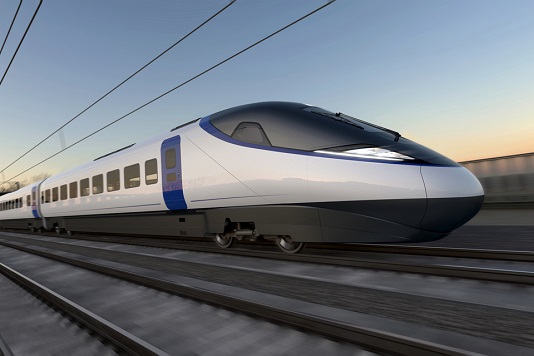
Phase One opens in 2033, around seven years later than originally planned, and tens of billions over budget.
To make matters worse, travel patterns have changed dramatically since High Speed 2 was first conceived. Routine business meetings now take place online, meaning demand for business travel has collapsed.
At the same time, a high proportion of professionals now work from home most of the week. They come into the office only occasionally and often avoid travelling during peak hours. The misery of long-distance rail commuting has largely been consigned to the past – at least for higher income groups.
HS2 still attracts a large number of passengers, though as with HS1, far fewer than forecast when the project was approved. The government has deliberately been slowing down services on the West Coast Main Line (WCML). As predicted, they have rigged the rail market to push more passengers onto the new route.
Competition is still a problem, however. Because few business travellers are using HS2, the vast majority of passengers are day-trippers, tourists, students and so on. They will switch to a slower journey on the WCML, the Chiltern Line, or even the coach if it saves them a few pounds. Inevitably this puts downward pressure on fares.
HS2 therefore faces financial disaster. Its construction was never going to be commercially viable, but it now requires heavy subsidies just to cover its operating costs.
And there are other clouds on the horizon. Driverless cars are finally being rolled out. While their top speed is lower, door-to-door journeys are often quicker than by HS2 – and far more convenient too, particularly for the elderly and those carrying luggage. The demand for rail is being further eroded.
HS2 has therefore become a major headache for ministers. They’ve already wasted tens of billions building the scheme and now it’s going to cost billions more to keep it running. In practice, this will mean cutting services on other parts of the network. After years of economic stagnation, the Treasury can no longer justify vast subsidies for the rail industry.
But there could be a solution.
Converting HS2 into a road has the potential to turn a heavily loss-making white elephant into a profitable business that could cover its operating costs and perhaps help to fill the financial black hole left by the project’s construction.
The government has claimed that up to 18 trains per hour, in each direction, could run along the southern section of HS2. Each train would carry up to 1,100 passengers. This amounts to roughly 20,000 passengers per hour. However, there is widespread scepticism that the planned frequency can be achieved in practice, particularly when many of the services are likely to experience delays on the legacy network before they join the new high-speed line.
Nevertheless, conversion into a road would massively increase potential capacity. Should the market demand it, the route could be managed to eliminate congestion and to maximise passenger numbers. Applying conservative assumptions, 600 coaches an hour, or one every six seconds, could carry 30,000 passengers an hour in each direction with 50 passengers per vehicle. (There are several real-world examples of busways achieving similar results). And obviously there would be relatively simple ways of increasing capacity further, for example by using driverless technology to reduce the gap between vehicles. A two-second gap – frequently observed already on motorways – equates to 1,800 vehicles per hour, or 90,000 passengers – around five times an optimistic figure for HS2.
As for journey times, it’s true that HS2 would reach a far higher top speed than the coaches. However, door-to-door journey times are what counts. The coaches would boast a far higher service frequency. Perhaps one would leave central Birmingham every minute. Better still, they could serve a much wider range of destinations, offering direct services into London and other places on or near the route from a large number of towns, villages and suburbs. Services could use the existing road network before joining and after leaving the former HS2. In this way, a far larger population could benefit directly from the new infrastructure.
Similarly, in London services could go to numerous destinations directly and wouldn’t have to terminate at Euston – perhaps continuing to the West End, City or Victoria Coach Station, for example. This in-built flexibility – which could also open up the route to shorter commuter journeys within the south-east – offers the potential of using the path of HS2 far more intensively than under existing plans.
The shift in travel patterns detailed above suggests that an ultra-high-capacity route might not be needed. In this case, spare “slots” could be sold to cars and goods vehicles, raising additional revenue and taking pressure off the motorway network. A congestion-free road into central London could prove extremely valuable.
While it has not been possible to cover every aspect of railway conversion in this article (for more details and technical analysis, see the main Transport Watch website), the evidence suggests this option would provide higher capacity at significantly lower cost than HS2 – which would translate into lower fares and eliminate the need for operating subsidies. In addition, there would be major benefits from the greater flexibility to adapt to changing market conditions and new technologies. Finally, there could be significant environmental benefits, with lower top speeds translating into less noise and reduced energy consumption compared with HS2. (Given current policies, it is assumed that the road vehicles using the route would be electric by the mid-2030s).
Going back to the situation in 2022, the best option remains cancellation of the entire High Speed 2 project. Even though billions have already been spent, the remaining budget would still deliver much higher returns if redeployed elsewhere (see the sunk-cost fallacy). Nevertheless, at some stage over the next few years Phase 1 of HS2 will hit the point of no return – not least due to the political embarrassment from abandoning it as it nears completion.
When this happens, wouldn’t it make sense for ministers to reconsider the final trajectory of the scheme? Clearly it would be less costly to decide on the road option at a relatively early stage rather than installing a railway, and all its paraphernalia, only to rip it out a few years later.
Richard Wellings
Image: gov.uk
 Transport Watch