
A key part of the “climate change” agenda is the policy of driving ordinary people out of their cars and as a result making motoring the preserve of the wealthy and well-connected. One of its most enthusiastic promoters in the UK appears to be Transport for London.
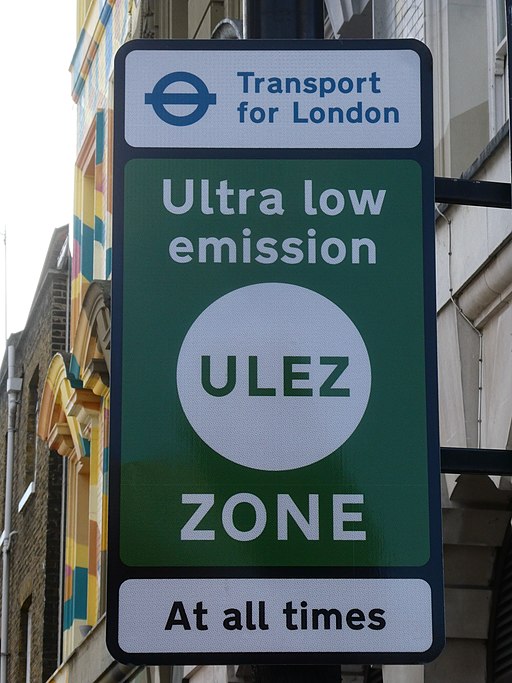
Across the capital, the space available for cars is being reduced, with numerous roads either closed or narrowed, often to make way for bus or cycle lanes that are barely used. Speed limits have also been lowered and the number of traffic controls expanded. Adding to motorists’ misery, a new £12.50 daily charge has been imposed on drivers of older vehicles inside an extended and extensive Ultra-Low Emissions Zone (ULEZ) bounded by the North and South Circular Roads.
The new charge is reprehensible in several ways. Firstly it targets older vehicles which tend to be driven by poorer motorists. In other words it could be perceived as a sly way of trying to force poorer motorists off the roads without stating this openly.
Secondly, it targets diesels in particular, even relatively new ones – this just a few years after motorists were encouraged to buy diesels by the government because they were told they were better for the environment. Diesel drivers have clearly been betrayed after following government advice and now face heavy losses, either through the ULEZ charge, depreciation or the costs of buying a different vehicle.
Finally, the charge is being imposed during a pandemic, a time when elderly and other vulnerable people are avoiding public transport due to the infection risks. This is also a bad time for drivers to be out and about looking for a newer car. Moreover, the policy adds insult to injury for those who need to drive as part of their job and now face a large extra bill at an already extremely difficult time.
It should also be noted that the pretext for the charge – reducing the harm to health from air pollution – doesn’t stand up to close scrutiny. The “evidence” behind this policy is highly questionable, with some commentators describing it as “junk science”. Moreover, the charge itself is unlikely to make much difference to levels of air pollution, yet alone to people’s health. And restricting people’s mobility is likely to be harmful in many ways – fewer outings and less exercise, for example – while the associated economic damage will tend to mean fewer resources are available for healthcare.
Indeed it’s possible that there is a hidden agenda behind this supposed health measure, namely putting in the infrastructure for more general and widespread road-user charging. This would be used to drive even more motorists off the roads, not just owners of older vehicles. It would be naive to expect TfL not to massively expand charging over time, especially given the longer-term anti-car agenda.
In this context, it is imperative that motorists resist this programme and do everything they can to starve TfL of revenue, thus limiting the resources it has available to impose yet more harmful policies.
Owners of older vehicles who drive frequently and extensively within the ULEZ zone realistically have little choice except to buy another vehicle instead of paying the prohibitive charges. However, for more occasional motorists, there are several strategies that could mitigate the costs and perhaps tip the balance in favour of keeping an older car – particular if much of the mileage takes place outside inner London.
The first method is to cluster trips on a single day, only paying the charge once rather than several times had the trips been spread out over several days. This is not ideal and could take some organising – it will not be possible for everyone – but could be worthwhile financially for those with sufficient flexibility.
Another strategy is to cooperate with nearby friends or family to borrow each other’s cars, providing the drivers are insured and with due regard for infection risks among the vulnerable. So, for example, one friend would use the vehicle in the morning, another in the afternoon, and another in the evening. Using the same car would mean only paying the charge once instead of three times. Alternatively, a driver who owns an older diesel could borrow a friend’s newer petrol vehicle.
For drivers who live relatively near the ULEZ boundary, it may be feasible to park outside the zone and stay out of it for the vast majority of shopping, business and leisure trips.
Finally, Transport for London has been reluctant to disclose the location of its ULEZ enforcement cameras, despite several Freedom of Information requests. The zone covers a large area and coverage is unlikely to be comprehensive. Those of a suspicious nature might think this is the real reason why several London councils closed numerous minor through roads in the months leading up to the ULEZ extension.
Many people will understandably not want to break the law on principle, even if the ULEZ is unethical in many ways. Nevertheless, it seems likely that some shorter journeys may be possible without the charge being imposed – particularly if obvious pinch points like major junctions and main roads entering the zone are avoided.
One possible way to experiment with this is to join the ULEZ Auto Pay system and then keep a record of the routes taken each day, say by marking them on a map. It will soon become clear which journeys are possible without the charge being imposed.
Drivers may feel that there is little they can do to resist the global agenda to reduce their mobility by forcing them out of their cars. However, there are ways to limit the damage and also push back by defunding the organisations hellbent on transforming our way of life without our consent.
Richard Wellings
Image: Wikimedia Commons
 Transport Watch